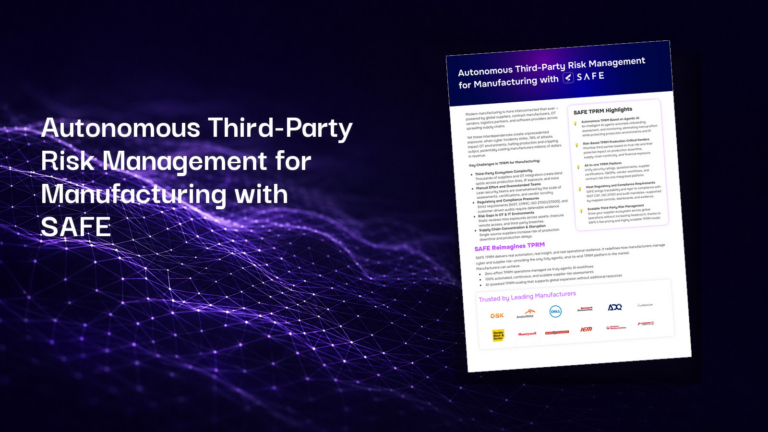
AI Cybersecurity in 2027: Why TPRM and CTEM Must Move at Machine Speed


I want to start with one sentence that I believe every CISO should think about before 2027.
You cannot defend a machine speed attack surface with a calendar speed risk program.
Industry has spent years buying more security tools, creating more dashboards, generating more findings and collecting more vendor evidence. Yet the thing that worries me most going into 2027 is not whether we have enough data. We have plenty of data. The problem is how long it takes us to turn that data into a decision and then turn that decision into action.
At the same time, AI is doing exactly the opposite for attackers. It is reducing the time needed to understand systems, test ideas, write code, adapt exploits and explore multiple attack paths. That is the real shift. And I think we are still underestimating it.
AI cybersecurity in 2027 will be defined less by one magical new attack and more by a change in attack economics. Smaller teams will be able to do more sophisticated work faster. Defenders will need TPRM, CTEM and AI security programs that continuously discover change, understand business context, validate real exposure and coordinate action at a speed much closer to the attacker.
The OpenAI story is interesting. But most people are looking at the wrong part.
In July 2026, researchers at Hacktron AI chained a vulnerability in the image processing path used by Discourse with an OpenAI identity and SSO weakness. The chain gave them access to OpenAI employee ChatGPT and Codex accounts and a path to an internal repository. To show impact without reading internal source code, they used an employee Codex environment to open a harmless pull request and then stopped further testing.
There is an important nuance here. This was security research that was reported to the affected companies, and OpenAI later clarified that testing against the Discourse hosted community forum itself was outside its bug bounty scope. So I would not reduce this to a dramatic headline saying that Claude hacked OpenAI. That misses the more important lesson.
What caught my attention was what happened when the model changed. Hacktron reported that an earlier Claude model could get part of the way but struggled to make the exploit reliable in the realistic environment. When a more capable model became available, the same research problem became much easier to operationalize. Read the Hacktron disclosure
Think about that for a second.
The vulnerable environment did not suddenly change. The weakness did not receive a new severity score. A new port did not open. The attacker capability changed.
That is the part I think the industry needs to pay attention to.
I call this Exploitability Drift
We normally talk about exploitability as if it belongs to the vulnerability. Is the asset reachable? Is authentication required? Is there a public exploit? Is the control working? These are still the right questions. But AI is adding another question: how capable is the attacker today compared with yesterday?
EXPLOITABILITY DRIFT
Exploitability Drift is the change in the practical exploitability of an existing weakness because attacker capability improved. That improvement might come from a stronger AI model, better agentic tooling, better automation or cheaper compute, even when the target environment itself did not materially change.
I am not saying that every new model release suddenly makes old vulnerabilities exploitable. That would be an irresponsible conclusion. I am saying something more practical: the cost of turning certain weaknesses into working attack paths is moving, and many risk programs are not designed to reassess that cost continuously.
This matters for your own environment. It matters even more for third parties because you do not control their environment. A vendor that looked acceptable six months ago can face a very different threat reality today even if its questionnaire answers have not changed.
The bigger problem is what I call the Security Loop Gap
Now look at the operating model on both sides.
An AI assisted attacker can discover, reason, test, observe and try again. If something fails, the agent can adjust. If a tool gets detected, it can modify the approach. If one path goes nowhere, it can investigate another.
Inside many enterprises, the defensive loop still looks very different. A finding appears. Someone figures out the owner. Another person adds business context. Someone investigates exploitability. A ticket is created. Remediation gets negotiated. An exception might be raised. Then we wait for the next scan or the next assessment.
None of those steps is wrong. The problem is the time between them.
THE SECURITY LOOP GAP
The Security Loop Gap is the difference between how quickly an attacker can discover, reason, test and adapt and how quickly a defender can understand, validate and reduce the same risk. Going into 2027, I believe reducing this gap will become one of the most important security objectives for large enterprises.
Five changes I expect security teams to feel in 2027
1. Complexity becomes less protective
For years, complexity gave organizations some accidental protection. An obscure application, a strange dependency or an undocumented API might be vulnerable, but understanding it took time. AI makes unfamiliar technology cheaper to understand. Complexity will still create engineering problems, but it will become a weaker security assumption.
2. More vulnerabilities become worth attempting
Attackers do not need every weakness to become easy. They only need the cost of trying to fall. If AI can read unfamiliar code, study an error, generate a proof of concept and keep iterating, then some vulnerabilities that were previously too expensive to investigate become economically interesting.
3. Identity, APIs and integrations become even more valuable
Modern enterprises are connected systems. SaaS connects to cloud. Cloud connects to identity. AI tools connect to repositories, documents, APIs and business workflows. One weakness can become important because of what it connects to, not because of its severity in isolation.
4. AI becomes both a security tool and part of the attack surface
Employees are using ChatGPT, Claude, Gemini, Copilot and specialized AI applications. Developers are connecting coding agents to repositories and environments. Business teams are giving AI systems access to documents, data and workflows. We now have to secure AI use while also defending against attackers using AI.
5. Detection alone becomes less impressive
Most mature enterprises can already detect a lot. The harder question is what happens after detection. Can you connect the signal to business impact? Can you validate the path? Can you get the right owner involved? Can you prove the risk actually came down? In 2027, that operating loop matters more than adding another dashboard.
This is where TPRM gets very interesting
Traditional third party risk management was built around a simple mental model. There is a vendor. We assess the vendor. We collect documents. We review controls. We assign risk. We approve the relationship. Then we reassess later.
That model is becoming too static for the world we are moving into.
A modern SaaS provider may use a cloud platform, a foundation model, a model router, open source components, a vector database, identity providers and multiple subprocessors. An AI agent may also hold permissions that let it take actions, not just return text.
So what exactly are we assessing? The company? The product? The model? The fourth party? The data flow? The identity path? The agent permission? In reality, it is all of them together.
The third party is becoming a live execution dependency inside your attack surface.
What should the best TPRM platforms in 2027 actually do?
I see a lot of searches for the best TPRM platforms in 2027, top TPRM tools and the best third party risk management software. I would not start with a vendor ranking. I would start with six questions because these questions tell you whether the platform is designed for the problem we will actually have.
| Do we know every material third party? | You need a reliable vendor inventory, business owner, service criticality and relationship context. If the foundation is a spreadsheet that nobody fully trusts, everything on top of it becomes weaker. |
| Can we automate the evidence heavy work? | Analysts should not spend their best hours reading the same SOC report sections, chasing the same documents and manually comparing answers. AI should absorb repetitive analysis while people remain responsible for material risk decisions. |
| Can we see fourth party and AI dependencies? | The platform should help you understand which models, cloud providers, subprocessors and downstream services materially support the vendor. |
| Can we connect vendor posture to access and business impact? | A vendor score without context is not enough. What can the vendor access? What data does it handle? Which business process depends on it? What happens if it is compromised or unavailable? |
| Can we detect meaningful change between formal assessments? | A useful TPRM platform should help identify changes in exposure, breach intelligence, ownership, AI dependency, data use or other material conditions without waiting for the next annual questionnaire. |
| Can we prove remediation actually reduced risk? | Closing a finding is not the same as reducing risk. The platform should preserve evidence, revalidate the control and maintain a defensible decision trail. |
For me, a top TPRM tool in 2027 should be judged by how much of this continuous risk loop it can keep current, not by how efficiently it digitizes an annual questionnaire.
You can see how we are approaching this at SAFE in the SAFE TPRM AI Co Worker
CTEM changes for exactly the same reason
An attacker does not look at your vulnerability spreadsheet and say, this one is 9.8 so I must attack it first. The attacker looks for a path.
An exposed application can lead to an identity. The identity can lead to a token. The token can reach a cloud workload. The workload can call an API. The API can reach sensitive data or a critical business process.
That is why Continuous Threat Exposure Management matters. CTEM is not simply better vulnerability sorting. It is a continuous program for deciding what matters, discovering exposures, prioritizing with context, validating what can actually be exploited and mobilizing remediation.
What should buyers look for in the best CTEM platforms in 2027?
The same thing applies when people search for the best CTEM platforms in 2027, CTEM tools or exposure management platforms. I would not ask which product has the biggest findings database. I would ask whether it helps you run the full exposure management loop.
| Can it scope what matters? | The platform should understand the business services, crown jewels, identities and systems that create material consequence. |
| Can it unify context? | Assets, identities, cloud, controls, threat intelligence and business context should not live as disconnected views when the attacker sees one connected path. |
| Can it prioritize beyond severity? | Reachability, exploitability, threat activity, control state and business impact should influence the decision. |
| Can it validate the path? | Attack path visualization is useful. Validation is more useful. The platform should help determine whether an exposure is actually reachable and exploitable in the real environment. |
| Can it mobilize remediation? | The right owner needs the right context, and exceptions need governance without losing the evidence that supported the decision. |
| Can it revalidate continuously? | When a fix is deployed or attacker capability changes, the organization should be able to test whether the risk assumption still holds. |
This is where Exploitability Drift comes back into the conversation. If attacker capability is moving faster than your patch cycles, your exposure assumptions cannot remain static.
Our current approach is described in the SAFE CTEM AI Co Worker
AI security is no longer a separate conversation
There is one more change that I think security teams need to internalize. AI systems themselves are becoming enterprise actors.
They can see data. They can inherit identities. They can use tools. They can call APIs. They can connect to repositories. They can interact with third parties. In some cases, they can take actions.
So when somebody asks me whether AI security belongs under application security, cloud security, TPRM or CTEM, my answer is increasingly simple: it touches all of them.
By 2027, AI Security Posture Management should feed both third party risk and exposure management. An AI service can be a vendor relationship and an attack surface component at the same time.
For additional context, see What is AI Security Posture Management?
What have we changed at SAFE with 2027 in mind?
I do not want this article to turn into a product pitch, but I do want to explain one thing we have changed in the way we think about the platform.
We no longer believe the next generation cyber risk platform should simply give a human more things to read. Security teams already have enough findings, questionnaires, alerts, PDFs and dashboards.
The real question is which parts of the risk loop can continuously ingest what changed, reason about why it matters, validate the exposure and coordinate the next action while keeping consequential decisions with accountable people.
TPRM: move from assessment workflow to continuous risk operations
SAFE TPRM AI Co Worker is organized around Intake, Due Diligence, Remediation, Continuous Monitoring and Offboarding.
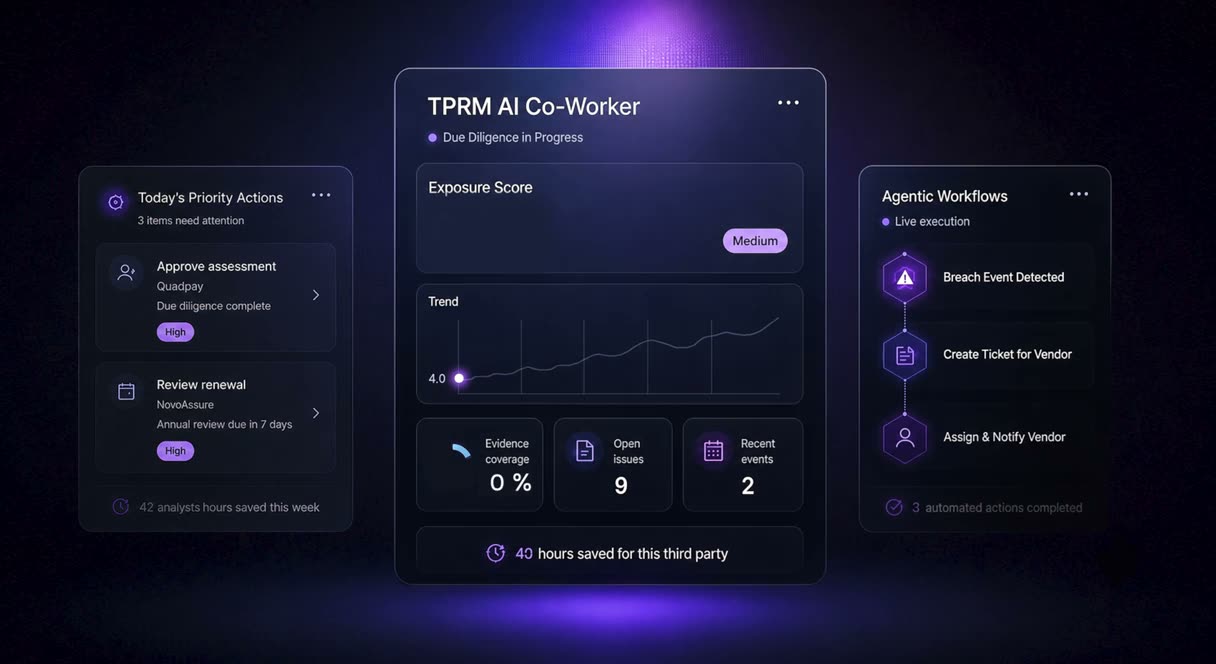
The important part for me is not the number of agents. It is the operating model. Evidence analysis, follow up, monitoring, remediation and offboarding should not wait for a person to manually move every piece of information from one queue to another.
CTEM: move from finding volume to validated risk reduction
SAFE CTEM AI Co Worker follows Scoping, Discovery, Prioritization, Validation and Mobilization. Again, the important part is the loop.
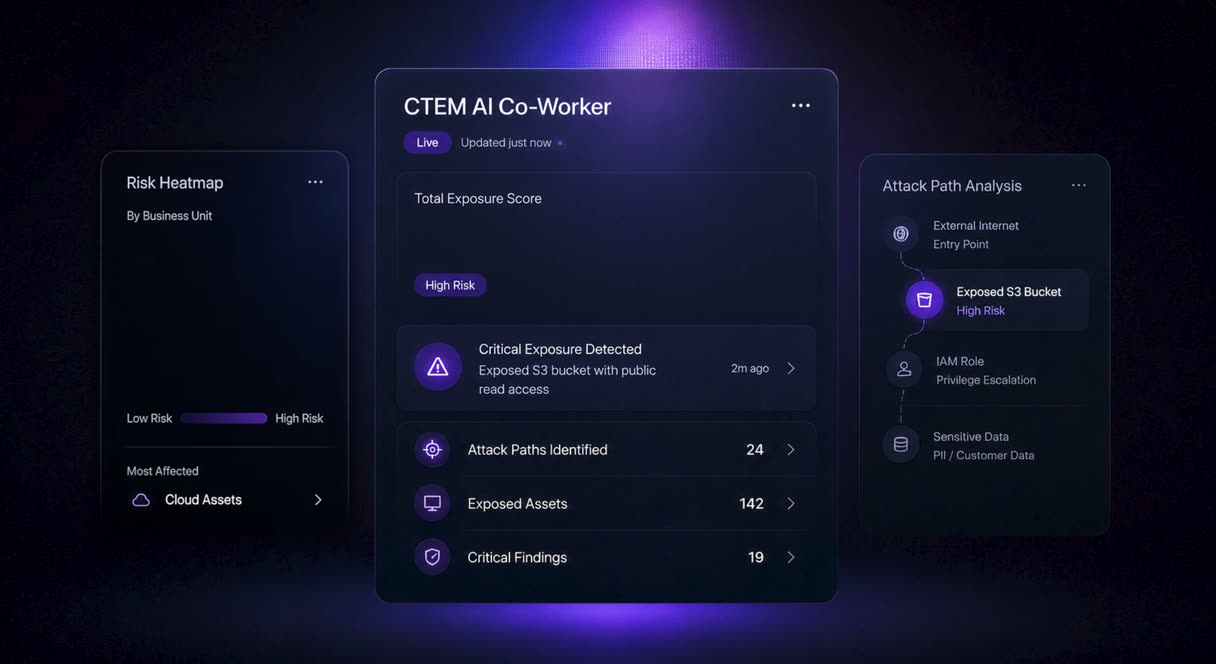
Know what matters. Discover what changed. Understand the path. Validate it. Get the right person to act. Then revalidate.
SafeX: move from dashboard to an ingest, reason and act model
This is the broader architectural direction behind SafeX. Bring signals together. Reason across the relationships. Coordinate the right AI Co Worker or workflow. Keep people responsible for the decisions that carry business consequence.
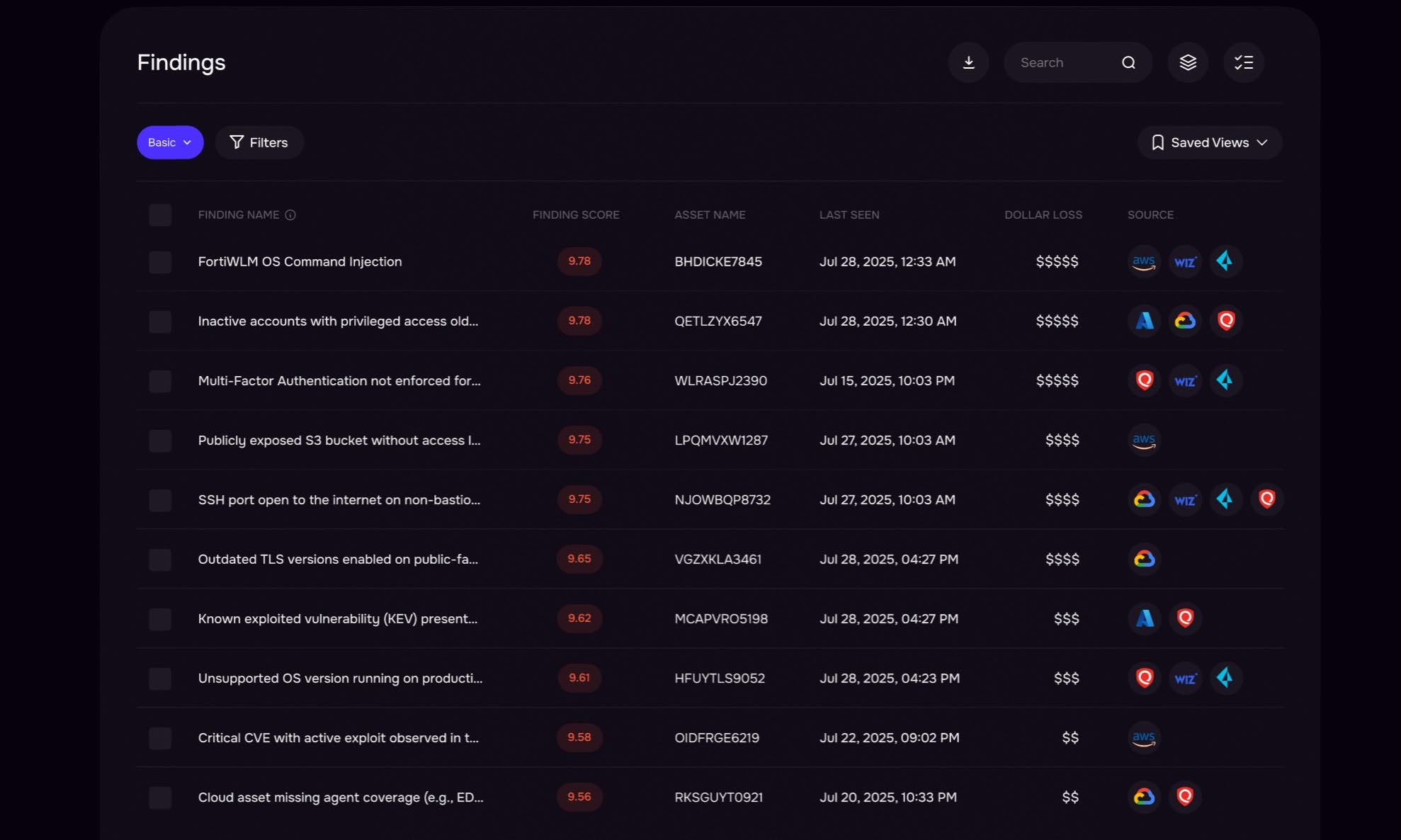
Findings view – Prioritize exposures using finding scores, business impact, financial loss, and context from across security tools.
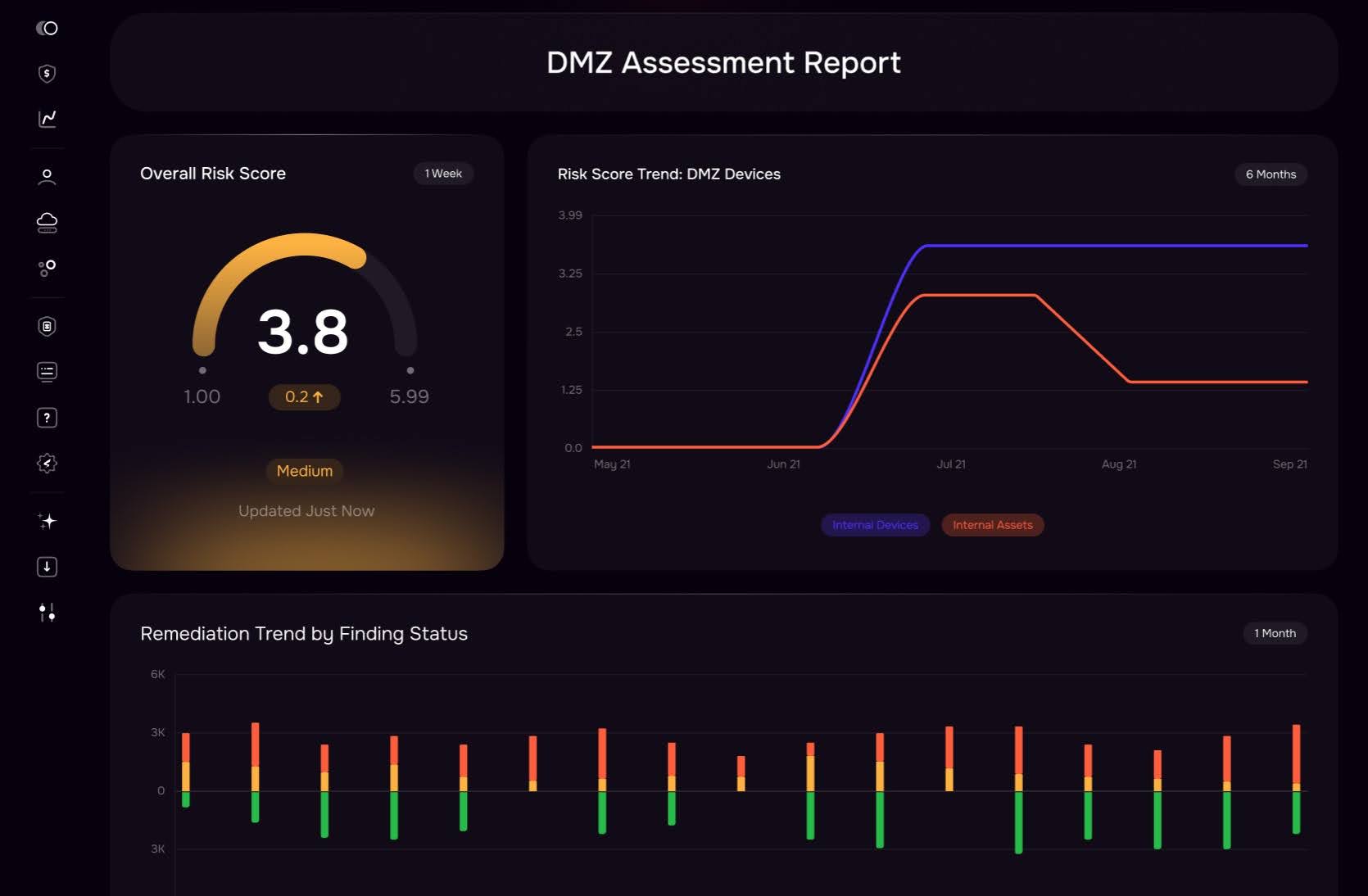
DMZ Assessment Report – Track risk scores, exposure trends, and remediation progress to show how risk changes over time.
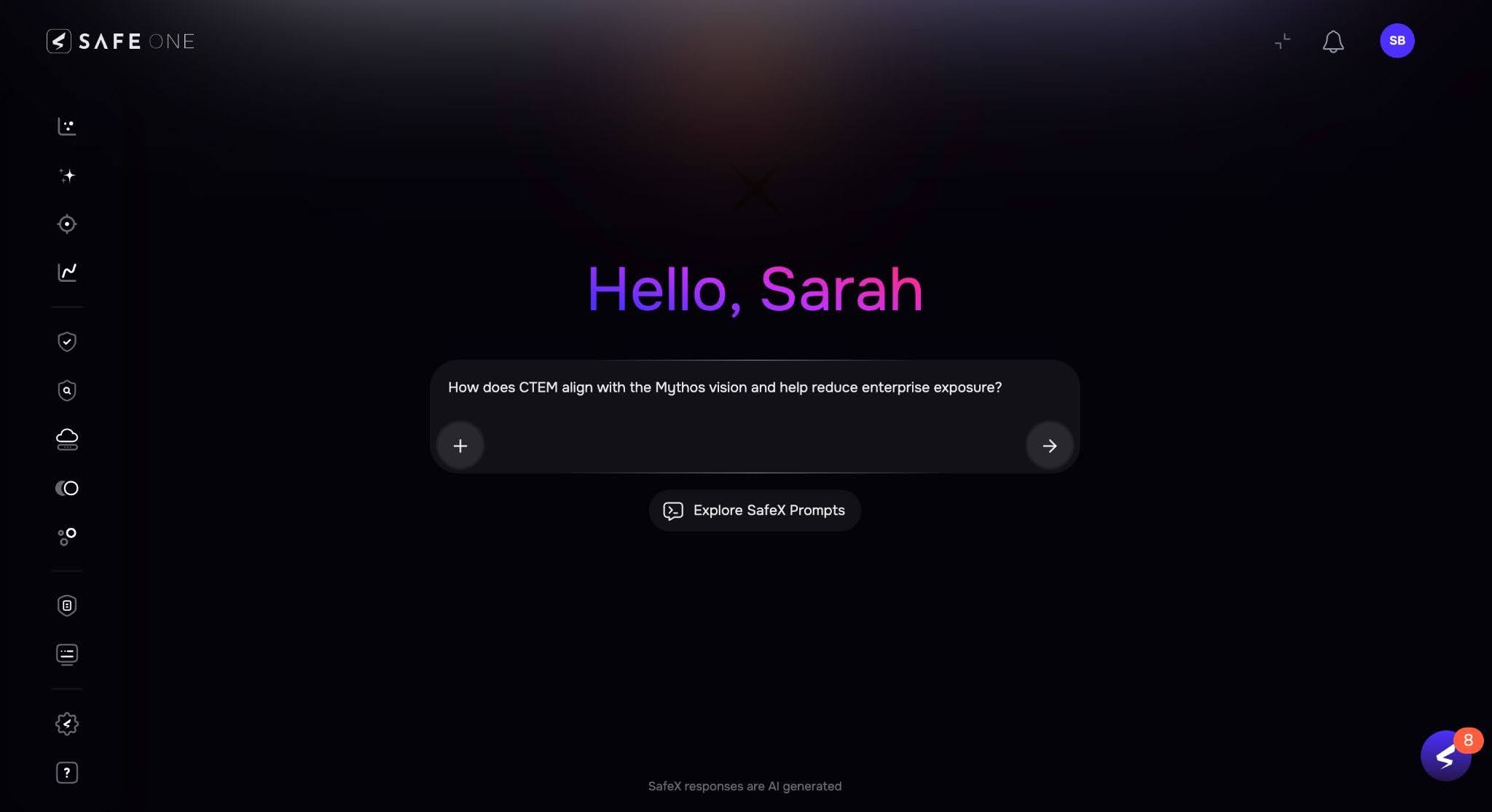
SafeX conversational interface- Ask exposure questions conversationally with SafeX and get instant answers from connected cyber and business context.
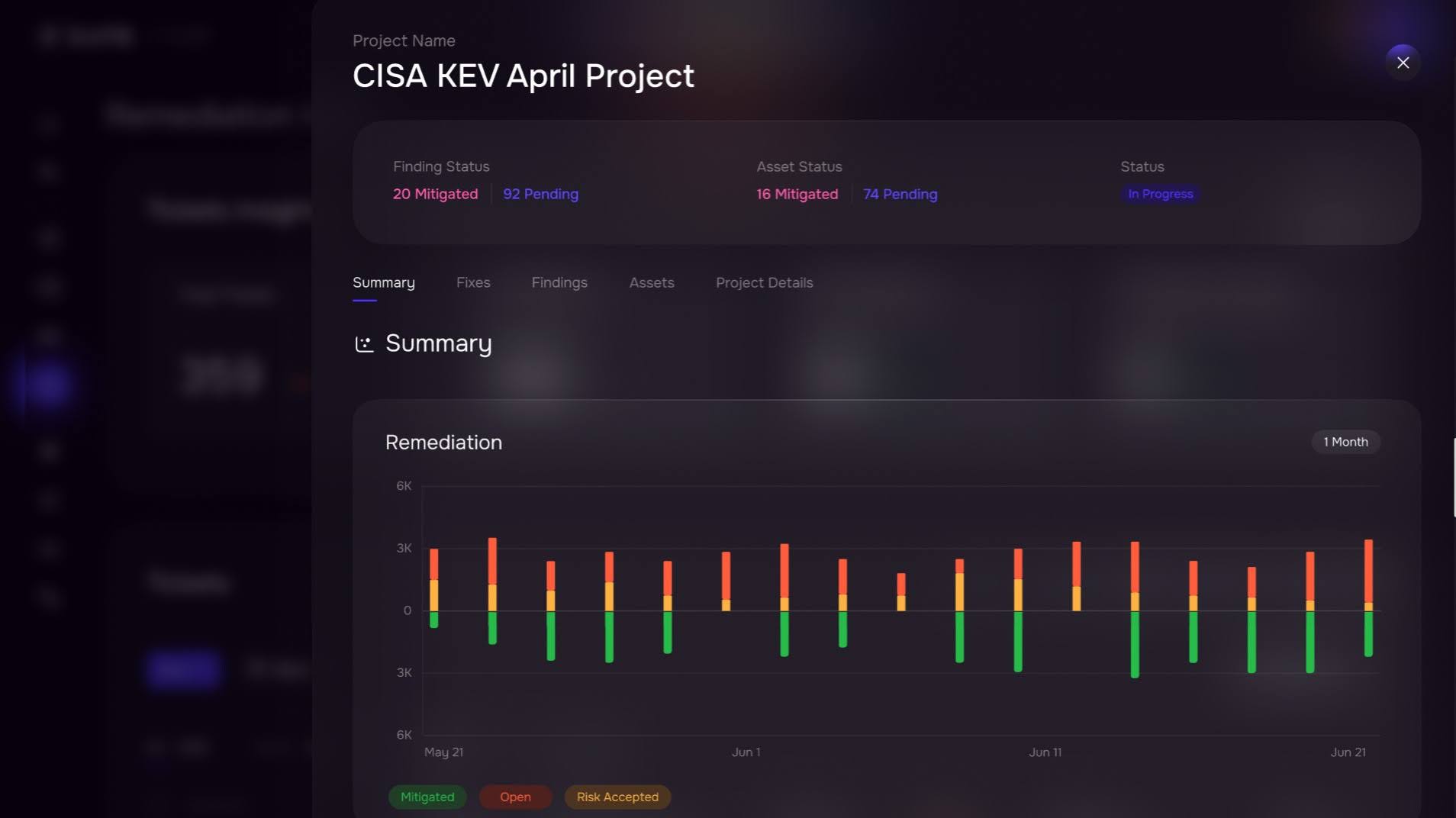
CISA KEV project / remediation view – Turn exposure insights into action by tracking findings, assets, and remediation progress through closure.
MY VIEW OF THE BEST PLATFORM IN 2027
The best TPRM platform or CTEM platform will not be the one that produces the most scores, findings or AI summaries. It will be the one that shortens the risk loop. Less time to know what changed. Less time to understand why it matters. Less time to validate the path. Less time to prove the risk was reduced.
Six questions I would put on every CISO agenda before 2027
- How long does it take us to move from a new exposure signal to a validated business risk decision?
- Which parts of our TPRM program still depend on annual reassessment even though the vendor and threat context can change every day?
- Can we identify and govern AI applications, models, connectors and agent permissions as part of our enterprise attack surface?
- Do our exposure management processes validate the paths that matter, or do they mostly rank findings?
- When a vulnerability is fixed or a vendor closes a finding, can we prove that the risk actually decreased?
- What happens if a new frontier model tomorrow makes a currently difficult exploit much easier to operationalize?
That last question is new. And I think it is one of the most important questions in this entire article.
My prediction for 2027: security becomes a competition between loops
I do not believe 2027 will look like a movie where an autonomous hacker presses one button and every enterprise falls over. Reality will be less dramatic and, in many ways, more dangerous.
Humans will still choose the valuable targets. Humans will still define objectives. Skilled people will remain important on both sides. But AI will do an increasing share of the work between find me a way in and here is the path.
Reconnaissance gets faster. Code comprehension gets faster. Exploit iteration gets faster. Environment adaptation gets faster. Attack path reasoning gets faster.
The defender needs the same leverage between something changed and risk has been reduced.
That is why I believe the most important AI security metric in 2027 may not be how many findings your tools produce. It may be how quickly your organization can close the Security Loop Gap.
ONE QUESTION TO LEAVE WITH
If an AI assisted attacker can continuously discover, reason, test and adapt across your assets, identities, vendors, APIs and AI systems, how much of your defensive risk program is still waiting for a person to manually move information from one queue to another?
Frequently asked questions
How will AI change cybersecurity in 2027?
The most immediate change is likely to be speed and economics. AI can reduce the human effort required for reconnaissance, code analysis, exploit research, adaptation and attack path testing. Defenders will need faster continuous processes for exposure validation, third party monitoring, AI security and remediation.
What is Exploitability Drift?
Exploitability Drift is the change in the practical exploitability of an existing weakness because attacker capability improved. A stronger AI model, better agentic tooling or better automation can make a previously expensive exploit easier to operationalize even if the target environment did not materially change.
What are the best TPRM platforms in 2027?
There is no single best TPRM platform for every organization. Strong platforms should support continuous vendor inventory, AI assisted evidence analysis, fourth party and AI dependency visibility, business and access context, event driven monitoring, remediation workflows and defensible governance. Buyers should evaluate how much of the complete risk lifecycle the platform can keep current.
What should I look for in the best third party risk management software?
Look beyond questionnaire automation. A modern TPRM platform should connect vendor criticality, cyber posture, data, access, fourth parties, evidence, contracts, monitoring and remediation. It should reduce analyst handoffs while preserving approvals, risk acceptance and an audit ready decision trail.
What are the best CTEM platforms in 2027?
The right CTEM platform depends on your environment. Strong platforms should help run the complete exposure management loop: scope what matters, discover exposures, prioritize with threat and business context, validate
exploitability, mobilize remediation and revalidate closure. Buyers should compare actual lifecycle coverage rather than rely on the CTEM label alone.
How is CTEM different from vulnerability management?
Vulnerability management focuses primarily on finding and managing vulnerabilities. CTEM is a continuous program that starts with business relevant scope and adds discovery, prioritization, validation and mobilization across a broader set of exposures. The objective is measurable exposure reduction.
Will AI replace cybersecurity teams in 2027?
I do not think replacement is the useful way to think about it. The more realistic model is augmentation and orchestration. AI can absorb repetitive research, correlation, drafting, validation and workflow tasks while people remain responsible for business trade offs, material exceptions, risk acceptance, policy and high consequence decisions.
Sources and further reading
Related Posts
 Cybersecurity
10 Most Common Cybersecurity Blind Spots
Nearly 90% of cyberattacks are caused by human error, so it’s important to understand and address your organization’s cybersecurity weak spots. Many organizations struggle to maintain a clear…
Cybersecurity
10 Most Common Cybersecurity Blind Spots
Nearly 90% of cyberattacks are caused by human error, so it’s important to understand and address your organization’s cybersecurity weak spots. Many organizations struggle to maintain a clear…

 Blog
2025 in Retrospect: SAFE Steers the Industry Towards Autonomous Cyber Risk Management
By: Sweta Bhattacharya 2025 wasn’t just a milestone year for SAFE: it was the year the entire cyber risk management landscape shifted. Every major shift in the SAFEOne…
Blog
2025 in Retrospect: SAFE Steers the Industry Towards Autonomous Cyber Risk Management
By: Sweta Bhattacharya 2025 wasn’t just a milestone year for SAFE: it was the year the entire cyber risk management landscape shifted. Every major shift in the SAFEOne…