
CISO Cyber Risk Management: Vendor and Exposure | SAFE
For CISOs

Answer "are we exposed?"
before the board asks

SAFE puts every vendor, every supplier and every exposure in your own estate on one risk model, priced in dollars. You fix what could actually hurt the business, and you can defend every number you report.

The Problem

The risk you're accountable for
is bigger than the risk you can see.

  1. Third parties are now part of most incidents

    Most programs still review critical vendors once a year and the long tail not at all.

  2. Your risk is split across tools that can't be added up

    Vendor risk sits in a ratings tool, internal exposure in scanners, and neither speaks in dollars.

  3. Every headline CVE and supplier breach starts a manual hunt

    Teams search by hand while AI-assisted attackers shorten the time to exploit.

  4. The CISO answers for every decision

    When a decision is challenged after an incident, the CISO is the one asked what was known and why it was approved.

  5. AI tools arrive faster than security can review them

    Security either slows the business or approves risk it hasn't measured.

The Solution

Why CISOs choose SAFE

One model for first-party and third-party risk, with AI agents that do the work and people who make the calls.

Breach event with the affected third and fourth parties listed

Shrink third-party breach exposure across the supply chain

Material vendor risk is caught and acted on earlier, and vendor decisions reflect today's risk, not last year's assessment.

  • Every vendor, the long tail included, is monitored continuously, so a deteriorating supplier is flagged now, not at the next annual review.
  • Shadow vendors and fourth parties are discovered automatically, so the program covers the supply chain you actually have.
  • When a supplier is breached, you know the same day which vendors and services are affected, and how far it reaches.
Reduce breach exposure
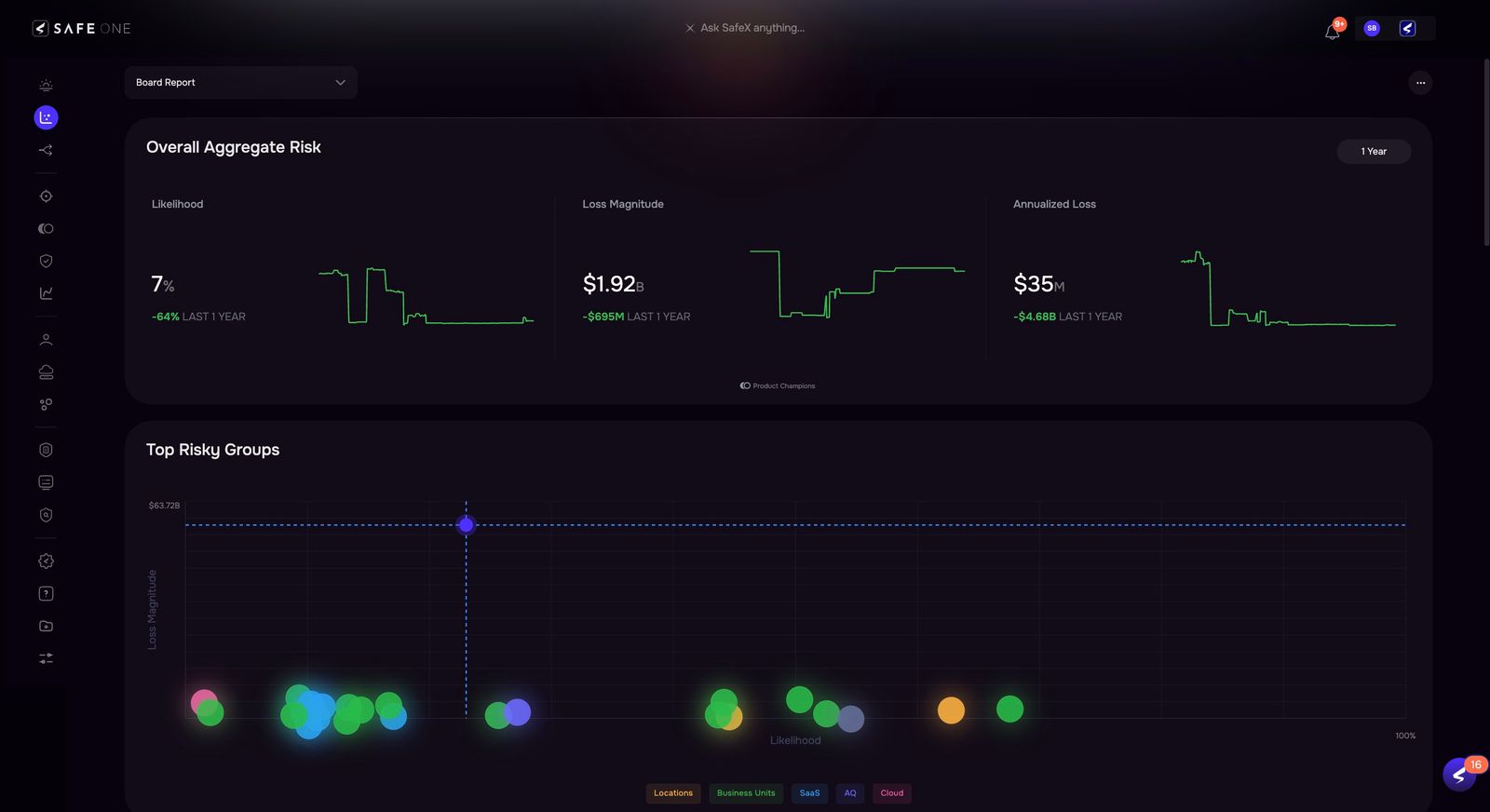
Board dashboard showing first-party and third-party risk in dollars

Report cyber risk the board can act on, in business impact

Security investments are defended with evidence, and exposure is accepted against a figure, not a color.

  • First-party and third-party risk sit on one FAIR-based model, so you report one number instead of two dashboards.
  • Board dashboards and PowerPoint-ready reports draw on the same data your team works in, so the board pack isn't rebuilt every quarter.
  • Every change in exposure comes with its cause, so you can explain a spike before anyone asks.
See risk scoring and quantification
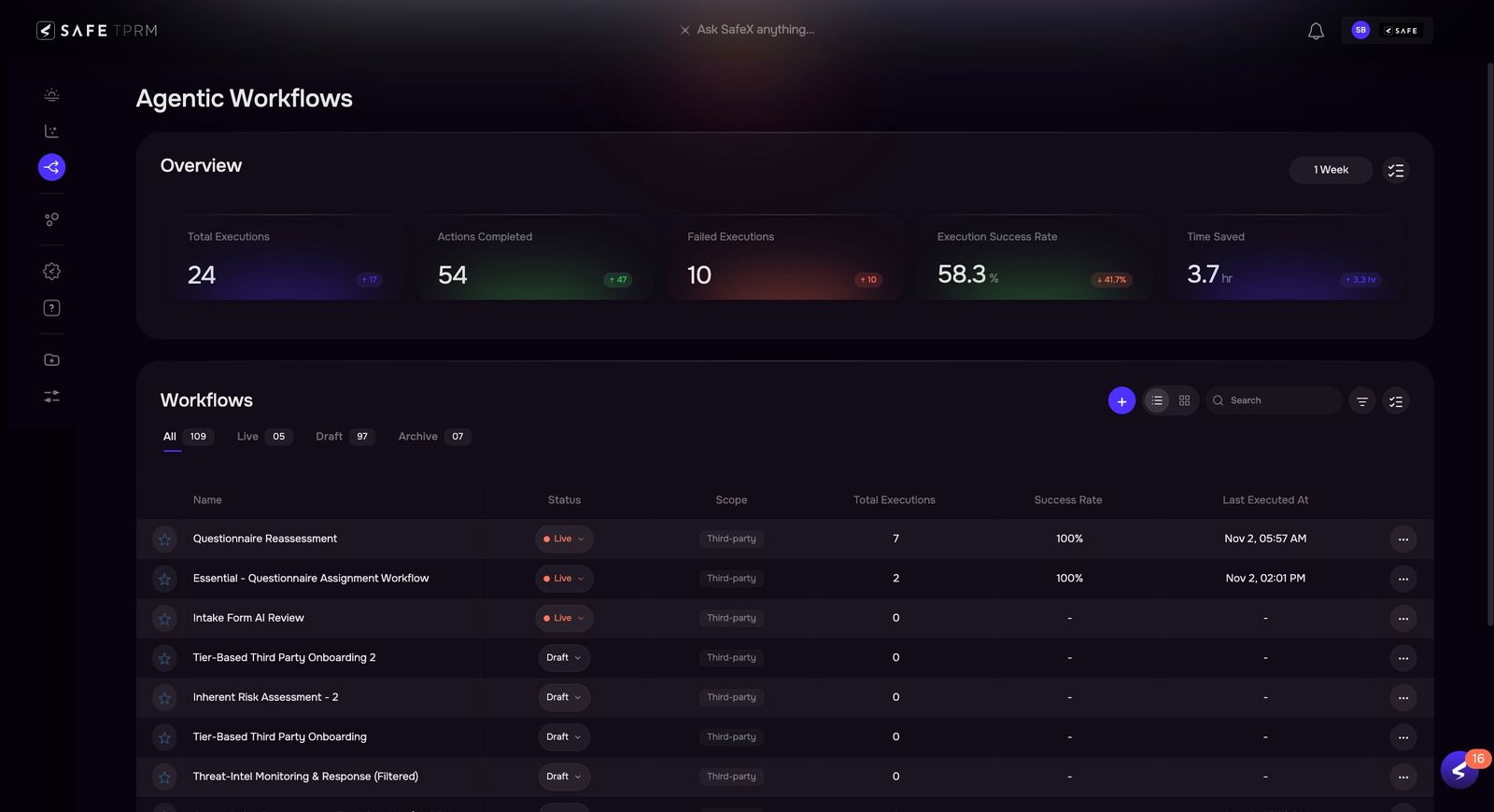
Agentic Workflow Insights

Scale the program without scaling headcount

Coverage grows with the business while cost per vendor and per fix falls.

  • AI agents do the reading, chasing and ticket routing, so experienced people spend their time on judgment and material decisions.
  • Instacart assessed 600+ vendors in three weeks and Kyriba covered its whole vendor base at no added budget, both without new hires.
  • Automation reports its own return in runs and hours saved, so the headcount-versus-automation case writes itself at budget time.
Scale without headcount
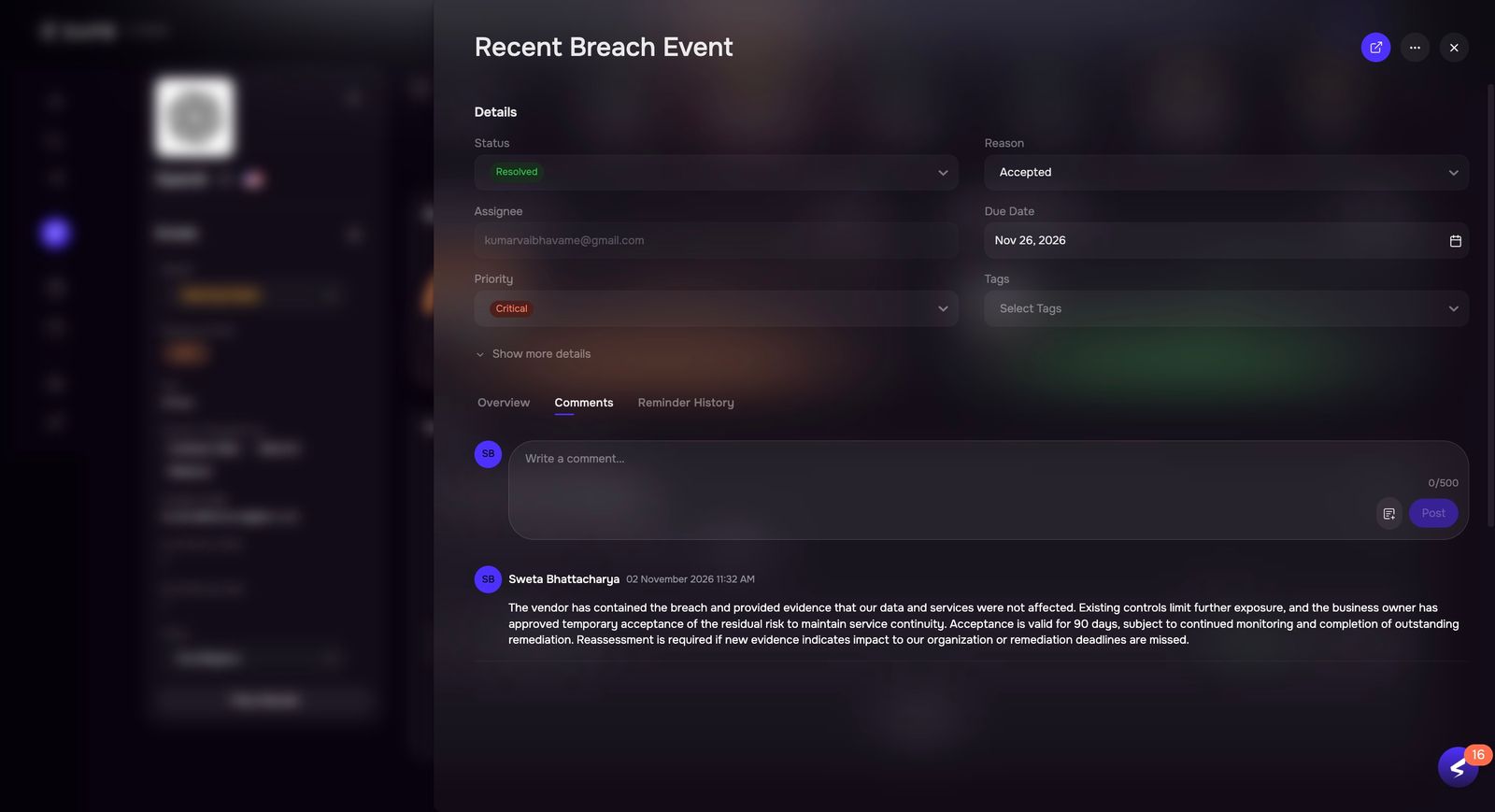
Risk acceptance record with owner, rationale, conditions and expiry date

Defend every decision to regulators, auditors and the board

Decisions are consistent, traceable and on the record, which protects the program and the person accountable for it.

  • Every score traces back to its evidence, on open standards: FAIR, MITRE ATT&CK and NIST CSF.
  • Risk acceptances carry an owner, rationale and expiry date, so residual risk is a recorded decision, not an inherited one.
  • Evidence is captured as the work happens, so audits don't need a war room.
Meet global regulations
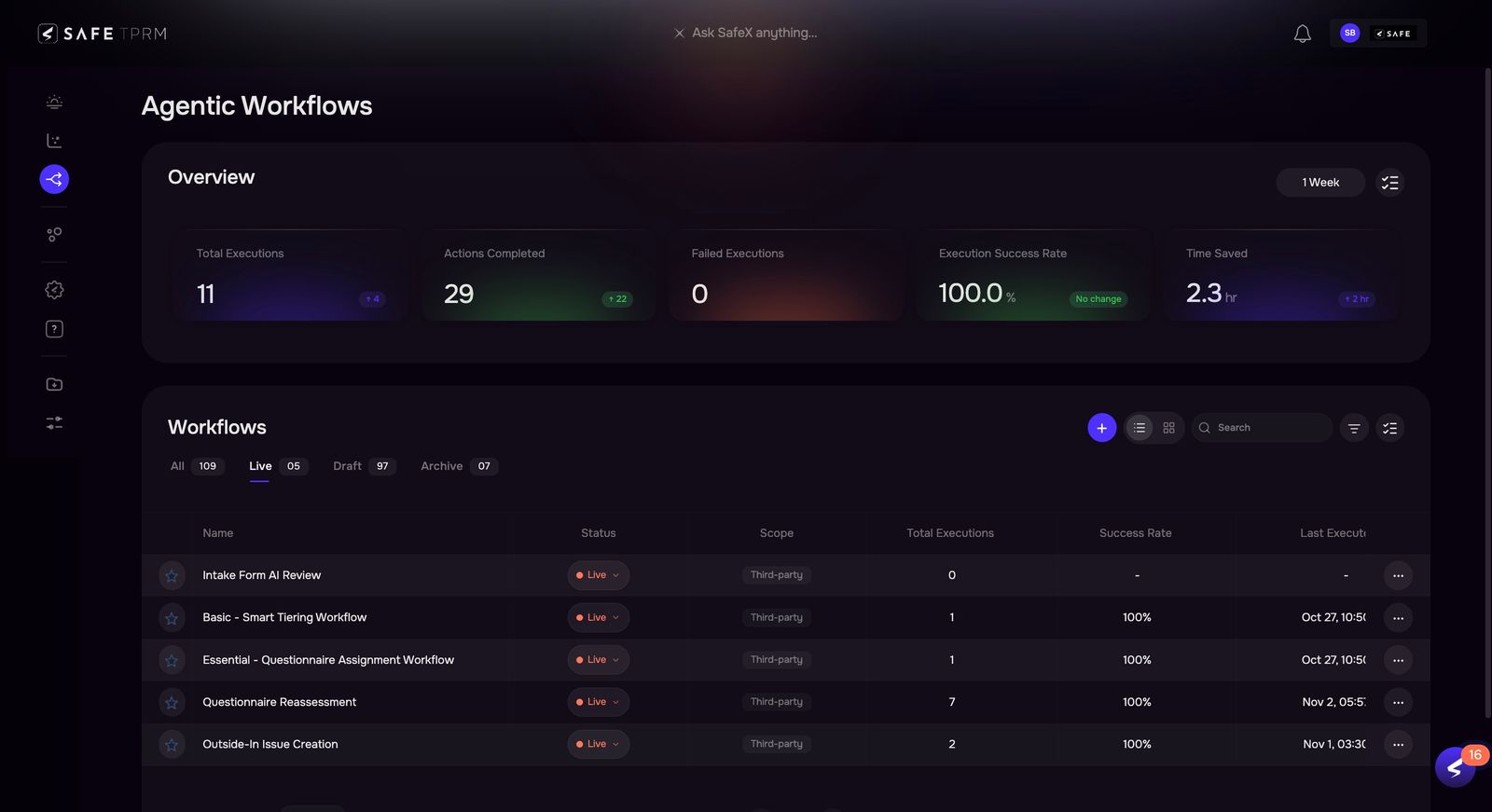
AI tool request moving from intake through review to approval with Agentic Workflows in SAFE TPRM

Say yes to the business, and to AI, without losing control

Security becomes the team that speeds adoption up, and budget moves from tool sprawl back to the business.

  • Risk-based intake sends low-risk requests down a fast lane, so the business isn't left waiting on security review.
  • AI tools are governed from intake through contract review and reassessed when they change, so approvals stay current.
  • One platform for exposure, third-party risk and quantification can retire overlapping tools, freeing budget for growth.
Accelerate AI adoption
AI You Control

Agents do the work. You make the calls.

Human approval at key decisions

AI review is advisory: severity and status change only when an analyst acts.

Suggestions, not surprises

AI-recommended issues stay suggestions until a person accepts them.

One switch

Admins can turn off SafeX, AI summaries, widget explanations and AI-powered uploads in a single setting.

Same permissions for agents

AI calls through MCP run as the calling user, so role-based access applies to agents too.

The Proof

Machine-Speed Defense. Measurable Results.

Instacart operationalizes enterprise-scale TPRM while reducing assessment effort.

Retail USA

Read the Full Story

The Challenge

Instacart's TPRM team managed hundreds of vendors through manual processes that slowed assessments and limited visibility. They needed a more automated, risk-based approach to scale the program.

The Results

30+
hours
of analyst work eliminated per assessment
3
weeks
to operationalize TPRM with 600+ vendors
100%
vendors
assessed and monitored with zero added headcount
Book a demo

Ready to meet your AI Co-Workers?

Get a Demo