
Vendor Risk Management Software for Program Leaders | SAFE
For TPRM and vendor risk leaders

Your vendor list doubled.
Your team didn't.

SAFE's AI agents discover, tier, assess and monitor every third party, long tail included, and keep the evidence behind every call. Your program grows with the supply chain and holds up when the auditor visits.

The Problem

Your program covers the vendors you can afford to assess.
Attackers don't care which ones those are.

  1. Analyst capacity caps coverage

    Capacity limits how many vendors get a full assessment. The long tail, where shadow IT and new AI tools come in, goes unmonitored.

  2. Annual assessments are stale the day they're filed

    A vendor can change its controls, its suppliers or its breach status the next morning, and nothing triggers a review.

  3. Static tiers waste diligence in both directions

    Low inherent-risk vendors get the full questionnaire while critical ones get too little scrutiny for what they can reach.

  4. Assessments take months, and the business notices

    Security gets blamed for slow procurement.

  5. Scaling the program means hiring

    More vendors means more analysts, contractors or outsourced reviews, and per-vendor pricing compounds the bill.

  6. Residual risk decisions don't survive scrutiny

    Subjective evaluation never passes the test.

The Solution

Solution highlights

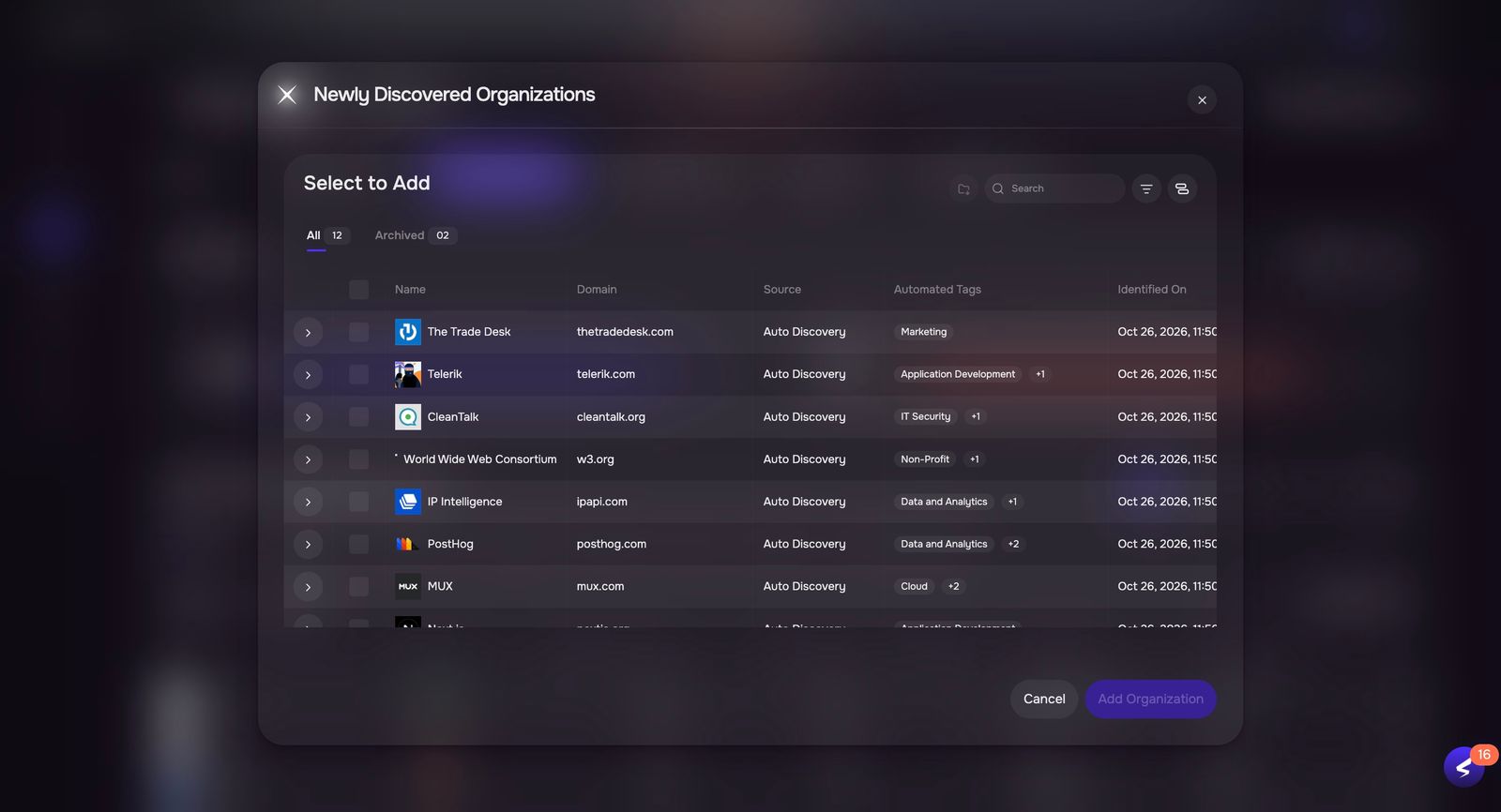
Newly Discovered queue on the inventory page with source and discovery reason

Close the coverage gap across your supply chain

Blind spots shrink, and leadership sees your whole third-party exposure, not just the part you had time to assess.

  • Unmanaged vendors are discovered in the systems you already use, like ServiceNow, OneTrust and Ironclad, so shadow IT enters the program instead of going around it.
  • Every vendor is monitored continuously, so a deteriorating supplier is flagged between assessments.
  • Fourth parties are mapped with the evidence behind each link, so concentration risk shows up before an outage does.
  • What it's worth: more of the vendor base under current risk visibility, measured by the share of critical vendors monitored.
See shadow third-party discovery
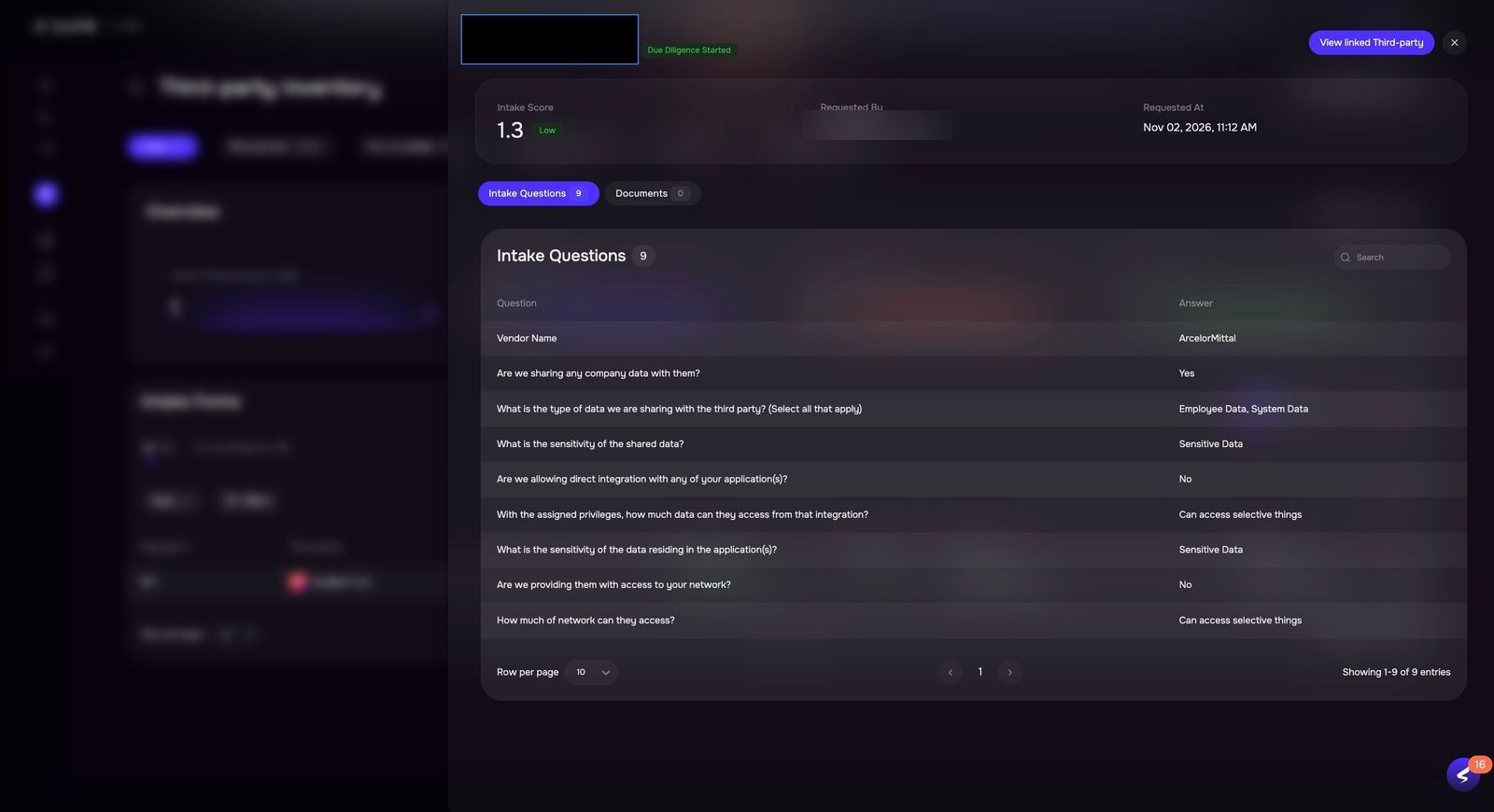
Intake request with inherent risk score and assigned review tier

Match diligence to inherent risk

Analyst effort goes to the vendors that could actually hurt you, and low-risk vendors stop getting 300 questions.

  • Every request gets an inherent risk score at intake, so the right level of review is set before anyone sends a questionnaire.
  • Low-risk vendors can share an existing SOC 2 or ISO report instead, which SAFE turns into findings.
  • High-risk vendors get deeper review and a human sign-off, so scrutiny lands where it counts.
  • What it's worth: San Francisco Health Plan cut assessments from 90 days to one to two weeks.
See intake and triage
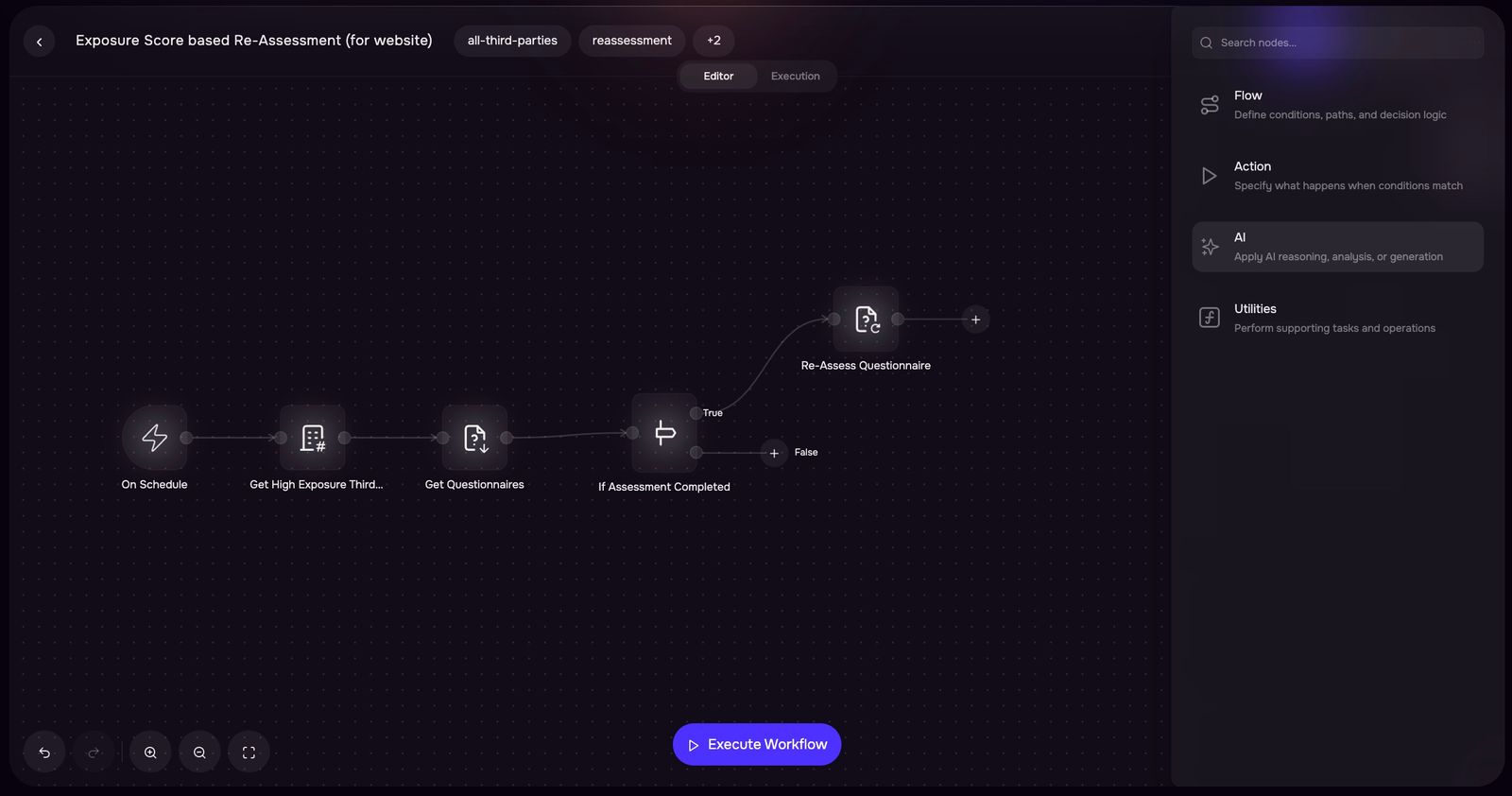
No-code workflow builder showing event, schedule and manual trigger options

Let agents run the routine, so analysts can make the calls

Team capacity grows, backlogs clear and the cost of each assessment falls.

  • Agentic workflows run onboarding, reassessment and issue creation on their own, triggered by events or schedules.
  • Agents request evidence, chase replies and send reminders, and reassessments reuse what you already collected.
  • Execution insights report hours saved, so the budget case for automation over headcount is already made.
  • What it's worth: Instacart eliminated 30+ hours of analyst work per assessment.
See agentic workflows
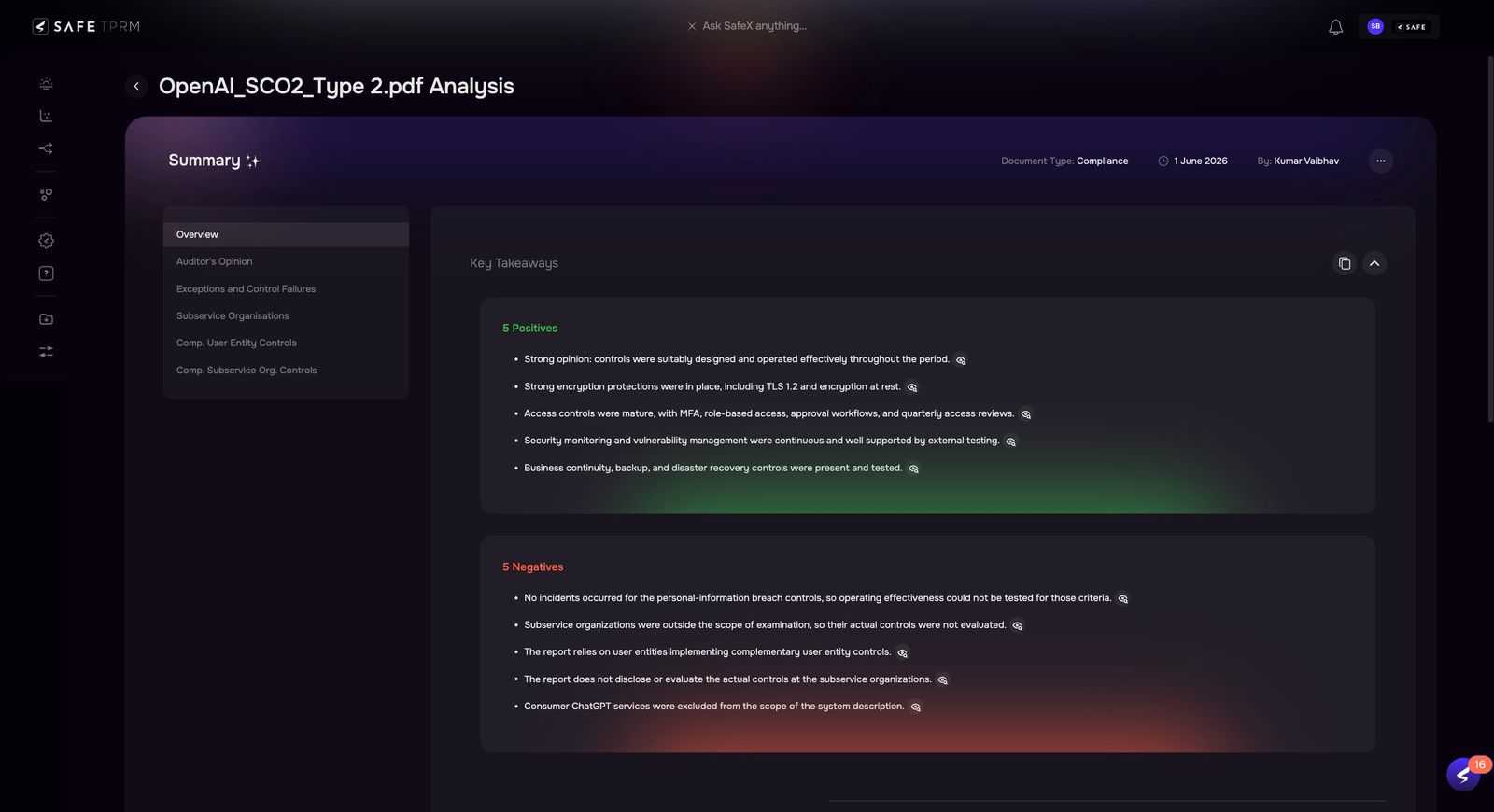
Document Analyzer view of a SOC 2 report with extracted controls, exceptions and subservice organizations. Document Analyzer view of a SOC 2 report for a sample vendor: extracted controls, exceptions, audit period, and subservice organizations in a side panel, with the matching source page highlighted.

Grow coverage, not cost

Vendor growth no longer means more analysts, more contractors or a bigger tooling bill.

  • AI reads SOC 2s, ISO certificates and policies and maps them to controls, so evidence review scales with the queue.
  • One program runs across business units and geographies, each with its own secure view, so you don't need separate tools per region.
  • Evidence is collected once and reused, and questionnaires are unlimited, so each new vendor takes less effort than the last.
  • What it's worth: Kyriba's three-person team assessed 100% of its vendors at no added budget.
Scale without headcount
Residual risk acceptance with owner, rationale and expiry date

Make every residual risk decision defensible

Decisions are consistent across analysts, accountability is explicit, and audits get cleaner.

  • The same policy and scoring apply to every vendor and every reviewer, and each score traces to its evidence.
  • Risk acceptances carry an owner, rationale and expiry date, so nothing quietly outlives its approval.
  • Evidence is captured as work happens, so an auditor's request doesn't mean weeks of reconstruction.
  • What it's worth: less audit preparation time and fewer findings on third-party oversight.
Meet global regulations
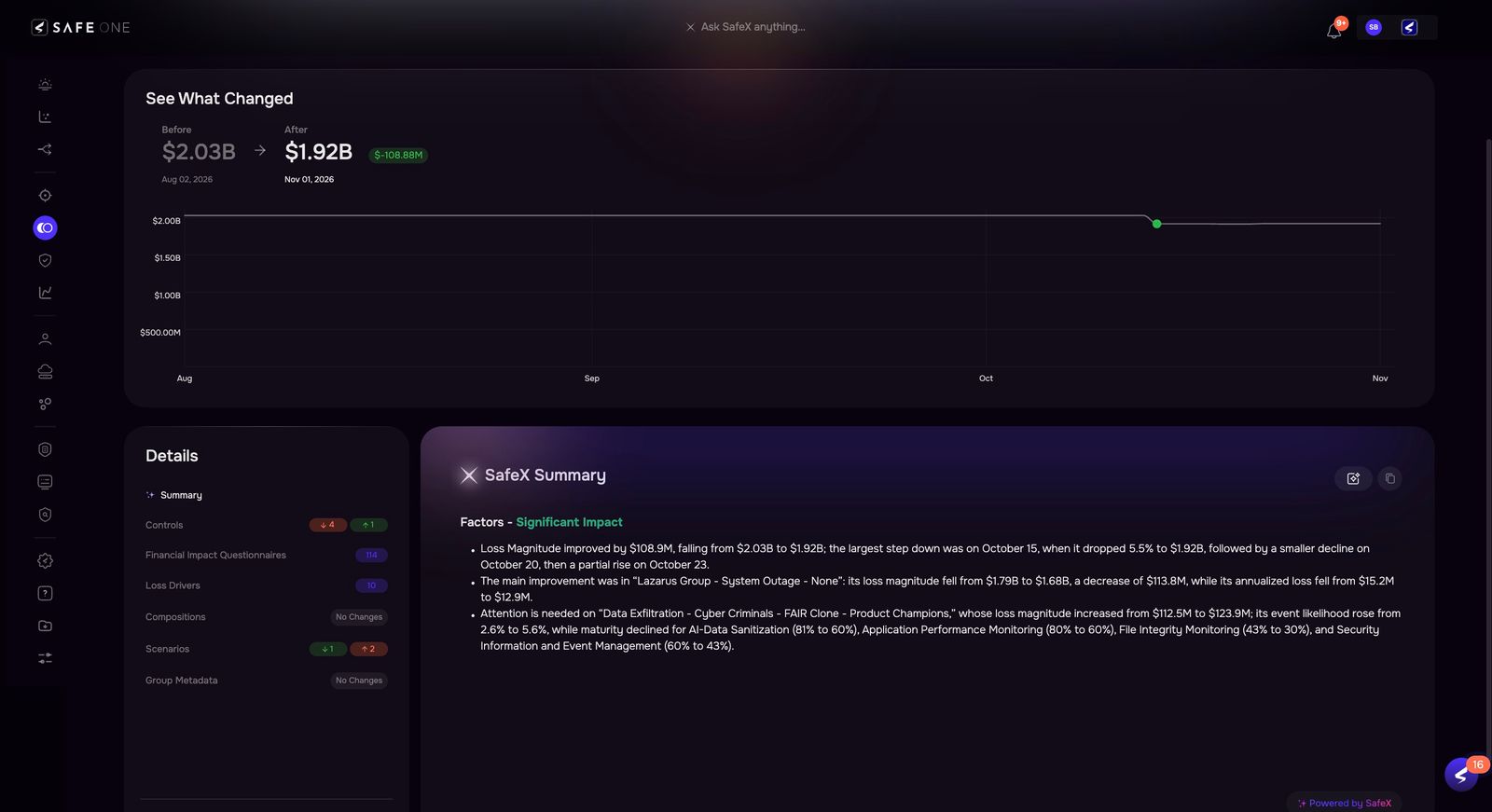
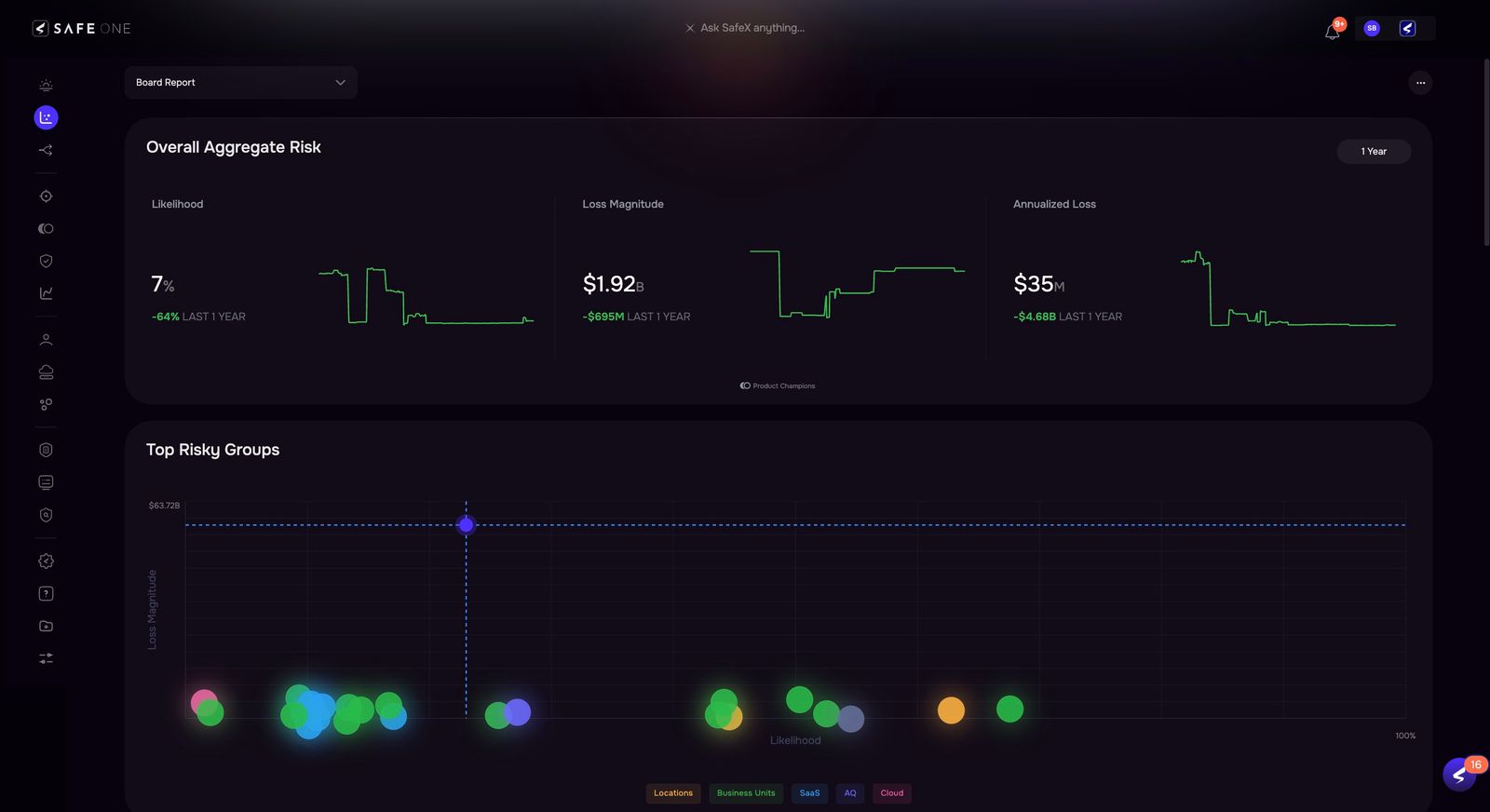
Board dashboard showing first-party and third-party risk in dollars

Report vendor risk the committee can act on

One set of numbers, in dollars, from the risk committee down to the vendor.

  • Dashboards and PowerPoint and PDF reports run on live data, so the committee pack isn't rebuilt every quarter.
  • Each vendor's risk is expressed in dollars with FAIR, so risk acceptance becomes a business decision.
  • AI summaries explain what changed and why it matters, so you walk in with the story, not just the chart.
See dashboards and reporting
AI You Control

Autonomous where it's safe.
Accountable everywhere.

Humans approve the decisions that matter

AI review is advisory: severity and status change only when an analyst acts.

Suggestions stay suggestions

AI-recommended issues become issues only when a person accepts them.

Turn it off in one setting

Admins can disable SafeX, AI summaries, widget explanations and AI-powered uploads for the tenant.

Agents inherit your permissions

MCP calls run as the calling user, so role-based access applies to AI too.

Results

What TPRM teams get back

vendors onboarded in
Kyriba's first week
300 72% matched to existing SOC 2 reports automatically
per assessment at San Francisco
Health Plan, down from 90 days
1 to 2 weeks 80% of questionnaires pre-completed by AI
third parties onboarded and
assessed by Instacart
600+ in three weeks
The Proof

Machine-Speed Defense. Measurable Results.

Instacart operationalizes enterprise-scale TPRM while reducing assessment effort.

Retail USA

Read the Full Story

The Challenge

Instacart's TPRM team managed hundreds of vendors through manual processes that slowed assessments and limited visibility. They needed a more automated, risk-based approach to scale the program.

The Results

30+
hours
of analyst work eliminated per assessment
3
weeks
to operationalize TPRM with 600+ vendors
100%
vendors
assessed and monitored with zero added headcount
Book a demo

Add your vendors.
We'll take it from there.

Get a Demo