At SAFE, we make cyber risk an informed business decision.
At SAFE, we turn cyber risk into informed business decisions. Our AI-powered platform unifies signals across people, processes, and technology to predict breach likelihood, quantify financial impact, and help enterprises proactively manage digital risk.
Security is at the heart of everything we do. We protect customer data through industry-leading security practices and robust safeguards across our cloud platforms and processes.

Risk Intelligence Hub
- Ransomware
(without Data Exfiltration) - 1% -19% last 1 year
- Data Exfiltration
- 1% -13% last 1 year
- System Outage
- 1% -16% last 1 year
*The information provided here represents cybercriminals targeting the systems/assets that store, process, or access data related to SAFE's customers or that is business-sensitive.
Our approach to security is based on the following objectives
-
Best-in-class SaaS product security
-
Satisfy customers' cloud security requirements
-
Fulfill industry security standards
-
Proactively identify security threats to the product
Compliance with Laws,
Regulations, and Standards
-
 TX-RAMP
-
 SOC 2 Type 2
-
 ISO 27001:2013
-
SOC 3
-
 ISO 9001:2015
Data Security
SAFE is a cloud-based SaaS platform.

Data Centers
Our product — SAFE — and our customers' data are hosted on the cloud hosting service, Amazon Web Services (AWS).
SAFE product and customers' data can be hosted on any of the supported AWS regions worldwide. As a customer, when you sign up for SAFE, you are essentially allocated a tenant. As part of this process, you can select a region where the application data is stored. There are different types of data collected, processed, and managed by SAFE.
Refer to Data Residency in SAFE for more details.
Currently, SAFE is hosted in the following AWS regions:

Encryption of data
- Data in transit: SAFE encrypts the customers' data in transit over public networks using TLS 1.2 to protect it from unauthorized disclosure or modification.
- Data at rest: SAFE encrypts the customers' data at rest using the AES 256-bit AWS KMS key.
- Key Management: SAFE uses AWS Key Management Service (KMS) for storing encryption keys. We allow our customers to provide their own AWS KMS key, and in such cases, the key generation and management access will completely be with the customer.
Securing the SAFE application
We follow a defense in-depth approach wherein the application code undergoes a series of security assessments. The vulnerabilities are prioritized based on their severity and are addressed before the application is deployed to production. The activities that take place under the application security program are outlined below:

Secure Coding Practices
We at SAFE follow a rigorous, industry best practice approach to secure our software development. We endeavor to provide a secure product with a continuous process of security testing and review. Our secure coding practice includes:
- Input Validation
- Output Encoding
- Cryptographic Practices
- Session Management
- Access Control
- Authentication and Password Management
- Error Handling and Logging
- Communication Security
- System Configuration
- Database Security
- File Management
- Memory Management
Vulnerability Assessment & Penetration Testing
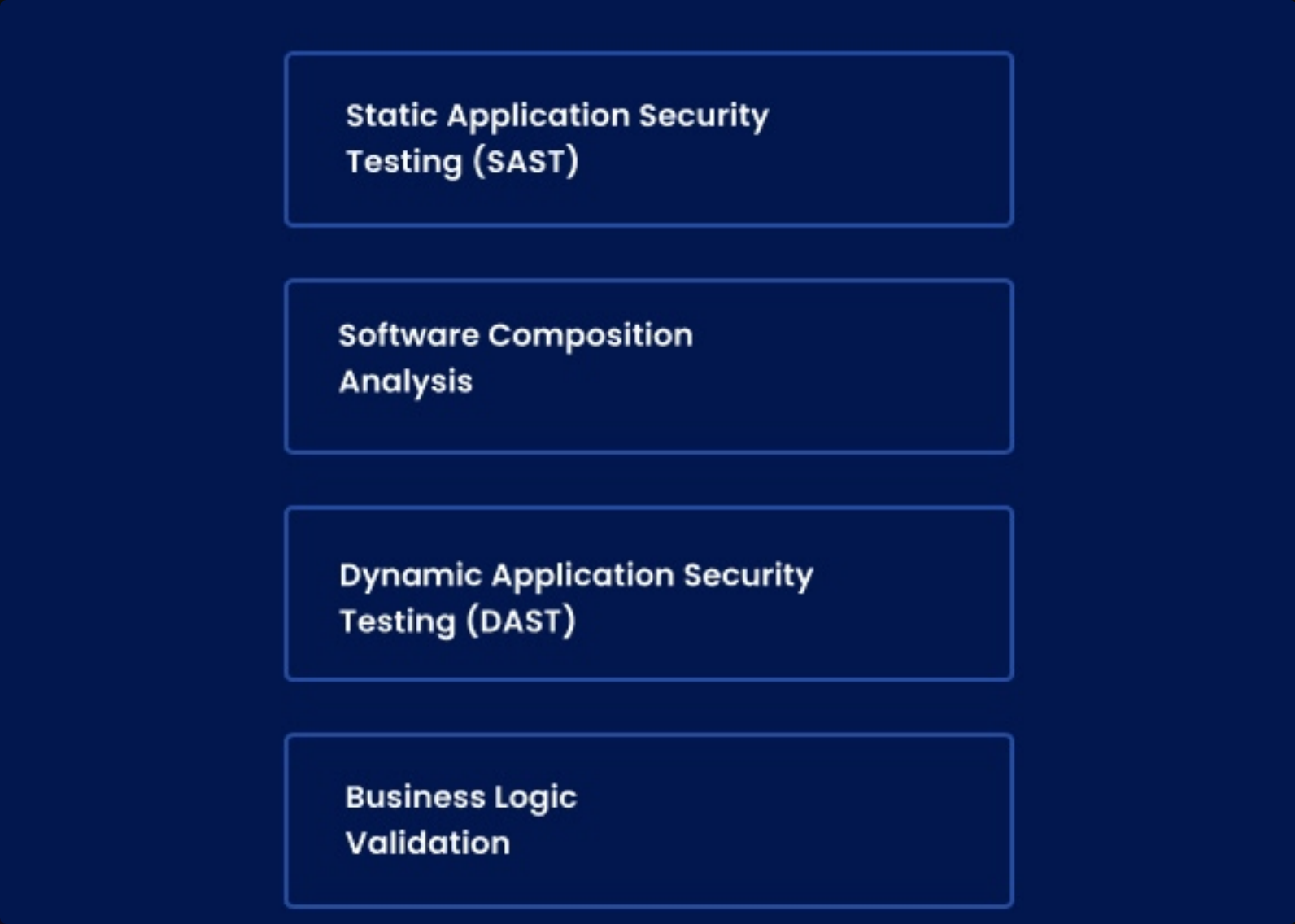
We perform continuous SAST and DAST scans of the product as a part of our DevSecOps practices. Any vulnerabilities found during these scans or other vulnerability discovery activities are patched with the highest priority before the product's final release. In addition, our internal security team performs the manual and automated testing of the application for the business logic flaws before each release.

Production Infrastructure Security
The AWS production environment where SAFE is deployed undergoes continuous security assessment. Some key activities include:
- Configuration assessment of all PaaS services
- Daily Vulnerability Assessment scans
- Continuous logs and alerts monitoring
- Periodic patch management and access review
The production endpoints that are accessible over the internet undergo security assessments as a part of our ‘due diligence’ approach to ensure only essential services are allowed over the internet.
Third-Party Assessment
Third-party Security Assessment is performed using a 4-tier approach defined under Vendor Management Policy and Process. All the third-parties are categorized based on the area of focus and criticality of business. A Questionnaire-based security assessment is performed for each of the third-party, and if the assessment report is found satisfactory, only then is the vendor allowed.
In addition, we perform Third-party Vendor Risk assessment for each third-party using the SAFE. The assessment includes digital attack surface discovery based on their domain name, assessment via 100+ automated Outside-In assessment controls for Email Security, Network Security, DNS security, System Security, Application Security, Malware Servers, Breach Exposure, and more.
Securing Our Employees
-
Security awareness training
Cybersecurity is in our DNA. We have implemented security awareness and secure coding practice training campaigns continuously to ensure that security is 'top of mind' and not 'an afterthought.'
-
Background verification of new recruits
We perform the background verification for all new recruits, according to local laws.
Privacy Policy
We care about the privacy of your personal information.
Reporting Security Issues
Responsible Disclosure Policy
We have implemented an easy process to report any bug or security issue in our system. If you find any security issues, please write to us at [email protected] with all the related information. For more details, please refer to our Responsible Disclosure Policy.
You are prohibited from publicly disclosing the details of the reported vulnerability, until the issue has been fixed and you have received prior written approval from SAFE to do so. In the event you fail to strictly comply with the foregoing confidentiality requirement, we reserve the right to institute appropriate legal proceedings.