Best Third Party Risk Management Solutions

A buyer’s guide for 2026 and 2027 to what modern TPRM platforms really do, and how SAFE Security handles vendor risk from the first intake form to the day you offboard.
Your vendors are part of your attack surface now. When a supplier gets breached, it’s often your customer data in the headlines and your team on the incident bridge at 2 a.m. And a lot of programs still run on a once-a-year questionnaire and a spreadsheet that’s out of date by the time it’s filed.
That gap is the whole problem. A vendor can pass review in January and get hit in March, and most programs won’t find out until the next annual cycle, if they find out at all.
The market has moved past that. The best TPRM platforms today don’t just store questionnaires and put a score on top. They read the evidence a vendor already has, watch what’s happening outside the vendor’s walls, flag what changed, and push issues to closure. This guide walks through what that looks like in practice, how to tell a real platform from a repackaged questionnaire tool, and where SAFE fits in.
What a TPRM platform actually does
Third-party risk management (TPRM) software helps you find, judge, and reduce the risk a vendor brings over the life of the relationship: intake, assessment, monitoring, and offboarding. Good tools take the repetitive work off your analysts, the chasing of questionnaires, the reading of SOC 2 reports, the third follow-up email, and keep one clean record per vendor. They score risk from a mix of the vendor’s security posture, its compliance evidence, and what you can see from the outside.
The line between old and new is simple: point-in-time versus continuous. Legacy vendor management gives you a snapshot. The best TPRM solutions keep watching between reviews and tell you when something has changed, so you’re working from today’s picture.
One more distinction, because buyers mix these up. Procurement and vendor-management tools care about contracts and spend. TPRM software cares about cyber risk, compliance, and what a vendor failure would cost you. A vendor can be a joy to work with operationally and still be your weakest security link. That’s the risk these tools exist to catch.
Why the stakes are higher now
Most enterprises deal with hundreds or thousands of third parties. Every one of them is a door into your environment, and more of your attack surface now sits on infrastructure you don’t control.
Regulators have noticed. In the US, the SEC expects public companies to disclose material cyber incidents, including ones that start at a vendor, on a tight clock. In Europe, DORA puts hard obligations on financial firms for how they manage ICT third-party risk, and NIS2 pulls supply-chain security duties into far more industries. NYDFS and others want documented, ongoing oversight, not a binder you dust off for the audit. Miss that and you’re looking at fines, plus the kind of reputational damage that lingers.
The money side is just as real. When a critical vendor goes down or gets breached, the fallout can stop your operations, push back revenue, and drag your team into expensive emergency work. A mature program gets ahead of that instead of cleaning up after it.
| Business impact | Running on spreadsheets | Running on a modern TPRM platform |
|---|---|---|
| Regulatory risk | Fines, failed audits, missed disclosures | Audit-ready evidence and reporting |
| Operational risk | Outages and supply-chain surprises | Problems caught before they spread |
| Reputational risk | Lost customer and board trust | Governance you can show your work on |
| Financial risk | Unplanned incident and labor costs | Exposure you can size and budget for |
| Analyst time | Weeks of manual review per vendor | Evidence reused; people focus on exceptions |
What to look for in a modern TPRM platform
Every vendor on your shortlist will say they’re AI-powered. That tells you nothing. The useful questions are what the AI actually does, where the evidence comes from, and whether the platform acts on risk or just reports it. A few things separate the top TPRM platforms from the rest.
Scoring that keeps up
The best TPRM tools update a vendor’s risk as new evidence arrives, instead of freezing it between annual reviews. Good scoring also keeps two things apart: inherent risk, meaning how bad it could be given the vendor’s access and the data it touches, and residual risk, meaning what’s left once you account for its controls and yours. That split is what lets you spend your time on the vendors that can actually hurt you.
Evidence first, questionnaires second
Strong platforms lean on what a vendor has already produced. Rather than make a supplier hand-type answers to 300 questions, the top TPRM solutions read its SOC 2 report, ISO certificate, policies, and contracts, pull out the relevant controls and exceptions, and fill in the answers with a citation back to the source. The questionnaire shrinks to the handful of things you still need to ask.
Monitoring that means something
A one-time assessment ages fast. The better platforms watch each vendor’s external posture and pull in breach, vulnerability, and credential-exposure signals, then tell you when a vendor’s risk has genuinely moved. The hard part is cutting the noise, so an alert means “look at this,” not “a number ticked down.”
Closing the loop
Finding a gap is the easy part. The best TPRM platforms turn findings into tracked issues with an owner and a due date, chase the vendor until they’re fixed, and re-check once the evidence changes. Risk that gets found but never fixed isn’t managed risk.
Fitting your stack
The top TPRM tools plug into what you already run: CLM, GRC, procurement, ITSM. They expose APIs so you can automate, and they tier vendors so your critical suppliers get real scrutiny while the low-risk ones move through quickly. Weak integration just rebuilds the silos you bought the tool to get rid of.
How SAFE works across the vendor lifecycle
SAFE treats third-party risk as one continuous job, not a pile of disconnected tasks. Its TPRM AI Co-Worker does the repetitive collection, review, and follow-up across five stages: intake, due diligence, remediation, monitoring, and offboarding. People step in where judgment or sign-off is needed, and the AI holds for human approval at the risk and decision points you define. The aim is automation you can supervise, not a black box.
Put that together with SAFE’s Outside-In external intelligence and its exposure scoring, and you get a program a small team can run at scale. That combination is a big part of why SAFE belongs in any serious look at the best TPRM solutions.
Intake: catching risk before a vendor’s approved
SAFE turns a half-filled business request into a clean, risk-rated vendor profile before it ever hits your inventory. It checks the mandatory fields, domains, and attachments, and flags likely duplicates by matching names and domains against what you already have. Then it fills the gaps with firmographic, industry, geographic, technology, and cyber-risk data drawn from a set of roughly 60 million companies, and it shows you the source and a confidence level so your analyst can sanity-check it before accepting.
At the same point, SAFE calculates an Intake Score, its read on inherent risk, from factors you can configure: how sensitive the data is, how much access the vendor gets, how much you’d depend on it, and which regulations apply. That score decides how deep the assessment goes and whose sign-off you need, so a low-risk SaaS tool and a vendor holding your customer PII don’t get the same treatment.
Due diligence: reading the evidence so your analysts don’t have to
This is where SAFE pulls away from questionnaire-first tools. Its document analysis reads SOC 2 (Type I and II), ISO 27001, HECVAT, NIST CSF, PCI DSS, SIG, and your custom questionnaires. It pulls out controls, exceptions, qualifications, audit periods, subservice organizations, and the observations worth flagging, and it links every one back to the exact document, page, and line it came from.
From there it drafts the questionnaire answers with those citations attached, goes to the vendor directly for whatever’s still missing, and runs an AI review that checks the vendor’s self-reported answers against the audit reports they handed over. It sorts responses into buckets like passed review, needs attention, and not reviewed, and it flags the vague, contradictory, or expired items for a human. Smart scoping means each vendor only gets the questions that fit its risk, data access, and location, and SAFE keeps the reasoning for why a question was in or out. Review that used to eat hours per report, and cycles that used to run weeks, come down to a fraction of that.
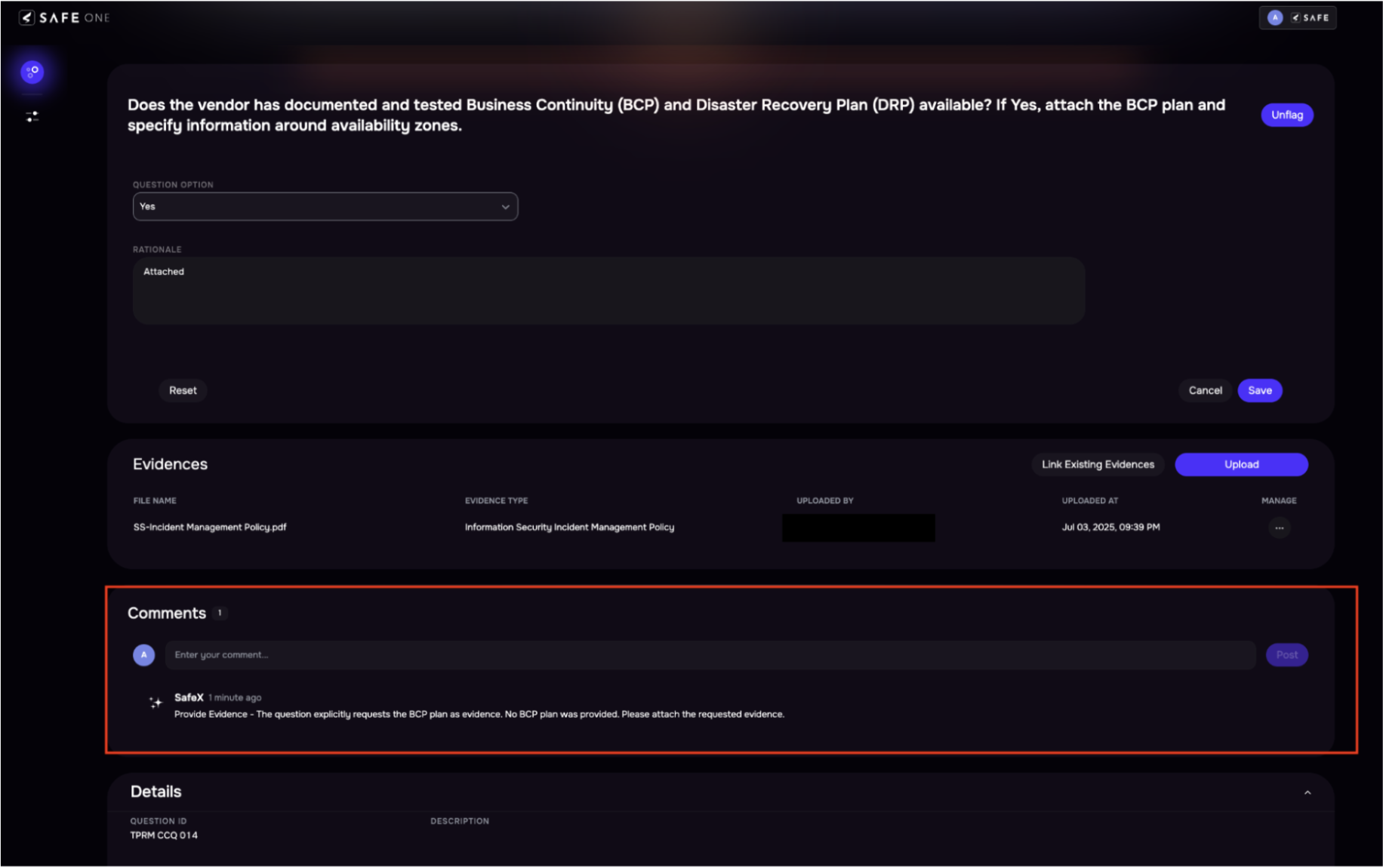
SafeX catches a mismatch: the vendor said “Yes” and attached a file, but it wasn’t the BCP plan the question asked for. The response gets flagged and the vendor is asked for the right evidence.
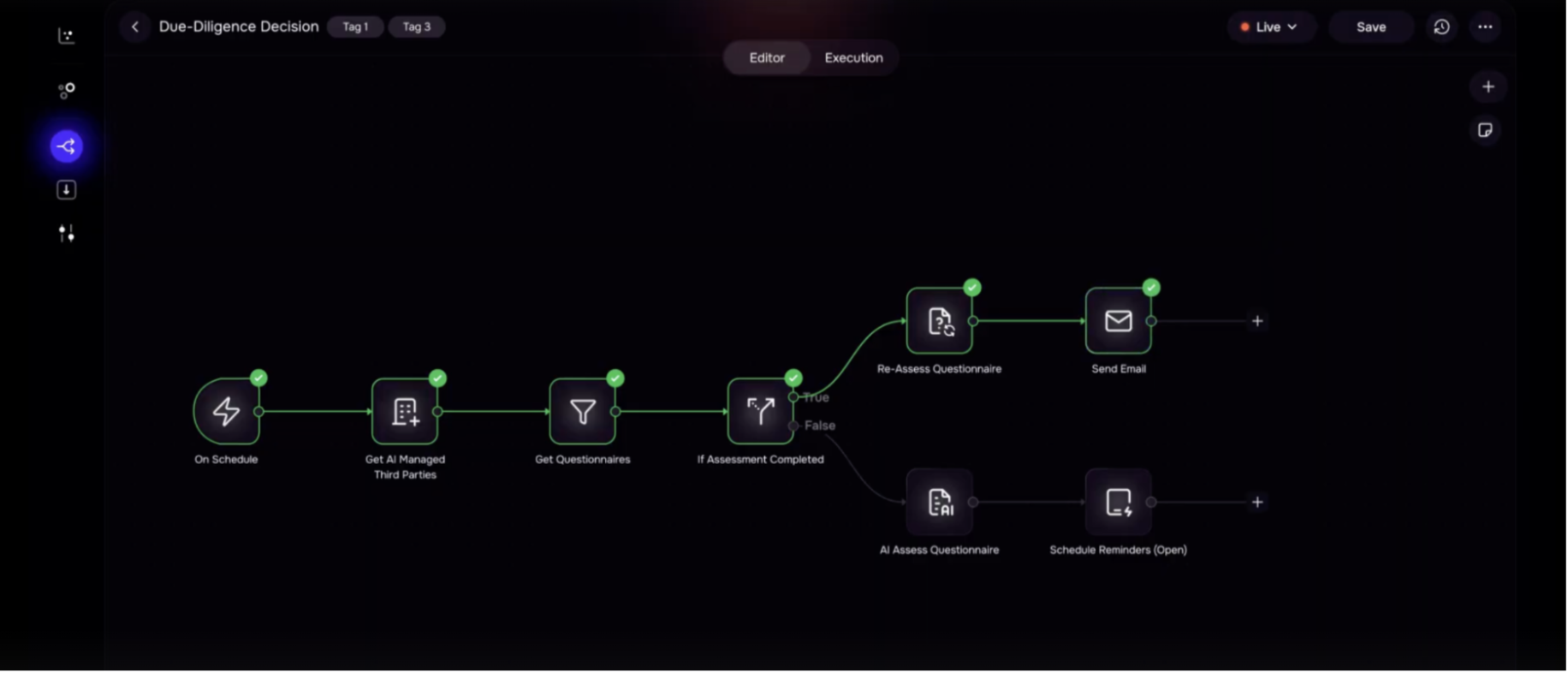
A due-diligence workflow in SAFE: on a schedule, it picks up AI-managed vendors, checks whether each assessment is complete, and either re-assesses and notifies the vendor or runs an AI review and schedules reminders. Every step is visible and editable.
Monitoring from the outside in
SAFE’s Outside-In engine is one of its sharper edges, and it’s a lot more than a security rating. It’s an agentless scanner that maps and watches a vendor’s internet-facing footprint across five areas: email security (SPF, DKIM, DMARC), application security (security headers, TLS, cookies), network and system exposure (open ports and services), breach and credential leaks, and DNS and cyber-reputation hygiene. It also attributes domains, subdomains, and IPs to the right company, so you’re looking at the vendor’s real estate and not someone else’s.
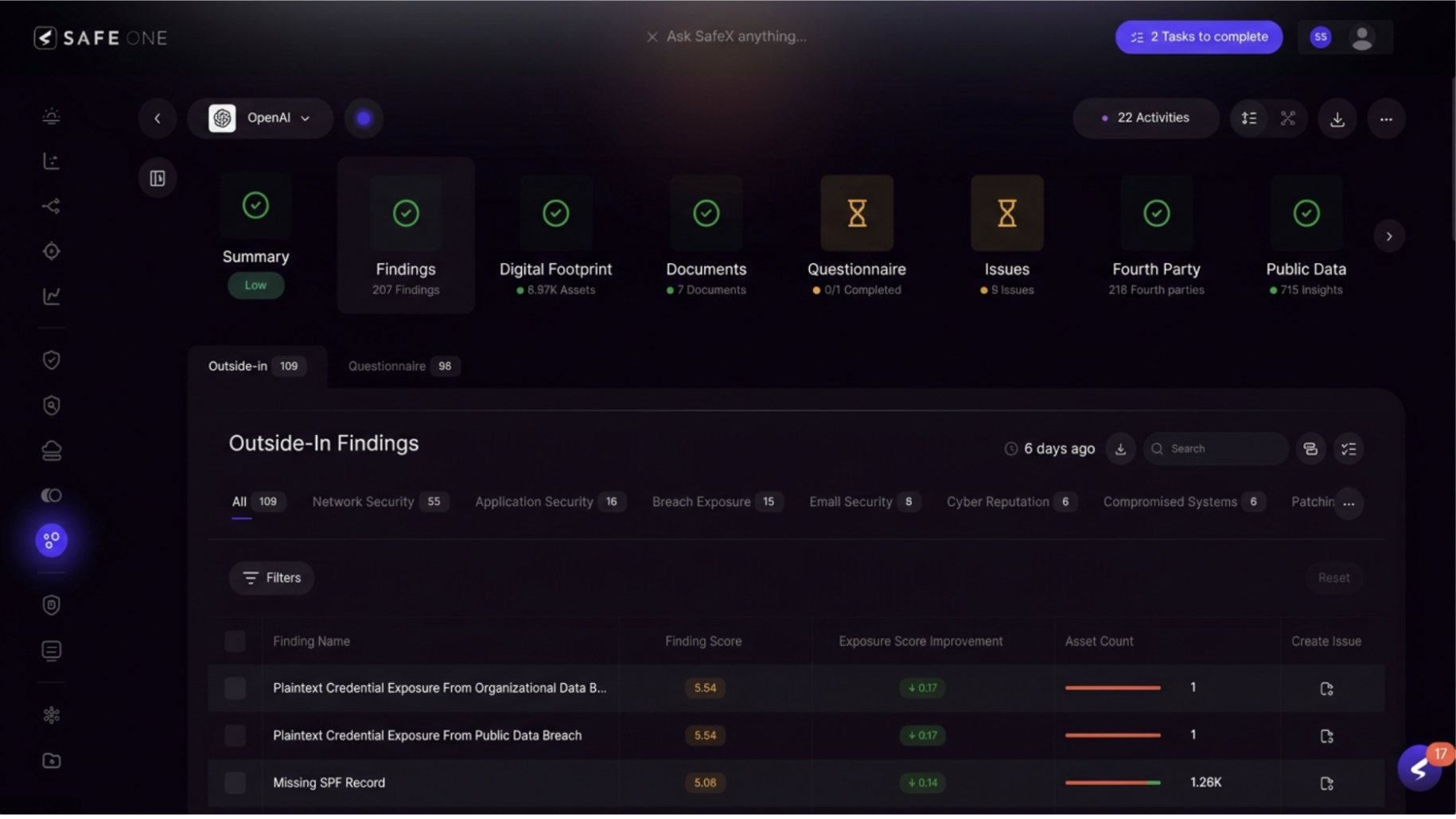
(A vendor’s Outside-In findings in SAFE, grouped by category: network, application and email security, breach exposure, cyber reputation and more.)
Here’s what makes it evidence-based instead of guesswork: SAFE matches known vulnerabilities to the services it actually sees running on the vendor’s infrastructure, and weighs them with CVSS, EPSS, attack vector, and how actively each one is being exploited. Those findings feed FAIR-CAM control maturity, where the automated checks map to 11 core Loss Event Controls, and they roll into a Third-Party Exposure Score. You can set how much the external signal counts versus the questionnaire answers, say 30% outside-in and 70% questionnaire, depending on how much you trust each. Attribution and findings refresh on a set schedule, and you can force a refresh when you need one right away.
Two features keep all this from becoming noise. Breach Intelligence scans public and commercial sources for breaches, ransomware, and data exposure, and uses entity resolution to tell a real event at your vendor apart from a same-named company or unrelated news. It then writes up the incident, the data involved, the attack type, and the timeline in one record that can kick off a reassessment. See What Changed compares the current assessment, documents, findings, and signals against the last set, and tells you what moved, when, and why it affects the vendor’s risk, so your analyst looks at the one thing that changed and skips re-reading everything.
Remediation that chases the outcome
SAFE connects finding a problem to fixing it. Its AI conflict detection compares questionnaire answers, documents, findings, and outside signals and surfaces the contradictions: a control the vendor swears it has that clashes with a SOC exception, a certificate that’s expired, an outside-in finding that says otherwise. It explains each clash with the evidence attached, so your analyst can confirm it without redoing the review.
Confirmed gaps become issues with a mapped control, a severity, a recommended fix, an owner, and a due date. From there, SAFE’s agentic remediation works the issue: it requests evidence, checks the vendor’s replies, sends reminders, escalates when things slip, and updates status, while still stopping for human approval at the thresholds you set. A shared, role-controlled workspace keeps your team and the vendor’s contacts on the same issue without handing the vendor the keys to everything else.
Offboarding without the loose ends
Vendor exits are where risk quietly gets left behind. SAFE runs offboarding through more than 20 ready workflows that reach across business, security, IT, privacy, procurement, and legal. It coordinates pulling access, shutting off integrations, returning or deleting data, recovering assets, and closing the contract. It recalculates residual risk from the exit steps that are done and whatever’s left over, and when an exposure can’t be cleared before the vendor leaves, it makes you document the mitigation, the transfer, or the formal acceptance. Every step lands in one timestamped, exportable record, so an exit holds up in an audit.
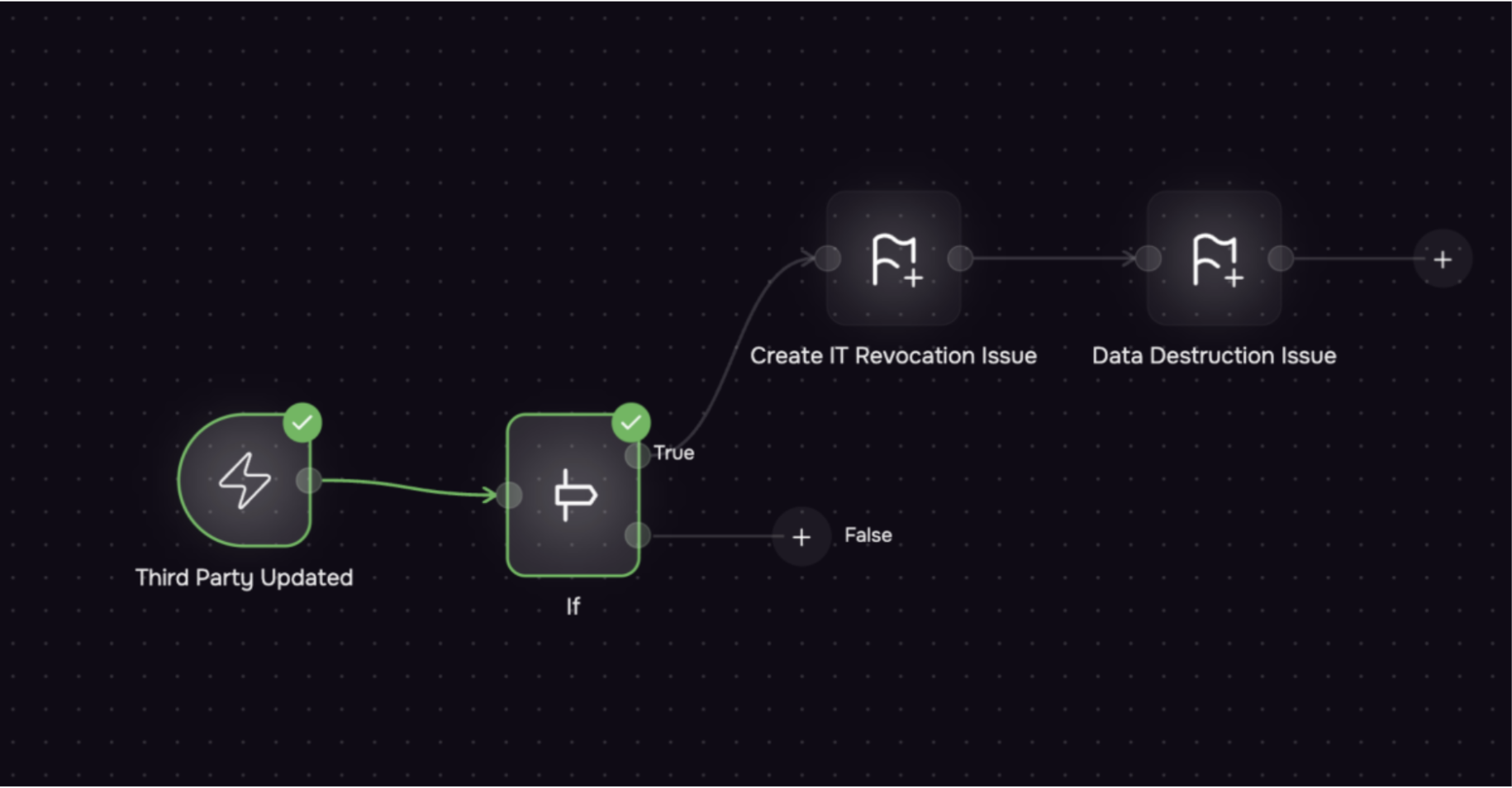
(An offboarding workflow in SAFE: when a vendor’s status changes, it automatically opens issues to revoke IT access and confirm data destruction.)
SafeX: ask your portfolio a question
Tying it together is SafeX, SAFE’s conversational layer. It comes with skills built for the job: an assessment skill that reads the outside-in telemetry and the questionnaire findings and gives you an opinion (accept, remediate, reject, or escalate); an investigation skill that drafts the follow-up questions for a vendor; a remediation skill that ranks the fixes worth doing first; a monitoring skill that triggers a reassessment when something material changes; and a portfolio skill you can just ask, in plain English, things like “which vendors that handle customer data don’t enforce MFA?” You also get the out-of-the-box reports on responses and portfolio views, with SafeX on top for the one-off questions a fixed report never anticipates.
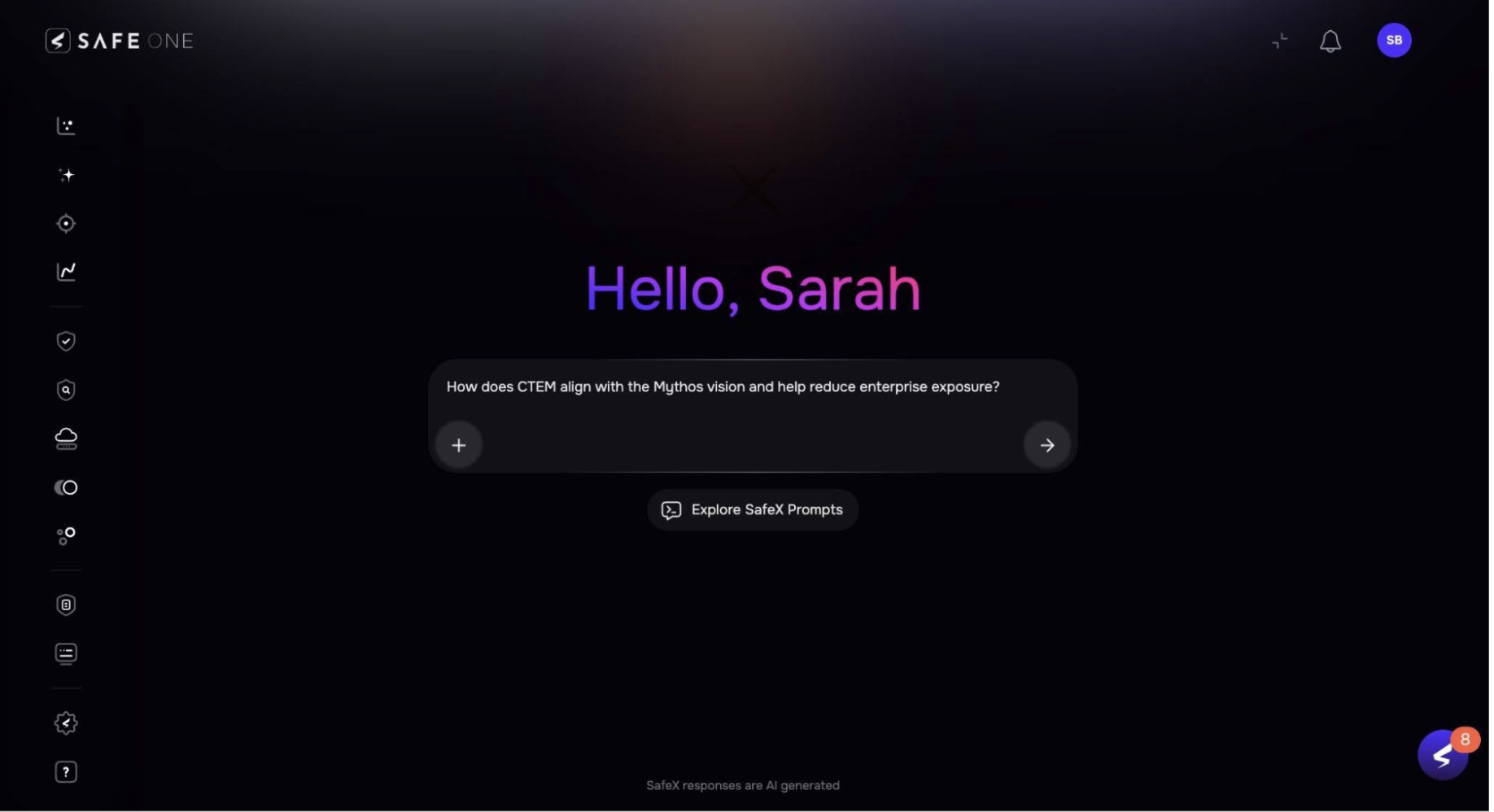
(Ask SafeX about your vendor portfolio in plain English, with no report-building required.)
Risk in dollars, when you need it
Because SAFE sits on a wider cyber-risk quantification platform, it can put a vendor’s exposure in business and financial terms with FAIR-based modeling, not just an abstract score. That’s what a CISO or a board actually wants: which relationships carry the most potential loss, and where a dollar of remediation buys the most risk reduction. It’s a configurable piece rather than something every assessment spits out automatically, and it earns its keep on your critical vendors.
Built to fit what you already run
SAFE connects to the systems that feed and act on vendor risk, including Ironclad CLM, ServiceNow TPRM, and OneTrust intake, and it exposes an API layer so intake can flow in and risk data and events can flow out. The point is to strengthen the program you have, not to become one more island.
How to evaluate top TPRM Platforms
Even among the top TPRM platforms, the right fit depends on your industry, your vendor count, and your stack. Here are a few ways to cut through the pitch and compare the best TPRM tools on substance.
Write down your own requirements first. Your regulations, how many vendors you’ve got and how messy they are, what security and GRC tooling you already run, and how many analysts you can spare. A global bank under DORA weighs these differently than a mid-market manufacturer.
Make the AI prove itself. Don’t accept “AI-powered.” Ask them to pull an answer out of a SOC 2 in front of you. Does it show the citation and a confidence level? Can it catch a questionnaire answer that contradicts the attached evidence? Does the automation follow an issue all the way to closure, or quit at the assessment? The best TPRM solutions let you see the reasoning behind a verdict: the evidence, the source, the confidence. They don’t hand you a number and ask you to trust it.
Push on the monitoring. Are the external findings tied to the vendor’s real infrastructure? Does the breach feed resolve the right company? Can a real change start a reassessment, or does it just send an email?
Check the plumbing and the reports. Confirm it connects to your CLM, GRC, ITSM, and procurement systems, and read a sample report to see whether it talks about risk in terms your executives and auditors understand.
Pressure-test scale and support. Ask about vendor limits, performance when the portfolio is big, and what onboarding help you’ll get. The top TPRM tools pair that scale with real implementation support, so you see value in weeks rather than quarters. Most cloud platforms are running in a few weeks, with full maturity a few months out depending on your vendor count and data quality.
Where this is all heading
SAFE calls its direction TPRM 3.0, and it’s worth being straight about what that means. The goal is a platform that can increasingly handle the routine parts of the process on its own, so your analysts spend their time on the calls that need a person. This is the roadmap and the design intent, not a claim that every step is autonomous today.
The pieces being built toward that: a knowledge graph that ties together everything the platform knows about a vendor; a decision engine that does the risk reasoning in one place and can explain itself; durable agents that can carry out multi-step work; a secure action layer with role controls, approval gates, and a full audit trail; and a portfolio view, Mission Control, that shows you what changed, what needs your call, and what the AI already handled. The through-line is controlled autonomy, with a person in the loop for anything that counts. If you’re buying now, the smart move is to pick a platform whose product today is clearly on that path, with the governance and explainability already built in.
Why SAFE Security belongs on the shortlist
You shouldn’t have to choose between depth and speed. SAFE gives you evidence-first due diligence that spares your analysts the grunt work, outside-in monitoring grounded in a vendor’s real attack surface, remediation and offboarding that reach closure, exposure you can state in dollars, and a conversational layer that lets a lean team run a big portfolio. If you’re weighing the best TPRM platforms against the everyday reality of too many vendors and not enough people, SAFE is a continuous program you can supervise, with evidence and approvals built in, not another questionnaire tool wearing a dashboard.
Common questions
How is a TPRM platform different from a GRC tool?
TPRM software is built for external, vendor, and supply-chain risk, with the intake, assessment, monitoring, and remediation workflows that implies. GRC covers your internal governance, risk, and compliance across the whole company. Plenty of teams run both and feed vendor data from the TPRM side into GRC for the enterprise view.
What puts SAFE among the top TPRM platforms?
An AI Co-Worker that covers the full vendor lifecycle, an Outside-In engine that checks a vendor’s real external footprint across five areas, document analysis with source citations, remediation and offboarding that drive to closure, and FAIR-based exposure in financial terms, all with human approval at the points you set.
Do the best TPRM tools get rid of questionnaires completely?
No, and be wary of anyone who says they do. What they do is shrink the questionnaire by reusing evidence the vendor already has, pre-filling answers with citations, and only asking about what’s left open. The questionnaire becomes a way to close specific gaps, not the whole job.
Why is continuous monitoring better than an annual review?
An annual review is a single snapshot, and a vendor can pass in January and be breached in March. Continuous monitoring watches external posture, breach signals, and credential leaks between reviews, and with features like See What Changed it tells you what moved and can start a reassessment, so you’re acting on current risk.
What kind of return do these platforms pay back?
Mostly through less manual work, since document review and assessment cycles drop from hours and weeks to a fraction of that. You also get fewer repeat questions because evidence gets reused, faster onboarding, and the incidents you avoid by catching risk earlier. And you stay audit-ready, because the documentation is current.
How long does it take to get running?
Most cloud TPRM platforms are doing useful work within a few weeks. Full maturity, migrating your vendors, configuring workflows, and wiring up integrations, usually takes a few months, depending on how many vendors you have and how clean your data is.
How do these platforms handle several compliance frameworks at once?
The top TPRM solutions map a vendor’s controls and evidence to more than one framework at a time, like SOC 2, ISO 27001, NIST CSF, PCI DSS, HECVAT, and SIG, so one assessment can cover several obligations and you can generate framework-specific reports for auditors.
Want to see what this looks like on your own vendors? Book a demo and watch the difference between chasing questionnaires and running a continuous, evidence-driven program with SAFE.
Related Posts
 Cybersecurity
10 Most Common Cybersecurity Blind Spots
Nearly 90% of cyberattacks are caused by human error, so it’s important to understand and address your organization’s cybersecurity weak spots. Many organizations struggle to maintain a clear…
Cybersecurity
10 Most Common Cybersecurity Blind Spots
Nearly 90% of cyberattacks are caused by human error, so it’s important to understand and address your organization’s cybersecurity weak spots. Many organizations struggle to maintain a clear…

 Blog
2025 in Retrospect: SAFE Steers the Industry Towards Autonomous Cyber Risk Management
By: Sweta Bhattacharya 2025 wasn’t just a milestone year for SAFE: it was the year the entire cyber risk management landscape shifted. Every major shift in the SAFEOne…
Blog
2025 in Retrospect: SAFE Steers the Industry Towards Autonomous Cyber Risk Management
By: Sweta Bhattacharya 2025 wasn’t just a milestone year for SAFE: it was the year the entire cyber risk management landscape shifted. Every major shift in the SAFEOne…