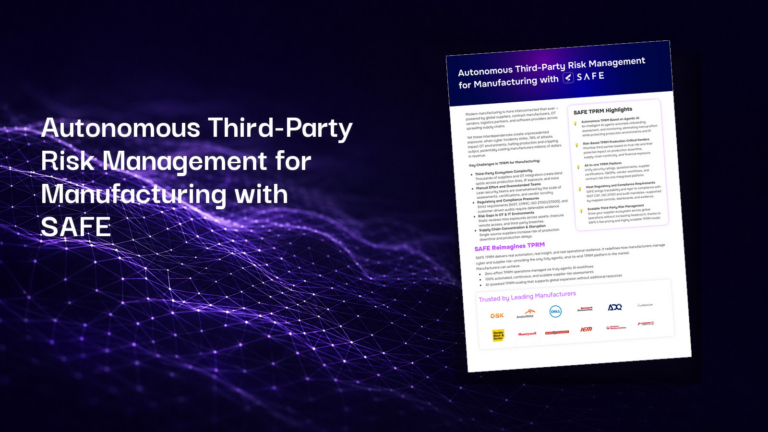
SAFE Security named a Leader in IDC MarketScape for Third Party Risk Management (TPRM) Software

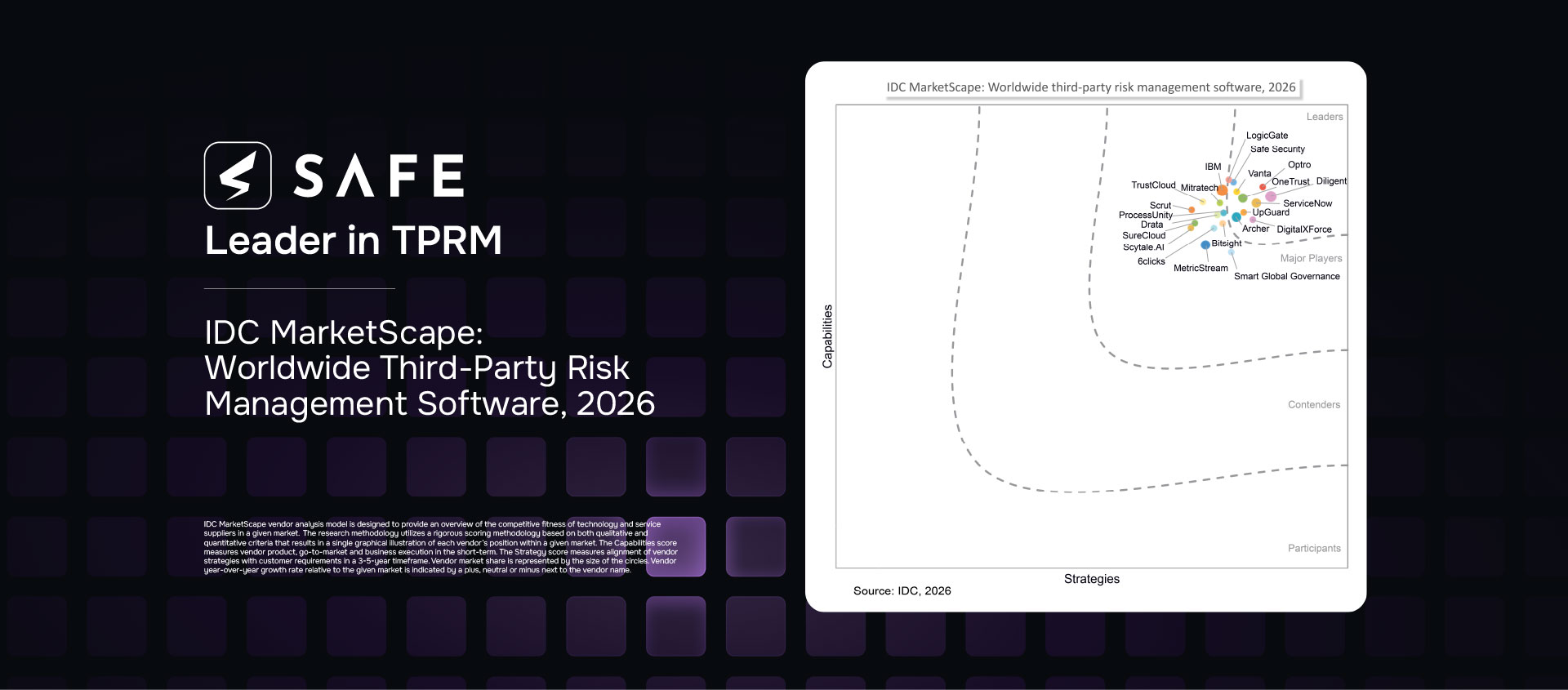
Safe Security has been named a Leader in the IDC MarketScape: Worldwide Third-Party Risk Management Software 2026 Vendor Assessment. The IDC MarketScape Report evaluated vendors across 20 weighted criteria: 10 for Capabilities and 10 for Strategies. The criteria span product functionality, innovation, customer satisfaction, service and support, go-to-market execution, and product roadmaps.
“SAFE entered TPRM 18 months ago with a clear vision: make it autonomous. In our first appearance in this IDC MarketScape, we are a Leader, said Saket Modi, CEO and Co-Founder, SAFE. “SAFE TPRM is growing more than 120% year over year, and we now serve 10% of the Fortune 500. That momentum reflects a need legacy platforms have left unmet: turning risk assessments into action without adding manual work. We built TPRM fundamentally differently, with AI at its foundation: identifying gaps, engaging vendors, and driving resolution. The industry is talking about AI. We’re putting it to work to drive outcomes.”
Recognized for Autonomous TPRM at Scale
According to the report, authored by IDC Research Director Philip D. Harris, CISSP, CCSK, one of SAFE’s key strengths is its ability to deliver autonomous TPRM at scale: “Purpose-built AI agents automate the entire TPRM life cycle, including tiering, questionnaire filing, document analysis, and continuous monitoring, enabling zero-effort, autonomous vendor risk management at scale.”
The report recognized Safe Security for the following strengths:
- Purpose-built AI agents automate the entire TPRM life cycle, including tiering, questionnaire filing, document analysis, and continuous monitoring, enabling zero-effort, autonomous vendor risk management at scale.
- Workflows are powered by a unified intelligence layer spanning third-party risk, enterprise exposure, and cyber-risk quantification.
- FAIR-based financial risk quantification uniquely expresses third-party cyber-risk in monetary terms that resonate with executives and board audiences.
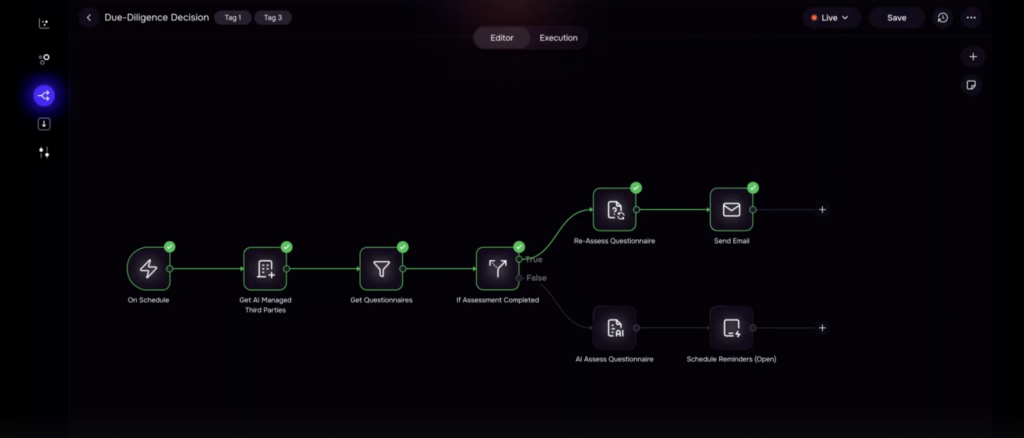
IDC: Consider SAFE When You Want TPRM to Go Beyond Assessments
The IDC MarketScape noted to consider Safe Security when:
- You want to unify Third-party Risk Management, AI Security Posture Management, Enterprise Risk Management, and Continuous Threat Exposure Management into one single platform.
- You want agentic AI to automate the entire TPRM life cycle, from vendor discovery and tiering to SOC 2 analysis and breach notifications, without adding analyst headcount.
- You need to communicate third-party cyber-risk in financial terms to executives, boards, or external regulatory stakeholders.
“We believe this IDC MarketScape recognition validates our focus on a challenge every TPRM analyst and program leader faces: managing a growing third-party ecosystem without scaling manual work,” said Saket Bajoria, Chief Product Officer, SAFE. “AI cannot be a bolt-on. It has to deliver value throughout the TPRM lifecycle, from collecting evidence to identifying gaps and driving resolution with vendors. 100% Autonomous TPRM gives teams the capacity to act as risk emerges and scale their programs without scaling headcount.”
About IDC MarketScape
IDC MarketScape vendor assessment model is designed to provide an overview of the competitive fitness of technology and service suppliers in a given market. The research utilizes a rigorous scoring methodology based on both qualitative and quantitative criteria that results in a single graphical illustration of each supplier’s position within a given market. IDC MarketScape provides a clear framework in which the product and service offerings, capabilities and strategies, and current and future market success factors of technology suppliers can be meaningfully compared. The framework also provides technology buyers with a 360-degree assessment of the strengths and weaknesses of current and prospective suppliers.
Related Posts
 Cybersecurity
10 Most Common Cybersecurity Blind Spots
Nearly 90% of cyberattacks are caused by human error, so it’s important to understand and address your organization’s cybersecurity weak spots. Many organizations struggle to maintain a clear…
Cybersecurity
10 Most Common Cybersecurity Blind Spots
Nearly 90% of cyberattacks are caused by human error, so it’s important to understand and address your organization’s cybersecurity weak spots. Many organizations struggle to maintain a clear…
 Blog
2025 in Retrospect: SAFE Steers the Industry Towards Autonomous Cyber Risk Management
By: Sweta Bhattacharya 2025 wasn’t just a milestone year for SAFE: it was the year the entire cyber risk management landscape shifted. Every major shift in the SAFEOne…
Blog
2025 in Retrospect: SAFE Steers the Industry Towards Autonomous Cyber Risk Management
By: Sweta Bhattacharya 2025 wasn’t just a milestone year for SAFE: it was the year the entire cyber risk management landscape shifted. Every major shift in the SAFEOne…