Large number of vendors and unmonitored access increase the risk of PHI exposure.
02
Manual vendor reviews delay onboarding of essential healthcare vendors.
03
Weak vendor controls expose patient and member data.
04
Scattered vendor evidence complicates HIPAA reviews and audits.
05
Former vendors retain access to sensitive patient information.
How SAFE Helps
Protect patient care across every vendor relationship
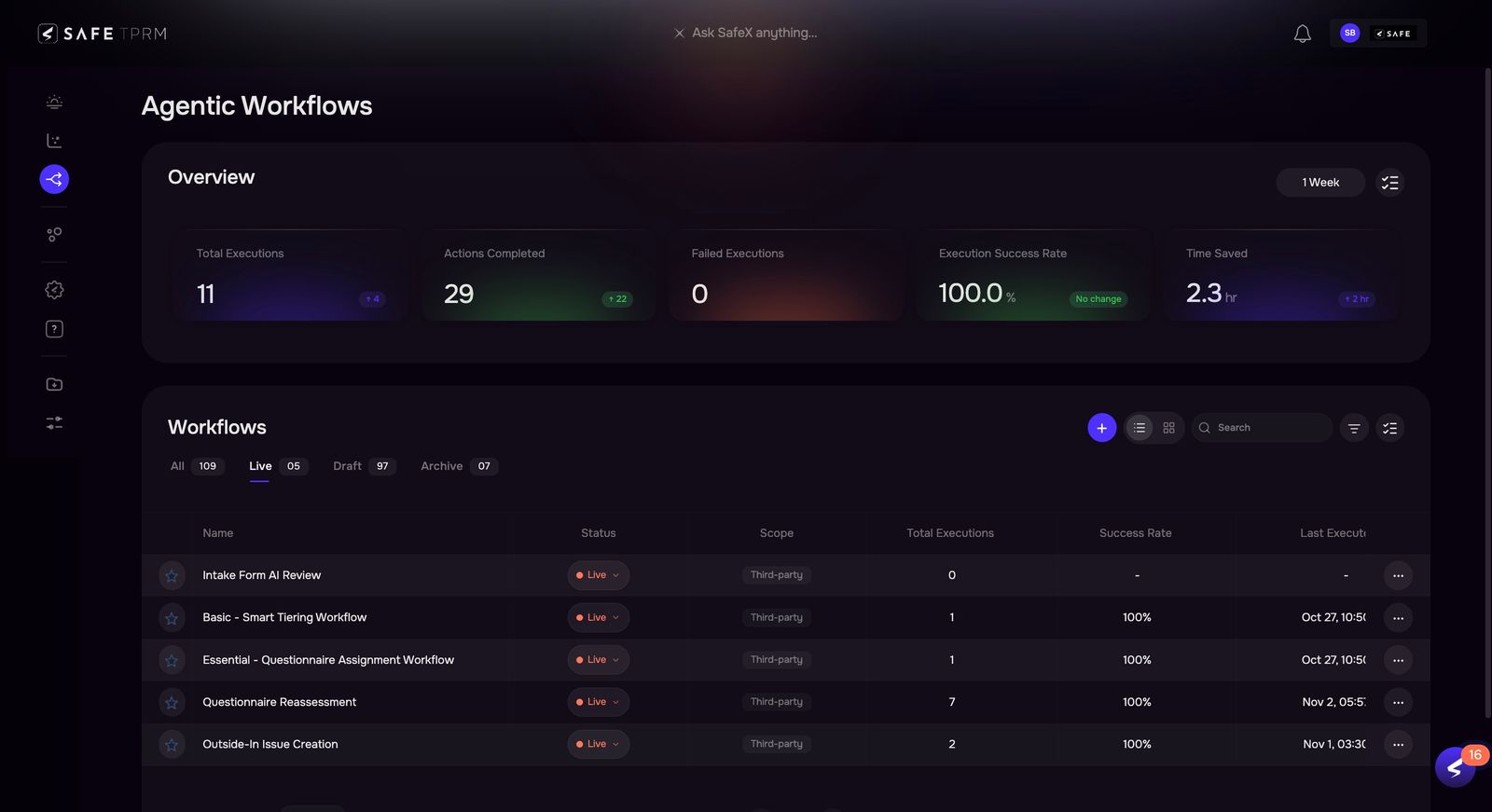
SAFE TPRM AI Co-Worker uses AI-driven workflows across intake, due diligence, remediation, monitoring, and offboarding, helping lean healthcare teams protect patient information and strengthen care continuity while retaining control over critical decisions.
Accelerate onboarding for essential healthcare vendors
Bring clinical technology, telehealth, and revenue cycle partners onboard faster with zero-touch due diligence tailored to their role in care delivery.
Establish PHI exposure upfront:
Assess what patient information vendors handle, which clinical systems they access, and how essential their services are to care.
Match diligence to the clinical relationship:
Tailor assessments for EHR providers, diagnostic laboratories, device suppliers, and billing partners based on their specific access.
Examine service resilience:
Review vendor evidence for backup, recovery, and incident response capabilities against your organization's requirements for critical clinical services.
Accelerate evidence collection:
Use agentic workflows to collect security documentation, request clarifications, and resolve incomplete responses directly with vendors.
Expose dependencies that put care continuity at risk
Identify vendor and downstream exposures that could interrupt access to patient records, diagnostic results, prescriptions, or reimbursements.
Reveal shared points of failure:
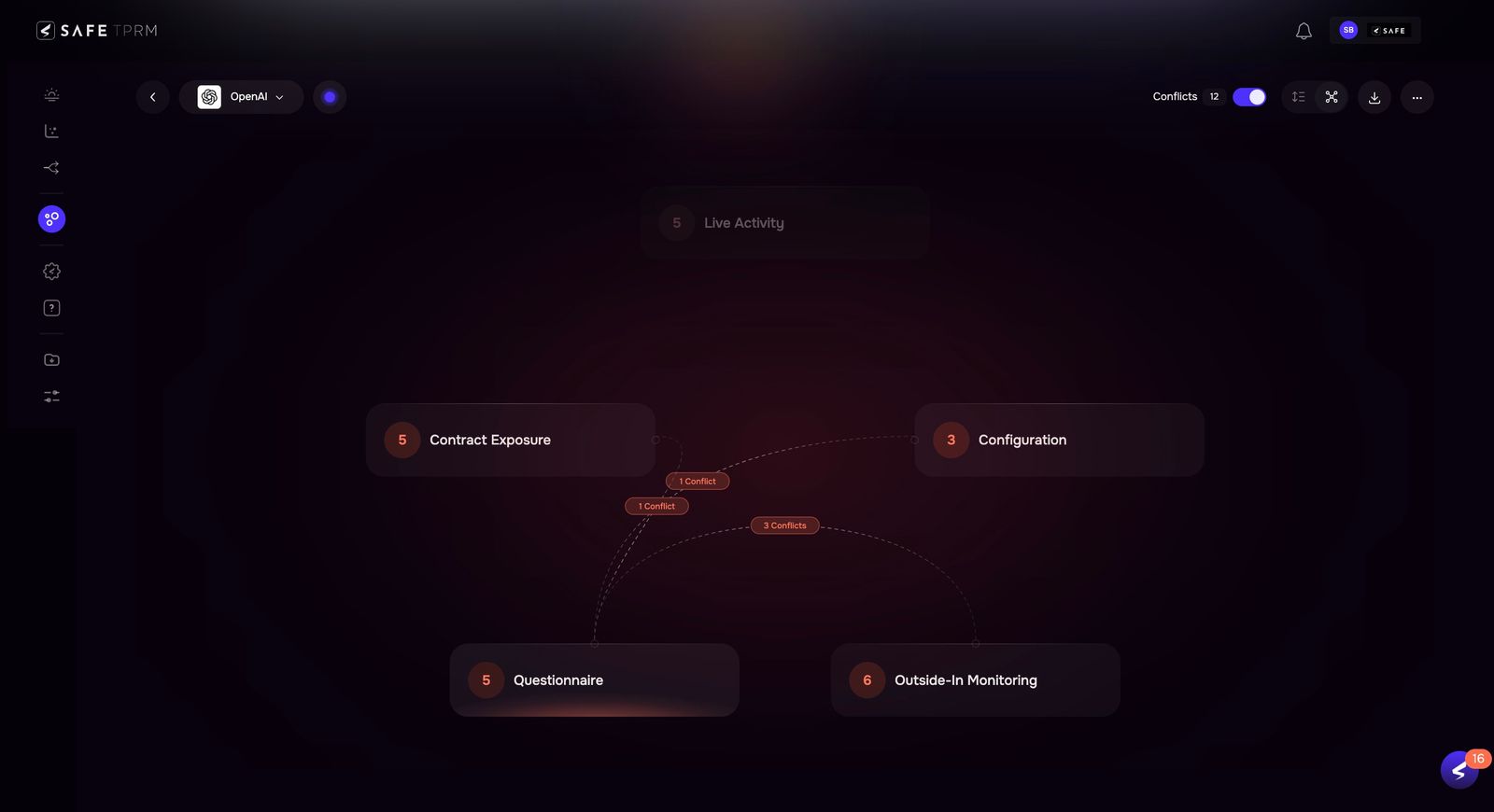
Identify common cloud providers and subcontractors supporting multiple clinical or administrative vendors.
Surface downstream PHI exposure:
Extract subcontractor relationships from vendor documentation and flag gaps in evidence about how patient information is protected.
Detect changes between assessments:
Correlate security signals, questionnaires, documents, contracts, and threat intelligence to identify deteriorating controls or changes in vendor risk.
Mobilize the right healthcare teams:
Trigger reassessment and escalation workflows involving clinical operations, pharmacy, revenue cycle, or privacy teams according to the affected service.
Close vendor gaps that threaten patient privacy and care
Prioritize remediation around sensitive information, clinical access, and the consequences of a service disruption.
Test claims against evidence:
AI flags contradictions in real time between vendor assurances about encryption, access restrictions, or data retention and their contracts.
Prioritize clinical consequences:
Focus remediation on vendors whose gaps could expose patient records, interrupt diagnostics, or compromise essential healthcare services.
Keep remediation moving:
Use agentic workflows to request corrective actions, follow up with vendor owners, and escalate overdue gaps to accountable healthcare stakeholders.
Validate closure with clinical oversight:
Review corrective evidence and route exceptions or changes affecting clinical services to designated security, privacy, and clinical owners.
Make healthcare vendor oversight audit-ready
Give security, privacy, and compliance teams a defensible record of how business associates safeguard patient information.
Review business associate commitments:
Analyze agreements against configured requirements for permitted PHI use, safeguards, incident reporting, and subcontractor obligations.
Connect HIPAA reviews to evidence:
Link findings to relevant requirements and source documentation, helping reviewers verify the basis for each assessment.
Surface gaps in subcontractor assurances:
Flag missing or conflicting documentation about protections expected of downstream parties handling PHI.
Preserve the oversight history:
Consolidate assessments, vendor clarifications, remediation evidence, and risk approvals for privacy investigations, internal audits, and regulatory reviews.
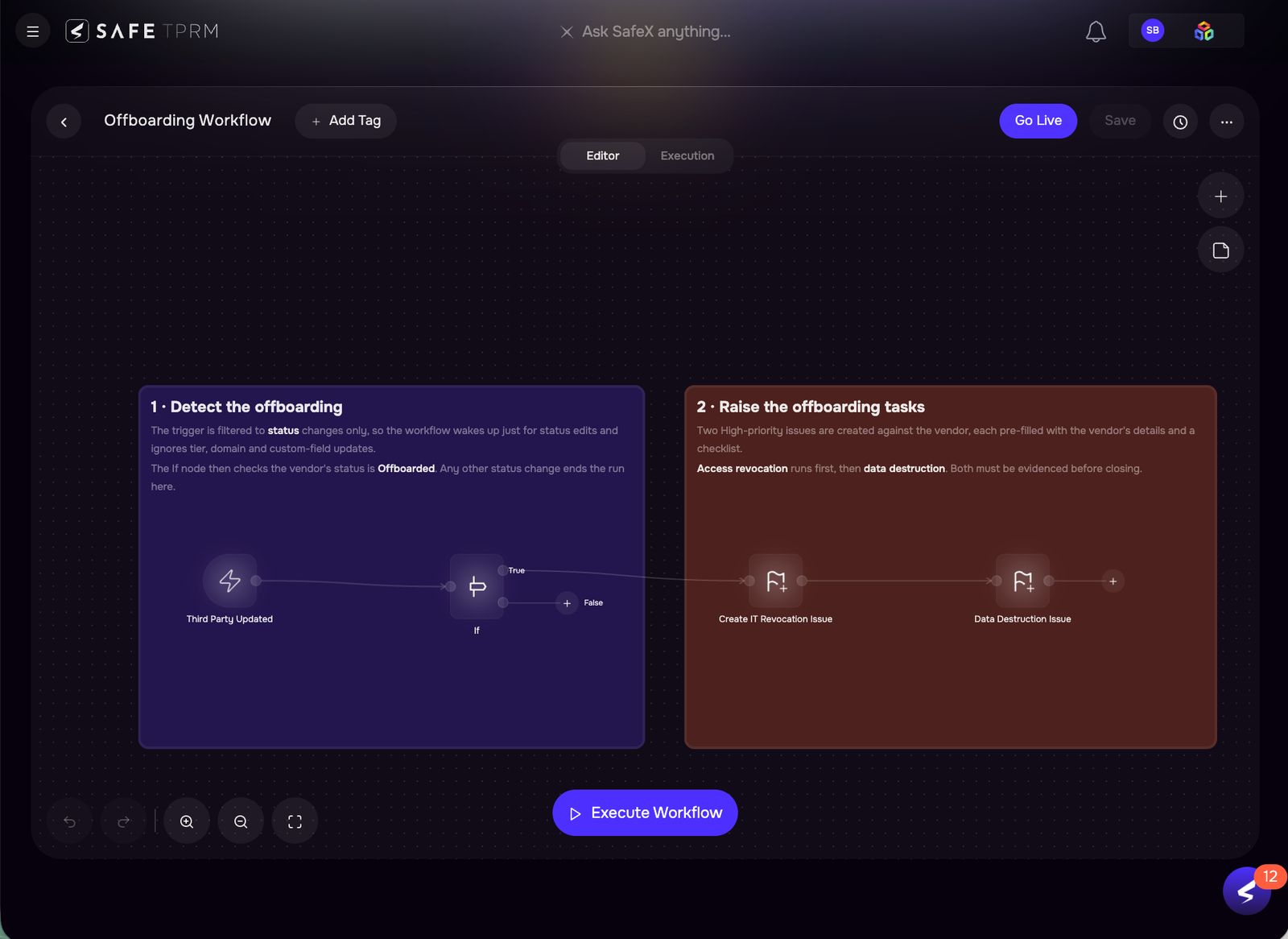
Protect patient information through every vendor exit
Coordinate vendor transitions with clinical stakeholders while maintaining accountability for patient records, system access, and continuing obligations.
Coordinate exits around care dependencies:
Use 20+ automated offboarding workflows to assign transition tasks and stakeholder approvals before closing relationships.
Confirm clinical access removal:
Collect confirmation that vendor accounts, remote support access, and integrations with clinical systems have been revoked or deactivated.
Verify patient data disposition:
Track evidence of record return or destruction, including documented retention exceptions and safeguards for information that must remain.
Keep continuing obligations visible:
Assign owners and follow-up actions for retained PHI, unresolved findings, and contractual responsibilities that survive termination.
Who Wins?
Built for everyone who owns vendor risk
CISO
Protect patient care and trust with continuous visibility into vendor exposures, clinical dependencies, and remediation priorities across the healthcare ecosystem.
Head of TPRM
Scale oversight across business associates, clinical technology vendors, and service providers with consistent risk tiering, autonomous workflows, and defensible evidence.
TPRM Analyst
Spend less time chasing documents and reconciling responses. Investigate evidence-backed gaps, track vendor changes, and focus remediation on risks to patient information and care delivery.
Third Party Risk ManagementTPRM for Financial ServicesWhy Third-Party Risk in Financial Services Is a Different Category of Problem Most industries face vendor risk. Financial services faces vendor risk and three additional layers of pressure…SAFESafe SecurityJun 1, 202618 min read
Third Party Risk ManagementVendor Contract Risk ManagementThe Contract Is a Risk Document. Your Team Is Not Treating It That Way. Somewhere in your contract repository there is a vendor agreement that specifies how long…SAFESafe SecurityMay 29, 202618 min read
TPRMHealthcare Providers Need a New TPRM PlaybookWhy Traditional TPRM Fails Healthcare Providers and What Needs to Change By: Sweta Bhattacharya In healthcare, a vendor breach is a clinical crisis. When a supplier goes dark, the…SAFESafe SecurityMay 12, 20268 min read
DatasheetsEffortlessly Scale TPRM Across Customer TenantsSAFE TPRM is the industry’s first Agentic AI-driven, multi-tenant Third-Party Risk Management platform, purpose-built for MSSPs. Orchestrating 100+ specialized AI Agents, it automates vendor intake, due diligence, remediation,…Aug 6, 20261 min read
Third Party Risk ManagementHow to Get Internal Buy-In for TPRMThe Policy Is Written. Nobody Is Following It. The TPRM policy is documented and approved. The process is posted on the intranet. Business units are still onboarding vendors…SAFESafe SecurityJul 7, 202610 min read
















 Third Party Risk Management
TPRM for Financial Services
Why Third-Party Risk in Financial Services Is a Different Category of Problem Most industries face vendor risk. Financial services faces vendor risk and three additional layers of pressure…

 Third Party Risk Management
Vendor Contract Risk Management
The Contract Is a Risk Document. Your Team Is Not Treating It That Way. Somewhere in your contract repository there is a vendor agreement that specifies how long…
 TPRM
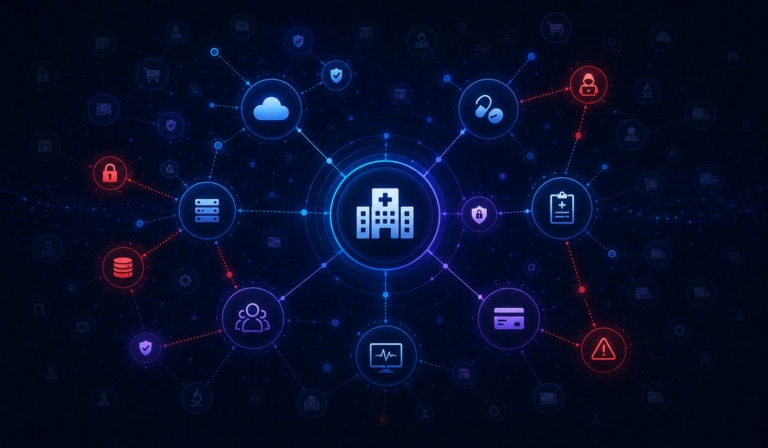
Healthcare Providers Need a New TPRM Playbook
Why Traditional TPRM Fails Healthcare Providers and What Needs to Change By: Sweta Bhattacharya In healthcare, a vendor breach is a clinical crisis. When a supplier goes dark, the…


 Datasheets
Effortlessly Scale TPRM Across Customer Tenants
SAFE TPRM is the industry’s first Agentic AI-driven, multi-tenant Third-Party Risk Management platform, purpose-built for MSSPs. Orchestrating 100+ specialized AI Agents, it automates vendor intake, due diligence, remediation,…
 Third Party Risk Management
How to Get Internal Buy-In for TPRM
The Policy Is Written. Nobody Is Following It. The TPRM policy is documented and approved. The process is posted on the intranet. Business units are still onboarding vendors…