Third-Party Risk Management
for Technology Companies
Reduce breach exposure from cloud, SaaS, and AI providers embedded in your product and operations.

Business challenges
-
Vendor reviews struggle to match product release cycles.
-
Shared cloud dependencies threaten availability across customer environments.
-
Supplier access exposes source code and customer data.
-
Fragmented supplier evidence complicates enterprise customer security reviews.
-
Retired tools leave active integrations and credentials behind.
Protect customer trust across
every technology dependency
SAFE TPRM AI Co-Worker uses AI-driven workflows across intake, due diligence, remediation, monitoring, and offboarding—helping technology companies protect service availability, safeguard customer information, and scale vendor oversight without slowing innovation.
Accelerate vendor onboarding for engineering and product teams
Bring cloud services, development tools, API providers, and AI vendors onboard with due diligence tailored to their role in your technology stack.
Establish technical context upfront: Capture whether vendors access source code, process customer information, support production workloads, or connect to development environments.
Match diligence to the integration: Tailor assessment requirements for infrastructure providers, embedded APIs, outsourced developers, and internal productivity tools.
Examine AI data handling: Review vendor documentation and contractual commitments for prompt retention, model training, sensitive data use, and downstream processing against your requirements.
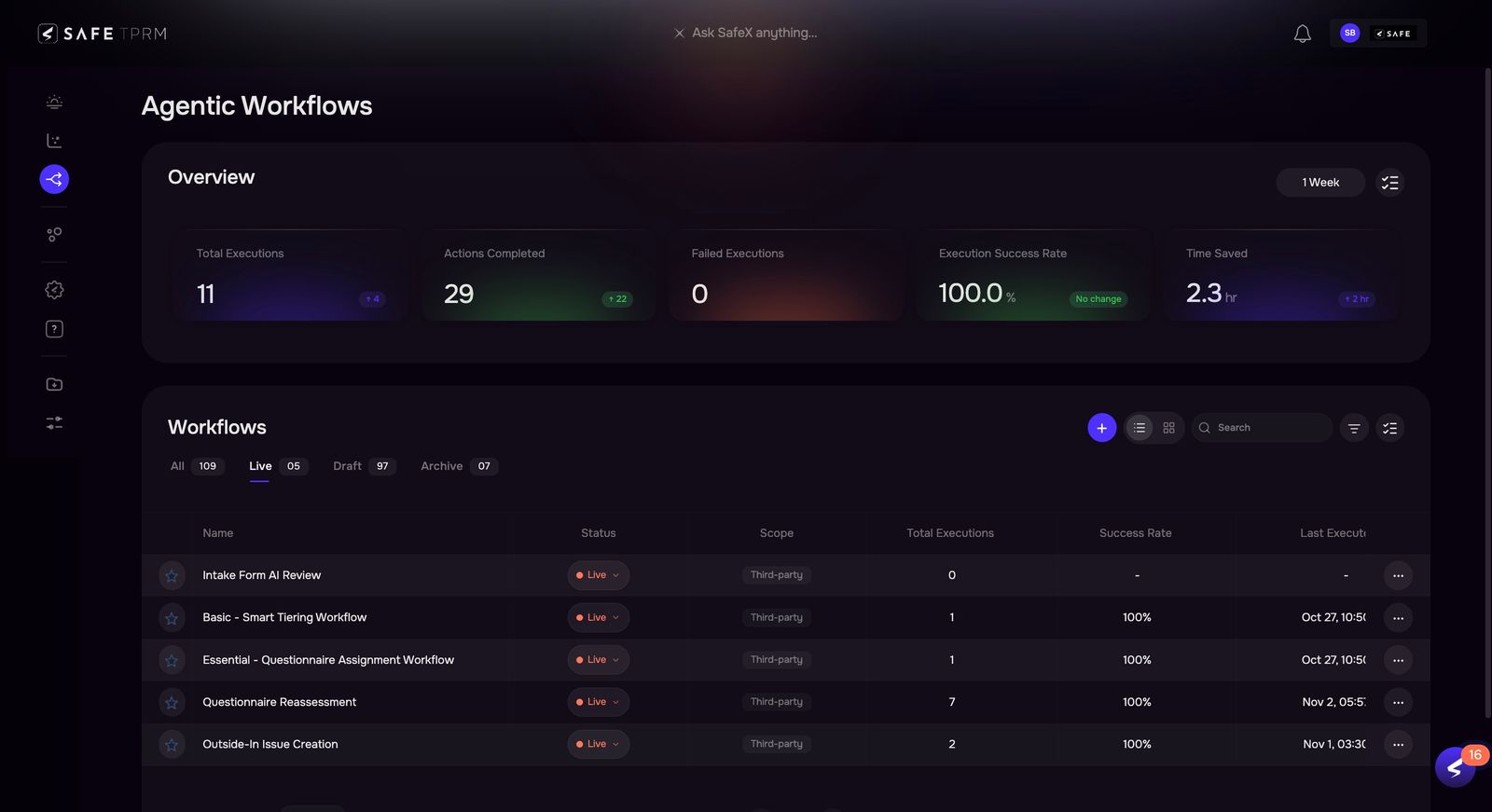
Keep reviews moving: Use agentic workflows to collect evidence, resolve incomplete responses, and route exceptions to security, engineering, privacy, or procurement owners.

Expose dependencies that threaten customer-facing services
Understand how vendor incidents and shared downstream providers could affect product availability, customer access, and service commitments.
Reveal common infrastructure dependencies: Identify shared cloud, identity, and other providers across vendors that support your products and operations.
Connect vendors to service criticality: Assess dependencies using the products, customer environments, and operational processes supported by each relationship.
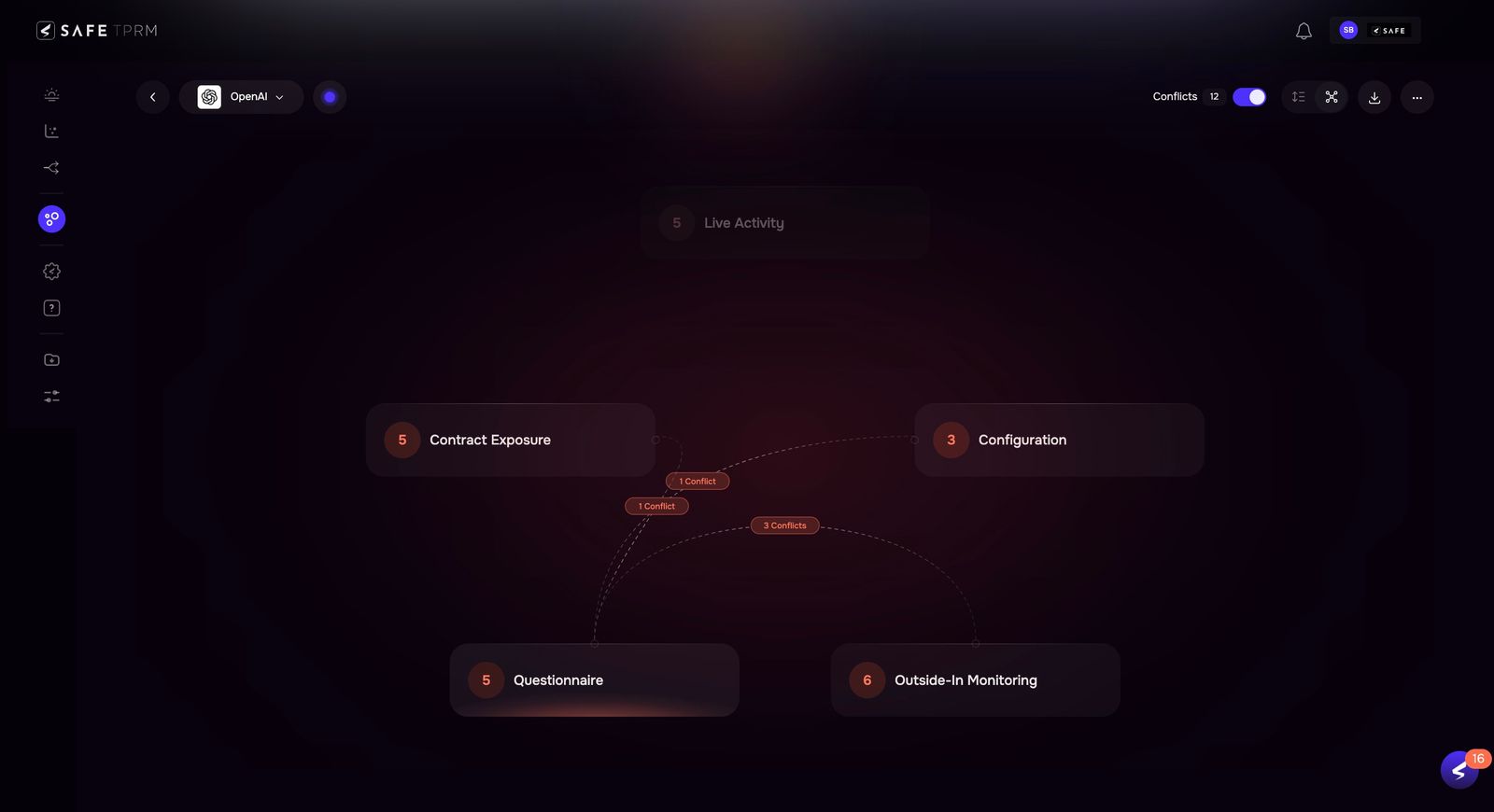
Detect changes between reviews: Correlate external findings, breach intelligence, questionnaires, documents, and contracts to surface changes requiring attention.
Escalate to accountable technical owners: Trigger reassessment and response workflows involving engineering, site reliability, or customer operations according to the affected service.
Close supplier gaps that expose code and customer environments
Drive remediation of weaknesses in vendor access, development practices, and the handling of sensitive technology assets.
Challenge privileged access assurances: Compare supplier claims about authentication, access restrictions, and production support with their supporting security evidence.
Scrutinize software supplier practices: Review documentation covering secure development, vulnerability handling, and incident notification against requirements for software embedded in your products.
Coordinate fixes with engineering: Use agentic workflows to assign corrective actions, pursue vendor responses, and escalate unresolved gaps to the teams managing each integration.
Verify closure before accepting the outcome: Review corrective evidence and route exceptions or changes affecting production services to designated technical and security approvers.

Make supplier oversight defensible to enterprise customers
Give security, privacy, and customer assurance teams traceable evidence of how vendors support your security and contractual commitments.
Check assurance scope: Review vendor SOC reports and ISO certifications for service coverage, reporting periods, and exceptions relevant to your use.
Clarify shared security responsibilities: Examine documentation and contracts for ownership of access controls, incident response, recovery, and other obligations between your company and its providers.
Review subprocessor commitments: Flag gaps in documented data use, processing locations, subcontractor obligations, retention, and breach notification against configured requirements.
Substantiate customer assurances: Preserve cited findings, remediation evidence, exceptions, and approvals to support enterprise security reviews and audits.
Retire vendors without leaving access or data behind
Coordinate service replacements and contractor exits across engineering, IT, security, privacy, and procurement.
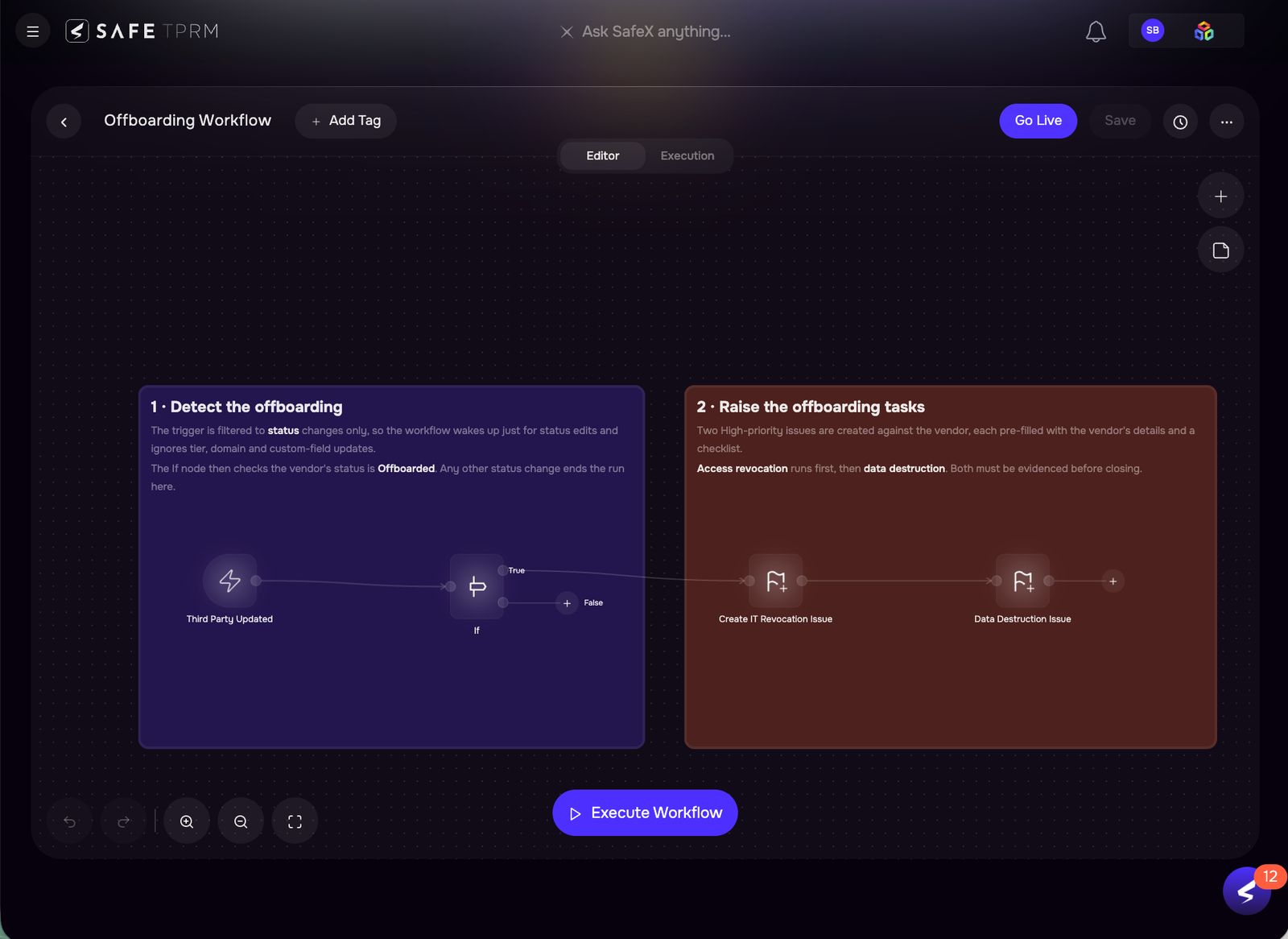
Sequence exits around technical dependencies: Use 20+ automated offboarding workflows to assign migration tasks, transition responsibilities, and stakeholder approvals before relationship closure.
Confirm credentials and integrations are retired: Collect evidence that vendor accounts, API tokens, service credentials, repository permissions, and production connections have been revoked or deactivated.
Account for code and customer information: Track the return or deletion of source code, datasets, support exports, and other shared information, documenting approved retention obligations.
Keep continuing commitments accountable: Assign owners for retained data, unresolved findings, and contractual duties that remain after the vendor relationship ends.
Built for everyone who owns vendor risk
CISO
Protect service availability, intellectual property, and customer trust with continuous visibility into vendor exposures across your technology ecosystem.
Head of TPRM
Scale oversight across cloud, SaaS, software, and AI providers with agentic workflows and consistent governance that keeps pace with product development.
TPRM Analyst
Spend less time chasing reports and clarifications. Investigate evidence-backed gaps, assess changing vendor dependencies, and coordinate remediation with engineering and service owners.
Technology teams running on SAFE

Trusted By 10% of Fortune 500








Related Resources
 Third Party Risk Management
Vendor Contract Risk Management
The Contract Is a Risk Document. Your Team Is Not Treating It That Way. Somewhere in your contract repository there is a vendor agreement that specifies how long…

 Datasheets
Effortlessly Scale TPRM Across Customer Tenants
SAFE TPRM is the industry’s first Agentic AI-driven, multi-tenant Third-Party Risk Management platform, purpose-built for MSSPs. Orchestrating 100+ specialized AI Agents, it automates vendor intake, due diligence, remediation,…
 Third Party Risk Management
How to Get Internal Buy-In for TPRM
The Policy Is Written. Nobody Is Following It. The TPRM policy is documented and approved. The process is posted on the intranet. Business units are still onboarding vendors…
 Third Party Risk Management
TPRM for Financial Services
Why Third-Party Risk in Financial Services Is a Different Category of Problem Most industries face vendor risk. Financial services faces vendor risk and three additional layers of pressure…
 TPRM
Changing the Economics of Third-Party Risk Management
By: Nick Sanna For years, TPRM has operated under a simple assumption: More vendors = more analysts. As organizations expanded their third-party ecosystems, most TPRM programs responded the only…
 TPRM
Healthcare Providers Need a New TPRM Playbook
Why Traditional TPRM Fails Healthcare Providers and What Needs to Change By: Sweta Bhattacharya In healthcare, a vendor breach is a clinical crisis. When a supplier goes dark, the…