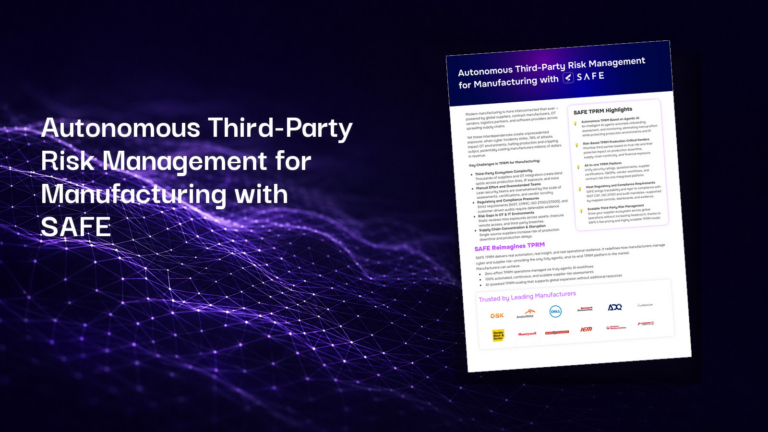
Third Party Risk Management Graduates with Honors: Your Framework for TPRM in Higher Education


Meghan Maneval, Director of Community and Education
At their core, higher education institutions thrive on the open exchange of ideas, decentralized collaboration, and a continuous influx of new technology. Whether it is a professor onboarding a niche software solution for a classroom, a research lab standing up a novel AI model, or an administrative department implementing a new student service, academic environments are designed to be open and accessible.
However, this inherent openness creates a sprawling digital footprint that frequently clashes with rigid corporate security perimeters. Centralized Information Technology and cybersecurity teams are tasked with securing tens of thousands of endpoints and managing hundreds of active third-party vendors. When strict budget crunches demand doing more with less, traditional Third-Party Risk Management (TPRM) quickly becomes an unsustainable bottleneck.
It’s time for a paradigm shift!
Let’s see how one US-based public research institution revolutionized its third-party risk management operating model and how you can too!
Metadata
- Industry: Education
- Geography: Americas
- Product: CRQ and TPRM
Metrics
- 85% Faster Vendor Assessments
- 300+ Vendor Backlog Eliminated
- 80% of Reviews Done in Less than 2 Days
The Challenge: Resource and Velocity Constraints
For years, the University relied on fragmented, highly manual TPRM processes. Assessing a single vendor required manual documentation reviews, completing lengthy questionnaires, and weeks of back-and-forth communication with the vendor. Already using SAFE One for Cyber Risk Quantification, they looked to SAFE’s TPRM capabilities to address several pain points across the institution:
- Severe Resource Constraints: The team was tasked with managing a high volume of new vendors daily, while operating with a reduced headcount.
- Lengthy Assessment Cycles: Legacy processes often took weeks to provide due diligence conclusions.
- Fragmented Reporting: Leadership lacked a unified view of risk across the university’s federated college structure, relying on inconsistent, manual data pulls.
- Low Score Defensibility: Previous qualitative methods were viewed as subjective, making it difficult to justify strategic investments to university executives.
“Our biggest challenge was the sheer volume of vendor reviews hitting a team that had recently shrunk by two people. In our old system, it took us up to three weeks to complete a single assessment. Now, we’re finishing 80% of those same reviews in just two or three days. It has completely removed the manual digging from our workflow, allowing us to deliver actionable risk data to our CISO and CIO without the typical administrative burden.”
— Cyber Security Director
Why SAFE?: A Rosetta Stone for Risk
SAFE stood out by providing a comprehensive exposure score that combines outside-in telemetry with internal attestations and HECVAT, a high-priority regulation for higher education. The University chose SAFE for its FAIR-based quantification, which acts as a Rosetta Stone linking common security frameworks like NIST 800-53 directly to financial loss magnitude across first- and third-party risk. This scientific foundation allowed the team to present board-ready metrics that proved the ROI of security initiatives and third-party investments, like their campus-wide EDR rollout.
The SAFE Solution: Your 3-Step Action Plan
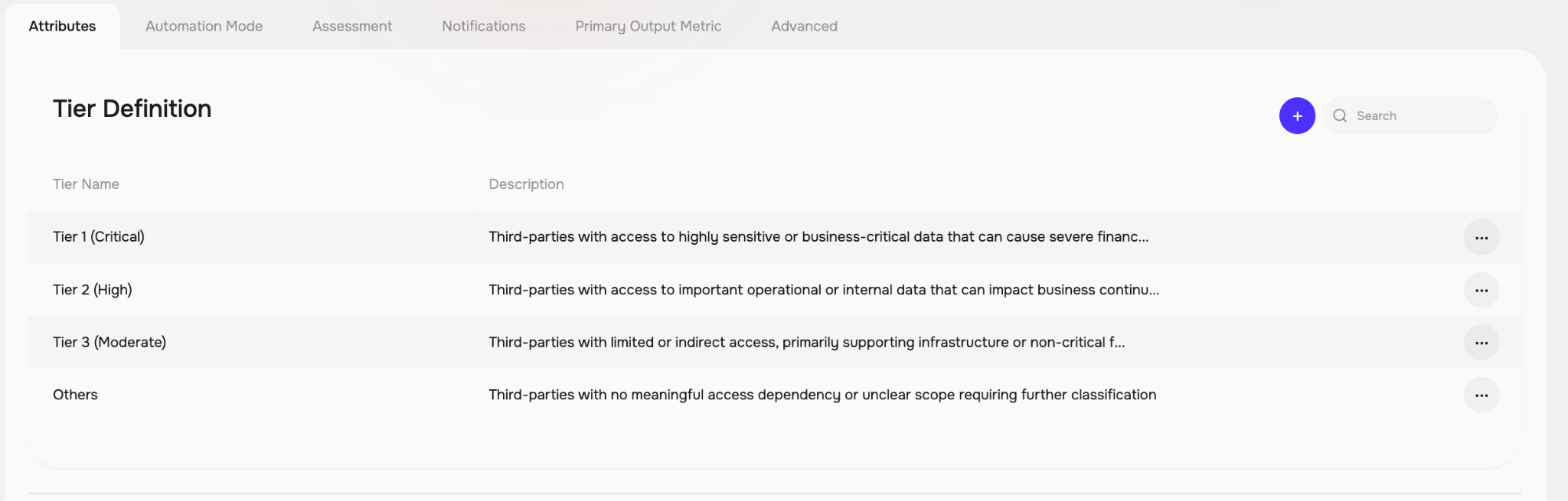
Step 1: Implement an Automated, Tiered Governance Model: Deploy a standardized classification system with tiers based on factors important to your institution. By automating this tiering logic based on data type (PCI, HIPAA, student records) and scope, for example, your platform can automatically trigger the appropriate level of due diligence. Low- and medium-risk vendors can be cleared in hours using public outside-in telemetry and automated data, removing them entirely from your team’s manual review backlog.
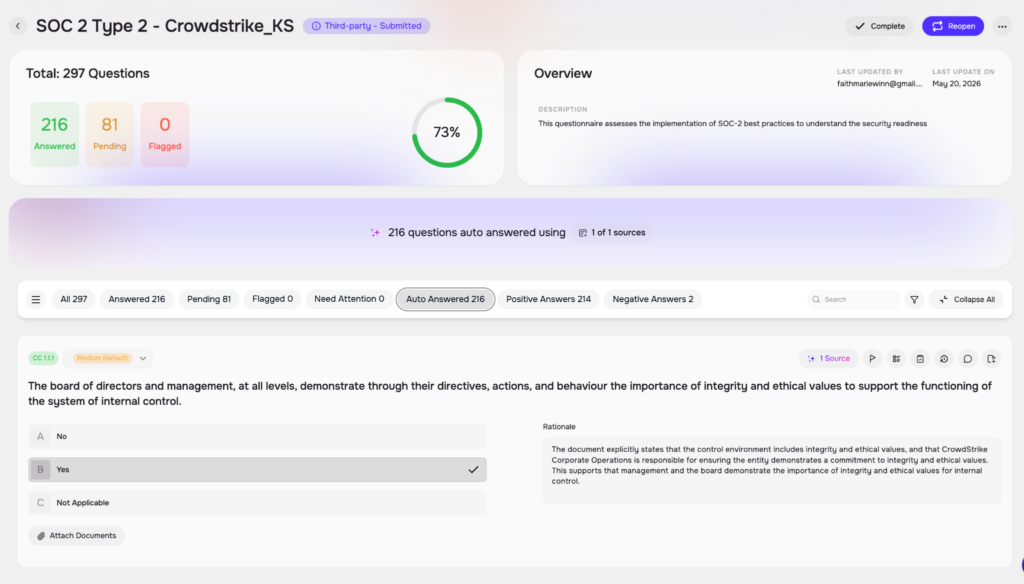
Step 2: Replace Manual Digging with Automated Parsing: Leverage automated analysis of security reports and pre-fill questionnaires to identify control deficiencies without manual digging. Removing this administrative burden allows your analysts to focus on higher-value internal assessments, privacy initiatives, and specialized research security.
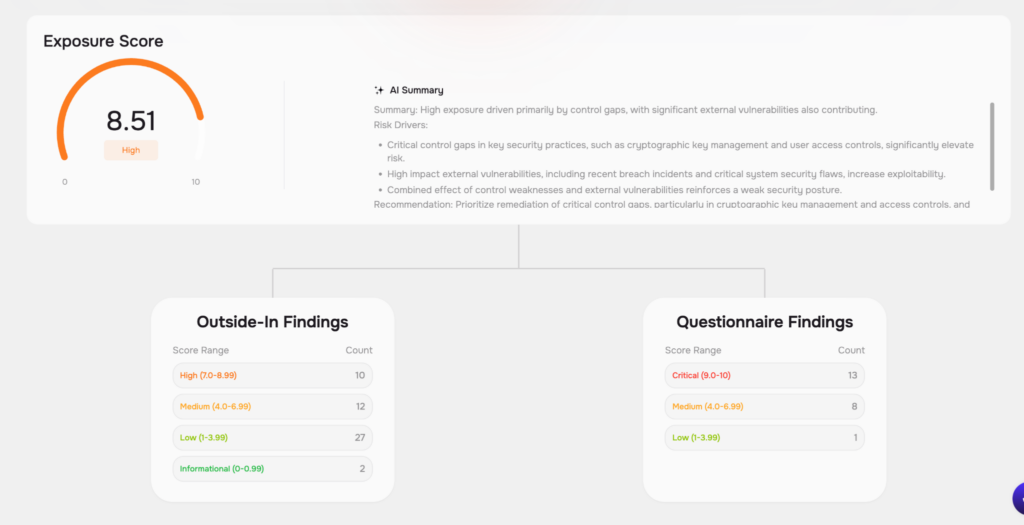
Step 3: Use Storytelling to Communicate Impact: When communicating with your CIO, CISO, and university leadership, qualitative risk scores often feel subjective. To build deep institutional trust, you must implement a defensible risk storytelling framework. Expand FAIR-based quantification to third parties, translating abstract technical vulnerabilities into clear loss magnitude and breach likelihood metrics.
The Future of TPRM in Education
Higher education will always balance the need for open collaboration with the necessity of data protection. However, resource scarcity shouldn’t mean sacrificing compliance or security. By embracing automated parsing, smart vendor tiering, and financial risk quantification, your cybersecurity team can secure its perimeter at scale, proving that you can do significantly more, even with far less.
Related Posts
 Cybersecurity
10 Most Common Cybersecurity Blind Spots
Nearly 90% of cyberattacks are caused by human error, so it’s important to understand and address your organization’s cybersecurity weak spots. Many organizations struggle to maintain a clear…
Cybersecurity
10 Most Common Cybersecurity Blind Spots
Nearly 90% of cyberattacks are caused by human error, so it’s important to understand and address your organization’s cybersecurity weak spots. Many organizations struggle to maintain a clear…
 Blog
2025 in Retrospect: SAFE Steers the Industry Towards Autonomous Cyber Risk Management
By: Sweta Bhattacharya 2025 wasn’t just a milestone year for SAFE: it was the year the entire cyber risk management landscape shifted. Every major shift in the SAFEOne…
Blog
2025 in Retrospect: SAFE Steers the Industry Towards Autonomous Cyber Risk Management
By: Sweta Bhattacharya 2025 wasn’t just a milestone year for SAFE: it was the year the entire cyber risk management landscape shifted. Every major shift in the SAFEOne…