
Vendor External Exposure Monitoring | SAFE
Continuous Monitoring

External Exposure
Monitoring for Every Vendor

Continuously monitor each third party's external attack surface for security exposures, vulnerabilities and material changes in risk, without waiting for the vendor to self-report.

The Problem

Vendor exposure changes between reviews. Most programs cannot see it.

  1. Exposure moves faster than the review cycle

    A vendor's internet-facing assets, services and vulnerabilities change constantly. An annual questionnaire captures none of that change.

  2. A single rating hides the evidence

    A score from one provider rarely shows which asset, finding or observation produced it, so analysts cannot verify it or challenge it.

  3. Attribution is guesswork

    Stale domains and unrelated IPs inflate findings and send analysts chasing assets the vendor does not own.

  4. Findings never become fixes

    External findings that are not tied to an owner and an issue sit in a report until the next review.

How It Works

From attack surface to remediation

SAFE operates its own outside-in assessment engine. Starting from a vendor's domain, it discovers and attributes the vendor's internet-facing footprint, assesses it on a regular cycle, and turns material findings into issues your team can track to closure.

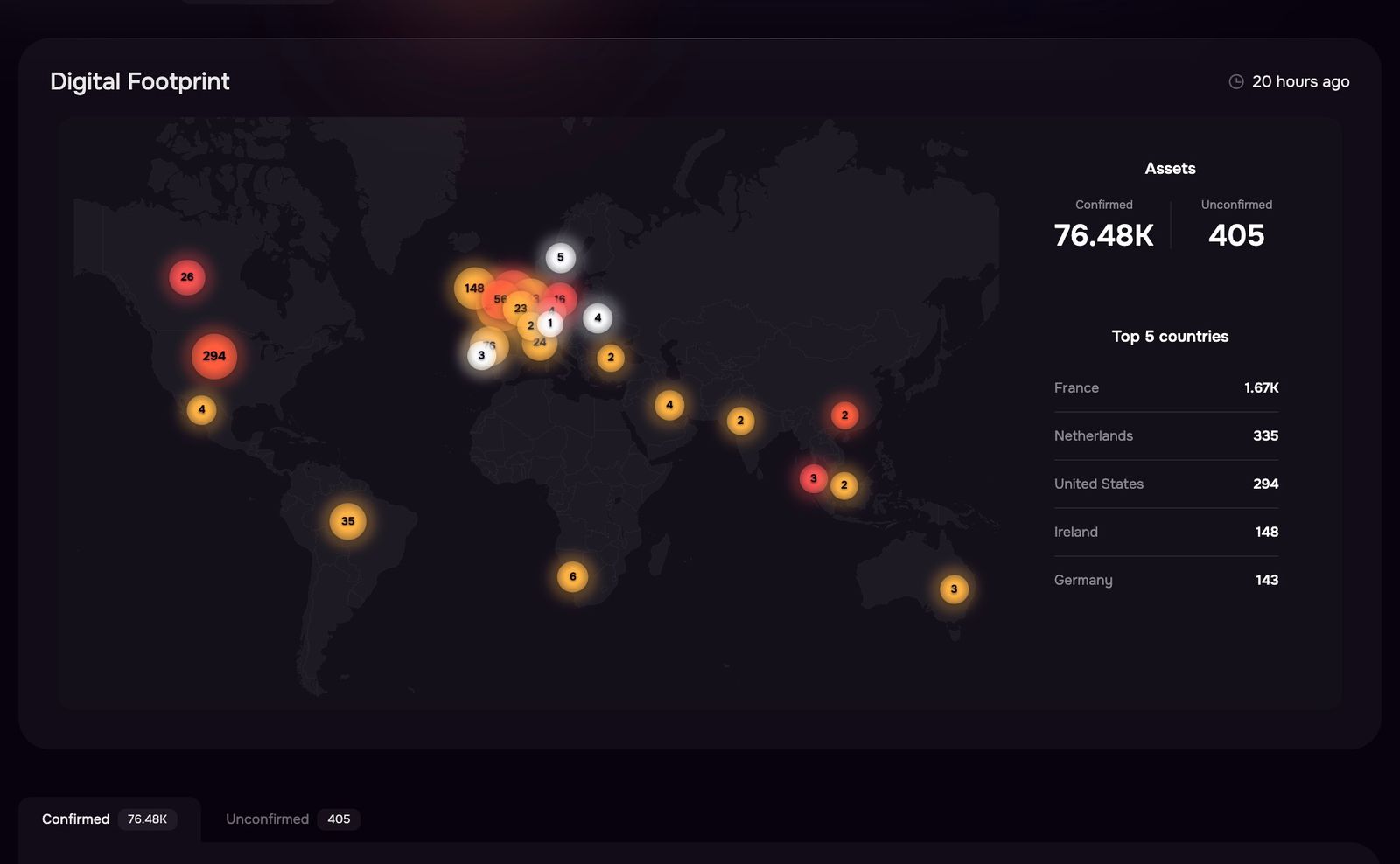
Interactive digital footprint map with attributed domains, subdomains and IPs

Discover the complete digital footprint

Starting from a third party's domain, SAFE discovers its internet-facing domains, subdomains, IPs and other digital assets.

  • Assessment needs no vendor involvement, agents or credentials.
  • Explainable attribution shows why each asset is associated with the vendor.
  • Outdated assets and findings are cleaned up automatically, so the footprint stays current.
  • An interactive footprint map and asset table let analysts explore and export what was found.
Outside-in findings for a vendor grouped by category

Assess external exposure every 15 days

Attributed assets are assessed across seven categories, including email security, application security, network exposure and breach and credential exposure.

  • Outside-in assessments refresh every 15 days, with on-demand refresh for priority investigations.
  • SAFE draws on specialized threat, exposure and security-data sources instead of a single signal provider.
  • Unassessed controls are marked as such, so they are never mistaken for passed ones.
  • Leaked credentials and exposed services are part of the same view.
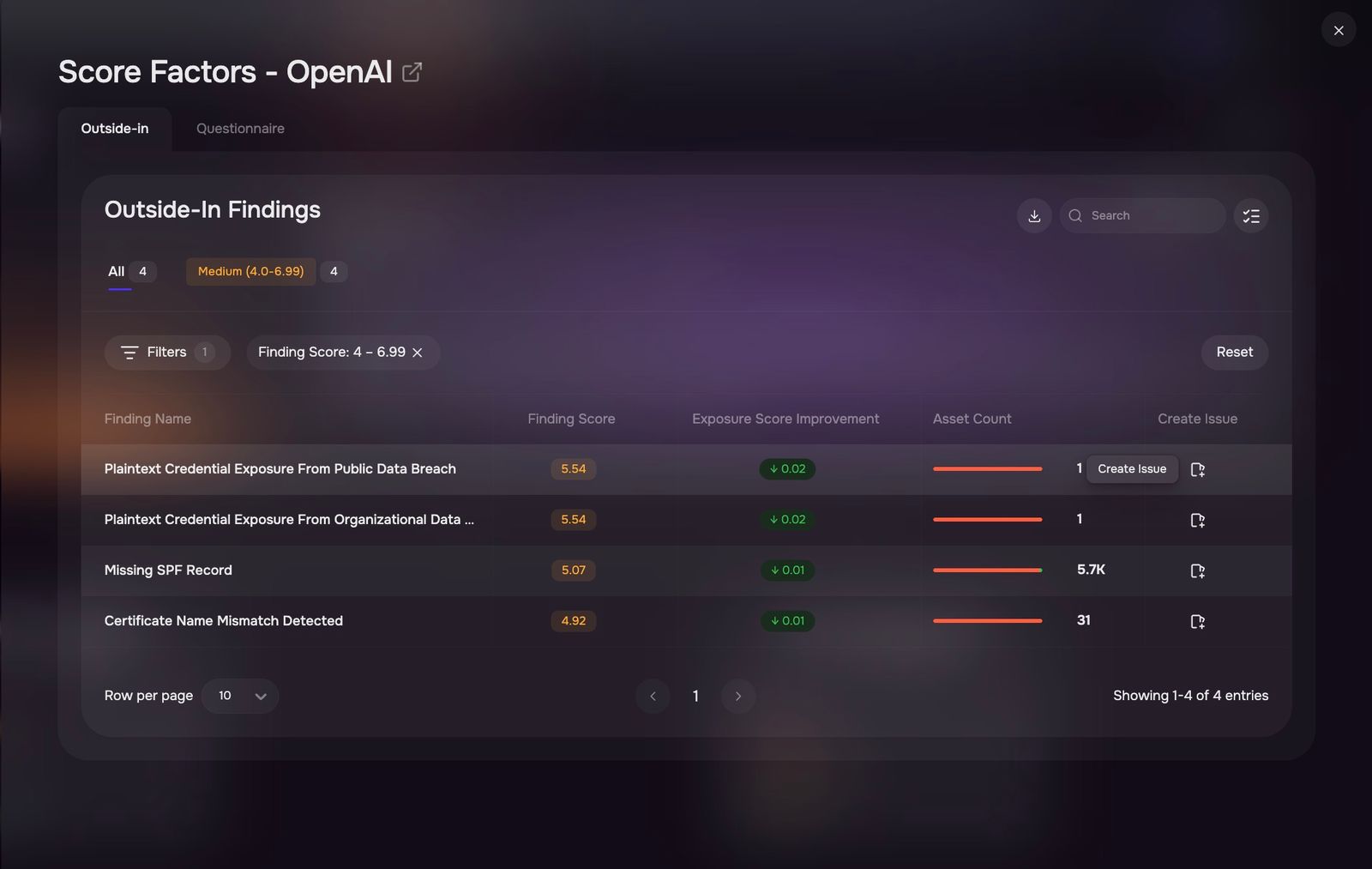
Exposure Score drill-down to asset, finding and raw observation

Trace every score back to evidence

Findings roll up into a continuously refreshed Exposure Score that highlights material changes in each vendor's risk.

  • From any score, analysts can drill into the affected asset, the finding, the raw observation and the attribution.
  • Source references and confidence indicators let analysts verify a finding before they accept it.
Exposure Score drill-down to asset, finding and raw observation

Turn exposure into action

SAFE ranks exposures against each vendor's criticality, so validated, relevant findings rise above low-value alerts.

  • AI agents triage alerts and bring analysts the exposures that matter with a recommended action.
  • Material findings become issues that can be assigned, tracked and remediated.
  • After a fix, continuous monitoring rechecks the signal, so a closed issue reflects real risk reduction.
  • Alerts reach owners through risk-based escalation, and issues move through remediation and closure.
  • External exposure is part of continuous monitoring, alongside breach detection and response and fourth-party and concentration risk.
Why SAFE

Outside-in intelligence with the evidence attached

Intelligence you can inspect

SAFE runs its own outside-in assessment engine, so you see the signals and evidence behind third-party exposure, not only a rating.

The complete exposure picture

Attack-surface posture, vulnerabilities, leaked credentials and third- and fourth-party breaches come together in one view.

Clear asset attribution

Explainable attribution shows why every domain, subdomain and IP belongs to a vendor, and stale assets are removed continuously.

Findings you can fix

Every point of exposure traces to a specific asset and finding that can be investigated, assigned and driven to closure.

The Proof

Machine-Speed Defense. Measurable Results.

Instacart operationalizes enterprise-scale TPRM while reducing assessment effort.

Retail USA

Read the Full Story

The Challenge

Instacart's TPRM team managed hundreds of vendors through manual processes that slowed assessments and limited visibility. They needed a more automated, risk-based approach to scale the program.

The Results

30+
hours
of analyst work eliminated per assessment
3
weeks
to operationalize TPRM with 600+ vendors
100%
vendors
assessed and monitored with zero added headcount

Book a demo

Ready to meet your AI Co-Workers?

Get a Demo