Developing An Effective Third-Party Risk Management Policy

Move beyond checkbox compliance to actually reduce the financial and operational risks your vendors introduce.
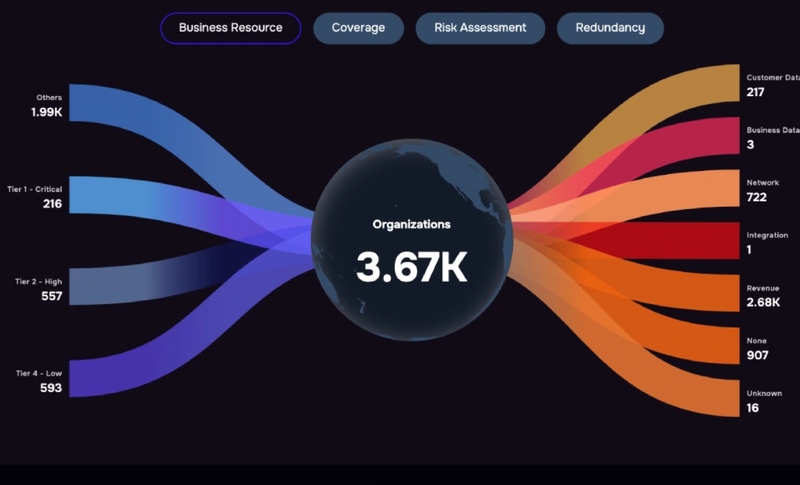
Third-party risk management dashboard, SAFE One platform
By SAFE
Your organization’s cybersecurity is only as strong as your weakest vendor. When a third party with access to your systems or data suffers a breach, regulators and customers hold you accountable—outsourcing the function doesn’t transfer the liability.
A third-party risk management policy is a formal document that defines how your organization identifies, assesses, manages, and mitigates risks from external vendors, suppliers, service providers, and contractors who access your systems, handle your data, or support your operations. This guide walks you through developing a policy that moves beyond checkbox compliance to actually reduce the financial and operational risks your vendors introduce.
What Is Third Party Risk Management?
A third-party risk management policy is a formal document that defines how your organization identifies, assesses, manages, and mitigates risks from external vendors, suppliers, service providers, and contractors. Third parties—any outside entity that accesses your systems, handles your data, or supports your operations—introduce cybersecurity vulnerabilities, compliance gaps, operational disruptions, reputational damage, and financial exposure that can materially impact your business even when your internal controls are solid.
The distinction between a policy and a program matters. A policy is the governance document—the rulebook that establishes standards, roles, and decision-making authority. A program is what you actually do—the assessments, monitoring activities, and remediation work your teams perform day to day.
Third parties create risk across five dimensions:
- Cybersecurity risk: Vendors with weak security controls become entry points for attackers targeting your network and data
- Compliance risk: Third parties handling regulated data like healthcare records or payment information can trigger violations if they fail to meet legal requirements
- Operational risk: Service disruptions at critical vendors cascade into your business operations, halting production or customer service
- Reputational risk: Vendor failures or unethical practices reflect on your brand, even when the fault lies elsewhere
- Financial risk: Vendor instability, fraud, or contract disputes create direct monetary losses
Regulatory frameworks increasingly mandate formal third-party risk management. The SEC’s cybersecurity disclosure rules require public companies to describe their processes for assessing and managing cybersecurity risks from third parties. NYDFS cybersecurity regulations explicitly require financial institutions to maintain third-party service provider policies. Healthcare organizations under HIPAA remain liable for breaches caused by business associates—the law doesn’t care that someone else caused the problem.
Why an Effective Third Party Risk Policy Is Critical
Organizations without formal third-party risk policies operate reactively, addressing vendor risks only after incidents occur or auditors raise flags. This creates inconsistent vendor treatment, gaps in coverage, and duplicated effort as different business units assess the same vendors using different criteria.
A formal policy creates organizational alignment by establishing clear expectations for vendor security, defining who owns vendor relationships, and standardizing how risk decisions get made. When your procurement team knows the security requirements before signing contracts, when business units understand their ongoing monitoring responsibilities, and when executives receive consistent risk reporting, you’ve shifted from reactive firefighting to proactive risk management.
Here’s the part most organizations miss: outsourcing a business function doesn’t transfer the risk or the regulatory accountability. When your cloud provider suffers a breach exposing customer data, regulators hold you responsible. When your payment processor fails PCI DSS requirements, your merchant account is at risk. When your software vendor’s update crashes your systems, your customers blame you, not the vendor.
| Organizations With Formal TPRM Policy | Organizations Without Formal TPRM Policy |
| Consistent vendor assessment across business units | Inconsistent or duplicate vendor reviews |
| Clear accountability and escalation paths | Unclear ownership when vendor issues arise |
| Audit-ready documentation and evidence | Scrambling to produce documentation during audits |
| Proactive identification of high-risk vendors | Reactive response after incidents occur |
Key Roles And Responsibilities in a 3rd Party Risk Management Framework
Effective third-party risk management requires coordination across multiple functions, each bringing different expertise to vendor oversight. Ambiguity about who owns what creates the gaps where vendor risks slip through.
Board and executive leadership set the risk appetite and resource allocation for the TPRM program. They approve the policy, review aggregate third-party risk metrics, and make decisions about accepting risks that exceed established thresholds.
The risk or compliance function typically owns the TPRM policy and program, maintaining the vendor inventory, defining assessment methodologies, and reporting enterprise-wide third-party risk to leadership. Business unit and relationship owners initiate vendor engagements, provide context about vendor criticality to operations, facilitate assessments, and monitor vendor performance. Their frontline visibility into vendor behavior makes them essential early warning systems for emerging issues.
IT security teams assess technical controls, review vendor security architectures, validate security testing results, and investigate vendor-related security incidents. Procurement collaborates on contract negotiations to ensure security requirements, audit rights, and liability provisions get included before agreements are signed.
Defining Risk Tolerance and Vendor Classification
Not all vendors present equal risk, and treating them identically wastes resources while missing critical exposures. Risk-based vendor classification focuses your most rigorous oversight on relationships that could cause the greatest harm.
1. Risk Appetite Levels
Your risk appetite defines how much third-party risk you’re willing to accept in pursuit of business objectives. This isn’t a single number but a set of statements that guide decision-making—for example, “We will not engage vendors with access to customer payment data unless they maintain PCI DSS Level 1 certification.”
Risk appetite translates into policy requirements with different stringency levels. High-risk vendors might require annual penetration testing, quarterly security reviews, and continuous monitoring. Lower-risk vendors might only need initial due diligence and periodic attestations.
2. Vendor Tiers
A tiering system categorizes vendors based on their potential impact to your organization. Most frameworks use three to five tiers:
- Tier 1 (Critical): Vendors whose failure would halt core business operations, handle highly sensitive data, or create significant regulatory exposure
- Tier 2 (High): Vendors supporting important but non-critical functions or handling sensitive data
- Tier 3 (Moderate): Vendors with limited data access supporting non-critical functions
- Tier 4 (Low): Vendors with minimal risk exposure, no data access, and negligible business impact
The tiering determines assessment depth, monitoring frequency, and approval authority. A Tier 1 vendor might require CISO approval and annual on-site audits, while a Tier 4 vendor needs only manager approval.
3. Assessing Criticality
Vendor criticality assessment examines multiple dimensions beyond just data sensitivity. Business impact considers how quickly a vendor outage affects revenue or operations—a payment processor outage immediately stops sales, while a facilities management vendor outage creates inconvenience but not immediate business impact.
Data sensitivity and volume matter, but so does data type: customer data, employee data, intellectual property, and financial data each carry different regulatory and reputational implications. Regulatory scope determines whether vendor failures trigger mandatory breach notifications, regulatory examinations, or enforcement actions. Replaceability also factors into criticality—vendors providing unique capabilities or representing single points of failure warrant closer oversight than vendors with readily available alternatives.
Steps To Develop A Third Party Risk Management Program
The vendor lifecycle provides the natural structure for your TPRM program, from initial evaluation through ongoing oversight to eventual termination.
1. Plan and Scope
Before engaging a vendor, you establish whether they fall under your TPRM policy and what level of scrutiny they’ll receive. This starts with inventorying existing vendor relationships—many organizations discover they have far more third parties than they realized, including shadow IT vendors that business units engaged without security involvement.
Policy scope defines which relationships require formal risk management. Most policies cover vendors with system access, data access, or critical operational roles, while excluding low-risk relationships like office supply vendors. Clear scope boundaries prevent both under-coverage of risky vendors and over-coverage that buries your team in low-value assessments.
2. Conduct Due Diligence
Pre-contract assessment evaluates vendor risk before you’re legally or operationally committed to the relationship. The assessment depth corresponds to the vendor’s risk tier, but certain baseline questions apply universally: Does the vendor have a security program? How do they handle data? What’s their incident history?
Security questionnaires remain the primary assessment tool, though their effectiveness depends on asking the right questions and validating responses. Documentation review examines security policies, SOC 2 reports, ISO 27001 certificates, penetration testing results, and insurance policies. For high-risk vendors, technical security testing validates controls rather than relying on attestations—vulnerability scanning of vendor systems that will integrate with yours, architecture reviews of cloud deployments, or code reviews of software you’ll deploy internally.
Essential due diligence documentation:
- Current SOC 2 Type II report (within past 12 months)
- Security policies and procedures documentation
- Incident response plan and recent incident history
- Relevant compliance certifications (ISO 27001, PCI DSS, HITRUST)
- List of subcontractors and their access levels
3. Formalize Contracts
Contract provisions translate security requirements into legally enforceable obligations. Without specific clauses, you have limited recourse when vendors fail to meet security expectations or cause incidents that harm your organization.
Security and privacy requirements specify the controls vendors maintain, often by reference to standards like ISO 27001 or NIST Cybersecurity Framework. Right-to-audit clauses preserve your ability to verify vendor security controls through questionnaires, documentation reviews, or on-site assessments. Incident notification requirements obligate vendors to report security incidents affecting your data or services within defined timeframes—typically 24 to 72 hours.
Subcontractor management provisions require vendors to impose equivalent security requirements on their subcontractors and notify you of subcontractor changes, preventing risk from cascading down the supply chain. Termination rights allow you to exit relationships when vendors fail to meet security obligations or when risk exceeds acceptable levels.
4. Monitor and Report
Initial due diligence captures a point-in-time snapshot, but vendor risk changes as their security posture degrades, their business evolves, or new threats emerge. Ongoing monitoring detects changes before they create incidents.
Continuous monitoring techniques include automated security ratings that track vendor external security posture, dark web monitoring for compromised vendor credentials, and threat intelligence feeds that identify vendor-related vulnerabilities. Periodic reassessment schedules vary by vendor tier—Tier 1 vendors might require quarterly reviews, while Tier 3 vendors get annual reassessments.
Key risk indicators track metrics that correlate with vendor risk: time to patch critical vulnerabilities, security training completion rates, incident frequency, or control audit findings. Declining indicators trigger escalation and potential remediation requirements.
5. Offboard And Review
Vendor relationships eventually end through contract expiration, vendor acquisition, or termination for performance or security failures. Offboarding procedures mitigate risks from departing vendors who retain access to your systems or data.
Data return or destruction verification confirms that vendors no longer possess your data. Access revocation ensures vendors can no longer authenticate to your systems, including revoking credentials, disabling integrations, and removing VPN access. Transition planning for critical vendors prevents service disruption when switching providers.
Common Pitfalls And Best Practices
Organizations implementing TPRM programs repeatedly encounter the same challenges. Learning from common mistakes accelerates your path to an effective program.
1. Over-reliance on Checklists
Checkbox compliance creates false confidence when vendors answer “yes” to security questions without actually implementing effective controls. A vendor might claim they encrypt data at rest, but if they’re using weak encryption algorithms or managing keys insecurely, the control provides little actual protection.
Risk-based assessment asks not just whether controls exist but whether they’re effective given the specific threats and data involved. The shift from compliance to risk also means accepting that perfect security is impossible and unaffordable—the goal isn’t eliminating all vendor risk but reducing it to acceptable levels given the business value the vendor provides.
2. Underestimating Vendor Criticality
The most damaging vendor incidents often come from relationships initially classified as low-risk. An HVAC vendor with network access for remote monitoring became the entry point for the Target breach. A menu management vendor’s compromise affected dozens of restaurant chains.
Criticality assessment needs to consider all access and integration points, not just the vendor’s primary business function. The HVAC vendor wasn’t critical for temperature control, but their network access made them a cybersecurity risk. Regular reassessment of vendor criticality catches changes that increase risk—a vendor might start with limited data access but gradually expand their integration scope.
3. Failing To Update Policies
TPRM policies written once and left unchanged quickly become obsolete as regulations evolve, new vendor types emerge, and your business transforms. Certain circumstances trigger immediate policy updates rather than waiting for scheduled reviews: major regulatory changes, significant incidents at your organization or industry peers, and organizational changes like mergers or new business lines.
| Warning Sign | What It Indicates |
| Frequent policy exceptions | Policy requirements don’t match business reality |
| Vendor assessments taking months | Process too complex or under-resourced |
| Business units bypassing TPRM | Process seen as obstacle rather than enabler |
| Same vendors repeatedly failing assessments | Unclear requirements or unrealistic standards |
Ensuring Ongoing Monitoring And Continuous Improvement
Static TPRM programs that assess vendors once and never revisit them miss the dynamic nature of risk. Vendor security posture changes, new vulnerabilities emerge, and business criticality shifts over time.
Technology solutions enable continuous monitoring at scale that manual processes cannot match. Security ratings platforms automatically assess vendor external security posture by scanning their internet-facing assets, monitoring for leaked credentials, and tracking security incidents. Integration with threat intelligence feeds identifies when vulnerabilities affecting your vendors are actively exploited or when vendor credentials appear in data breaches.
Program effectiveness metrics demonstrate whether your TPRM program is achieving its objectives. Leading indicators include assessment completion rates, time-to-assess new vendors, and percentage of contracts including security requirements. Lagging indicators track vendor-caused incidents, vendor assessment findings, and remediation completion rates.
Feedback loops from incidents and near-misses improve your program by incorporating lessons learned. When vendor incidents occur, post-mortems examine whether your assessment would have detected the weakness, whether monitoring would have provided early warning, and whether contract provisions gave you adequate recourse.
Strengthening Your Program with Strategic Technology
Manual TPRM programs struggle to scale as vendor counts grow and assessment depth increases. Technology doesn’t replace human judgment but amplifies your team’s capacity to manage larger vendor portfolios with greater consistency.
Automated vendor risk assessment platforms centralize vendor information, standardize assessment workflows, and provide risk scoring based on questionnaire responses and external data. Continuous monitoring tools track vendor security posture without requiring manual data collection—security ratings services assess external attack surface by scanning vendor domains for vulnerabilities and misconfigurations.
Integrated GRC (Governance, Risk, and Compliance) solutions connect TPRM with broader risk management, combining third-party risk with first-party risk for enterprise-wide visibility. AI and machine learning applications are transforming TPRM from periodic manual assessments to autonomous continuous monitoring—AI agents can automatically ingest vendor security documentation, extract relevant controls information, map controls to frameworks, and identify gaps.
Risk quantification capabilities translate technical security findings into financial impact estimates using methodologies like FAIR (Factor Analysis of Information Risk). Instead of reporting that a vendor has “high risk,” quantification estimates the probable financial loss from vendor-related incidents, enabling cost-benefit analysis of risk mitigation investments.
Accelerate Your TPRM Strategy with Confidence
An effective third-party risk management policy transforms vendor oversight from reactive firefighting into proactive risk management. The path forward starts with formalizing your policy, establishing clear governance and responsibilities, and implementing risk-based vendor classification.
SAFE’s autonomous TPRM solution powered by Agentic AI enables organizations to manage vendor risk at scale with unprecedented efficiency. The platform automatically assesses vendor security posture, continuously monitors for emerging risks, and quantifies vendor risk in financial terms using FAIR methodology—allowing security and risk teams to prioritize vendors based on actual potential financial loss rather than arbitrary risk scores.
SAFE TPRM integrates vendor risk with enterprise risk in a unified platform, providing CISOs with complete visibility across first-party and third-party attack surfaces. Automated workflows handle vendor onboarding, assessment distribution, response tracking, and escalation without manual intervention. The platform’s AI agents handle routine tasks autonomously—ingesting vendor documentation, mapping controls to frameworks, identifying gaps, and generating executive-ready reports.
Request a demo to see how SAFE can transform your third-party risk management from a resource-intensive compliance exercise into an automated strategic capability.
FAQs About Third Party Risk Management Policy
How can AI enhance our third party risk management policy?
AI automates assessment processes by extracting security controls from vendor documentation, continuously monitors vendor security postures through external scanning and threat intelligence, and identifies emerging risks before they become incidents through predictive analytics.
What if a vendor refuses to meet our security standards?
Decision frameworks for vendor exceptions include implementing compensating controls that mitigate specific risks, requiring executive approval with documented risk acceptance, and establishing enhanced monitoring for exception cases. Documentation of exception rationale and compensating controls is critical for audit defensibility.
Can we quantify third party risk in financial terms?
Methodologies like FAIR (Factor Analysis of Information Risk) translate technical risk metrics into financial impact estimates by modeling loss event frequency and magnitude. This enables prioritization of vendor risk mitigation based on expected loss reduction and justification of security investments using cost-benefit analysis that business leaders prefer.
Learn more about SAFE’s third-party risk management solution, powered by Agentic AI.
Related Posts
 Cybersecurity
10 Most Common Cybersecurity Blind Spots
Nearly 90% of cyberattacks are caused by human error, so it’s important to understand and address your organization’s cybersecurity weak spots. Many organizations struggle to maintain a clear…
Cybersecurity
10 Most Common Cybersecurity Blind Spots
Nearly 90% of cyberattacks are caused by human error, so it’s important to understand and address your organization’s cybersecurity weak spots. Many organizations struggle to maintain a clear…
 Blog
2025 in Retrospect: SAFE Steers the Industry Towards Autonomous Cyber Risk Management
By: Sweta Bhattacharya 2025 wasn’t just a milestone year for SAFE: it was the year the entire cyber risk management landscape shifted. Every major shift in the SAFEOne…
Blog
2025 in Retrospect: SAFE Steers the Industry Towards Autonomous Cyber Risk Management
By: Sweta Bhattacharya 2025 wasn’t just a milestone year for SAFE: it was the year the entire cyber risk management landscape shifted. Every major shift in the SAFEOne…