A Blueprint for Cyber Resilience in Global Manufacturing


SAFE partnered with an industrial giant to meet the challenge of too much data, not enough clarity.
In the world of global manufacturing, downtime isn’t just an IT headache; it’s a threat to the entire supply chain. As industrial organizations integrate Information Technology with Operational Technology (OT), the attack surface becomes a sprawling, interconnected web of hundreds of thousands of assets.
SAFE partnered with a global manufacturer that was facing a challenge many of you know well: too much data, not enough clarity. By shifting to a framework of Continuous Threat Exposure Management (CTEM), they didn’t just improve their security; they transformed their operational efficiency.
Here is the breakdown of how they reduced their risk exposure by 85% in a single year.
Strategic Risk Quantification and Prioritization with SAFE
As a critical part of the EMEA industrial infrastructure, this global manufacturing and regional giant faces a sophisticated threat landscape that includes everything from advanced persistent threats (APTs) to geopolitical pressures. With 14,000 assets across IT and Operational Technology (OT) networks, the security team previously struggled with fragmented visibility and a lack of clear business context and prioritization strategies for remediation.
Metadata
- Industry: Manufacturing
- Geography: APAC, North America, EMEA
- Product: CTEM
Metrics
- 85% Reduction in Exposure based on Risk Units measurement of SAFE
- 17% improvement in Mean Time to Patch (MTTP)
- 30-minute goal to identify vulnerabilities, assess the risk exposure, and to strategize a decisive patching remediation plan.
The Challenge: Beyond Manual Patching
- Critical Infrastructure Pressure: The organization must maintain a resilient cybersecurity posture to prevent production slowdowns.
- Fragmented Visibility: The organization juggled unknown vulnerabilities across its global locations without a “single source of truth,” leading to inefficient, manual prioritization.
- Incomplete Risk Data: Legacy tools failed to report critical vulnerabilities that weren’t blocked in breach simulations, leaving “blind spots” in their defence.
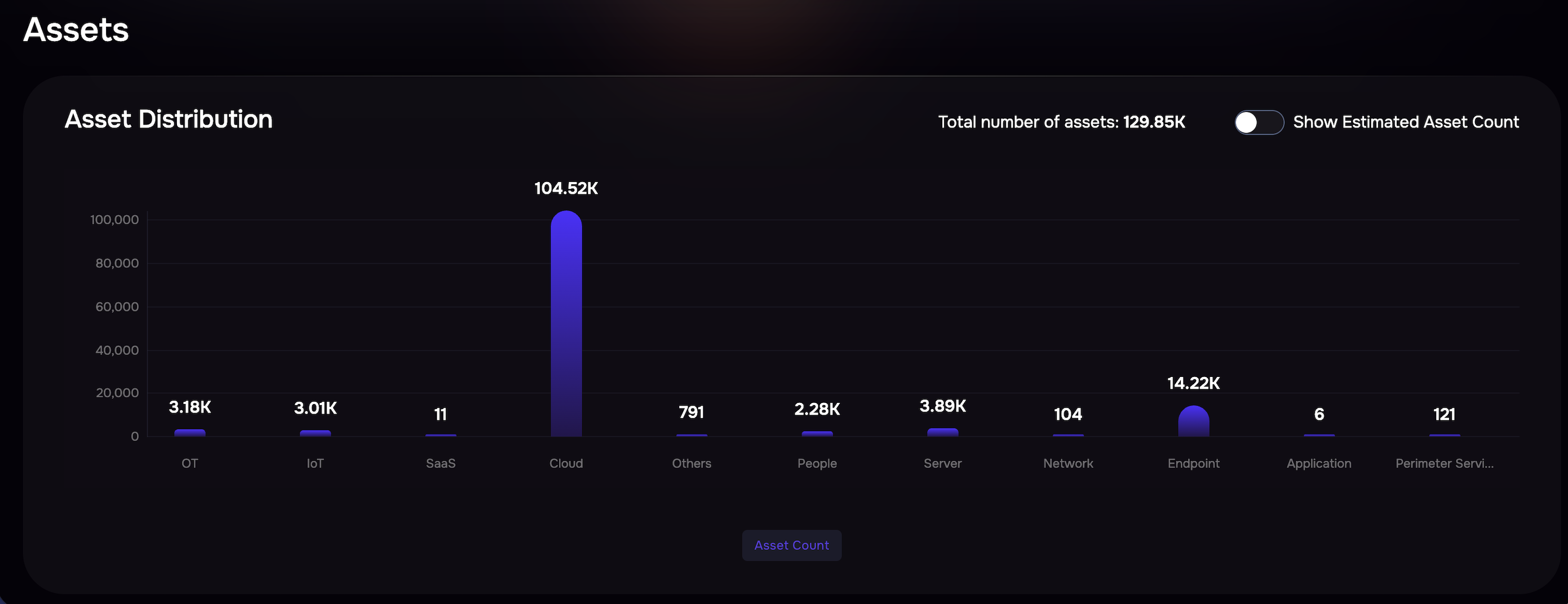
Asset inventory with SAFE. Click for larger image.
The Solution: SAFE & The CTEM Framework
The organization partnered with SAFE to transform raw data into actionable, quantified risk intelligence by integrating data feeds across the organization’s infrastructure with data-driven business context. SAFE’s unified platform provides the organization with actionable insights that are most relevant and critical to the organization.
- Unified Asset Inventory: Leveraged over 5,000 sensors to deduplicate 76.7K raw assets into a clean, classified inventory across both IT and OT networks.
- Validation with Pentesting Tools: the organization confirmed that the vulnerability hygiene provided by SAFE is directly reflected in their external penetration testing scores, which consistently show high “A/B” grades, particularly for OS vulnerabilities.
- Risk-Based Prioritization: Instead of chasing thousands of alerts, the platform identifies the <1% of exposures that pose a risk to the business.
- CISO Dashboard Reporting: Monthly reports are now provided to IT management via a centralized dashboard, using risk-based units to communicate the security posture clearly to stakeholders.
The Results: Measuring Success
- 85% Reduction in Exposure: Within one year, the organization reduced its overall Risk Score from 584K to 87.9K units.
- Improved Patching Efficiency: Realized a 17% improvement in Mean Time to Patch (MTTP), reducing the cycle from 70 to 58 days.
- Elite Penetration Test Performance: The platform’s prioritization of “known exploitable vulnerabilities” ensures that the organization’s most critical assets remain hardened against real-world attack vectors.
The Road Ahead: AI-Driven Remediation
The organization is now moving toward a 30-minute goal for identifying and prioritizing vulnerabilities. By leveraging SAFE Security’s Agentic Workflows, the organization aims to automate ServiceNow ticket creation and patch management, further reducing the manual burden on its security and IT teams.
“The ability to assess our organizational security posture in IT and OT and across both cloud and non-cloud environments has been extremely helpful. We now have the visibility and information needed to prioritize remediation based on real-world risk factors like known exploits and asset criticality.” —Head of Cyber Security
See SAFE’s agentic AI in action – Watch the video
Schedule your demo of the SAFE One Platform.